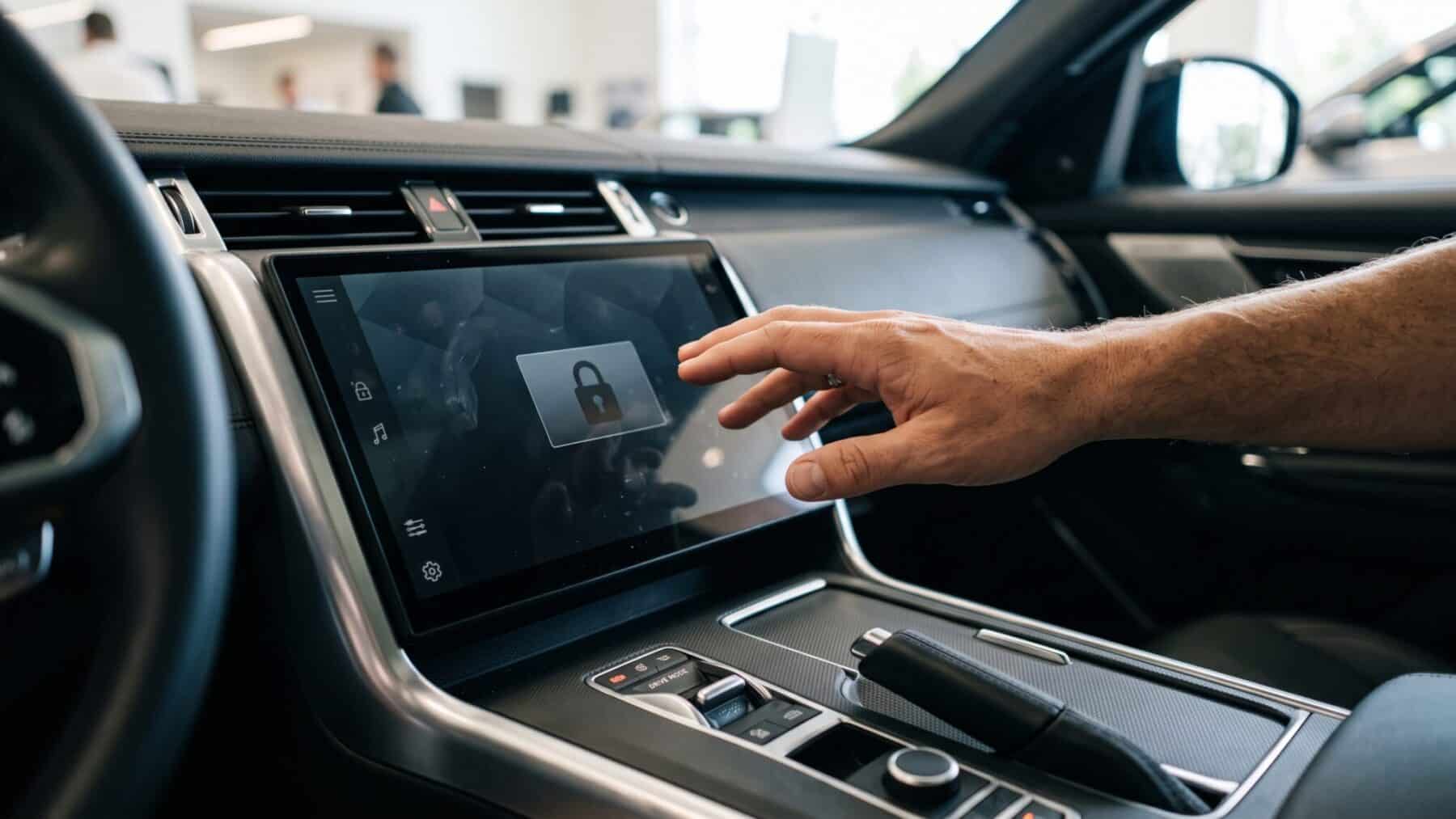
Picture a cold morning, a car that worked perfectly on the test drive, and an app that simply will not respond.
The button is still on the dashboard. The icon is still on the touchscreen.
Nothing is broken. The hardware is all there, fully wired, waiting.
So why has remote start stopped working six weeks after the sale?
The answer has nothing to do with the car, and everything to do with whose name was on the account when the clock started ticking.
How the feature locks you out even though the hardware is already in your car
Adaptive cruise upgrades, hands-free driving modes, and remote functions are increasingly locked behind software licenses. In most cases the hardware is already installed at the factory, fully wired and waiting. You are paying only for permission to use it.
A single software flag in the car’s computer is the only barrier between you and the feature you assumed was yours. Because that lock is thrown remotely and silently, there is no warning light, no error code, no trip to the shop. The car feels identical. It simply stops responding to the app.
Automakers got better at burying subscriptions inside connected-service terms. The trial expires quietly, and the owner has to dig through a settings menu to understand why their remote start has gone dark.
What the used-car lot does not tell you about the trial that already ran
A listing can mention connected services, navigation, and driver-assistance tools without those features still being active. The original trial may have expired, or the previous owner may have cancelled the account. Dealers rarely flag this at the point of sale, and there is no legal requirement that they do.
The window sticker that helped the first buyer separate trial from permanent is long gone by the time a second buyer sits in the seat. The test drive proves nothing, because a mid-trial feature feels identical to one that is permanently included.
Some of the most commonly gated features are also the most familiar. One major automaker charges $8 a month for remote start after a free trial ranging from three to ten years depending on the model. Advanced hands-free highway systems have followed the same path, with automakers treating the software unlock as a recurring product rather than a one-time sale.
The scale of the problem and what the data actually shows
This is not a fringe issue affecting a handful of luxury buyers. According to IoT Analytics’ Software-Defined Vehicles Adoption Report 2026, 45 percent of automotive OEM and supplier respondents now rank the shift to software-defined vehicles as their top strategic priority, and every one of those vehicles creates the same used-market trap.
Deloitte’s 2026 Global Automotive Consumer Study, which surveyed more than 28,500 consumers across 27 countries, found that consumers globally place the greatest value on connected features that enhance safety and security, with many open to AI-driven personalization and OTA-enabled enhancements. In the US specifically, the highest willingness to pay is for safety and security-related connected features such as anti-theft tracking, pedestrian detection, and emergency assistance. That gap matters because remote start, embedded Wi-Fi, and cloud navigation sit squarely in the convenience tier consumers least want to pay for twice.
A vehicle that looks affordable at the point of sale can accumulate hundreds of dollars in annual software fees if every trial runs past expiry. There is also a parallel risk most buyers miss: connected-car services rely on cellular networks, and when older networks are decommissioned, vehicles that depend on them can lose functionality entirely, with no refund on offer.
Where the catch gets worse and who is pushing back
The subscription trap does not stop at inconvenience. Removing connected features can quietly cut a car’s resale value, because a buyer who pays a fair-market price partly for a tech spec list is overpaying if half that list sits behind a paywall.
Several US states have proposed or enacted legislation targeting subscriptions for hardware already installed in a vehicle. The core argument is simple: if the buyer paid for the car and the hardware is installed, the seller cannot reasonably charge an ongoing fee for what was already sold. That legal pressure is moving the issue from consumer frustration toward a formal regulatory fight.
US regulators have begun examining disclosure practices, specifically whether buyers are adequately informed at the point of sale that certain features require ongoing payment. For used-car buyers, the original sales conversation happened with someone else entirely, making the disclosure gap even harder to close.
What a used-car buyer can actually do before signing anything
The fix is mostly information. During the test drive, open the settings menu and check what is actually active. Ask for the original window sticker, owner account details, and service history to separate permanent features from timed ones. A seller who cannot produce that paperwork is signalling something important.
For features that carry a monthly fee, aftermarket remote-start systems can be installed for $150 to $400 and work independently of the manufacturer’s app ecosystem. That is a one-time fix cheaper than two years of the subscription it replaces.
The software-defined car is not going away, and neither are its subscription layers. What is changing is awareness: buyers who understand the trial structure going in can factor it into the offer price rather than discovering the gap on a cold morning. As subscriptions expand across even high-volume mainstream vehicles, the used-market lag will only widen, and informed buyers will be the ones who come out ahead.
