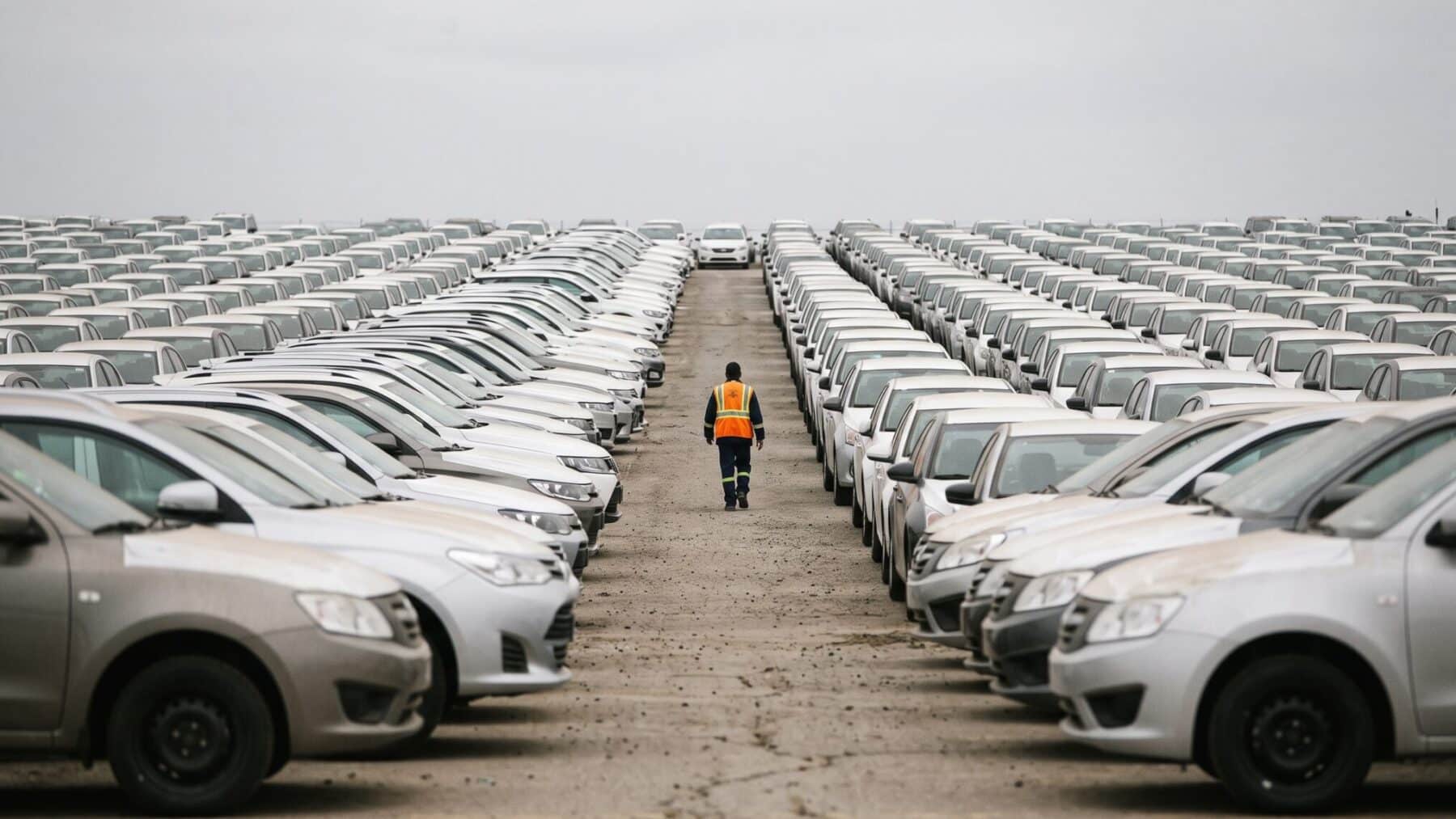
Walk onto almost any US dealership lot this month and the math hits you fast.
Rows of unsold vehicles stretch toward the fence line. Sticker prices on fresh models have climbed sharply. Yet tucked beside them, last year’s cars wear price tags slashed by thousands. What is pushing these two realities onto the same forecourt at the same time?
How a tariff wall and a tax-credit cliff landed on the same calendar page
The tension on today’s lots has two pressure points working against each other. Section 232 tariffs impose a 25 percent duty on imported automobiles and certain automobile parts, meaning every dollar of foreign content in a new car carries an additional levy that eventually works its way into the price a buyer sees. For USMCA-compliant vehicles, the 25 percent duty applies only to the non-US content of the vehicle, and USMCA-compliant auto parts remain under a temporary exemption pending a Commerce Department valuation process. Since no US-assembled car uses 100 percent domestic parts, the tariff bill lands on almost every new vehicle sold in the country, just in different amounts. Rates also vary by origin: auto imports from the EU, Japan, and South Korea face a 15 percent total tariff rather than the full 25 percent applied to other sources.
Then there is the incentive side. The One Big Beautiful Bill Act, signed into law in July 2025, ended the electric vehicle tax credit on September 30, 2025. Starting October 1, 2025, no EV tax credits are available regardless of the manufacturer, price point, or battery configuration. Many manufacturers are now compensating with aggressive discounts and zero-percent financing to keep EV sales moving. That credit’s disappearance stripped a powerful selling tool from the market overnight, forcing brands to replace it with their own money.
What the numbers look like on the lot right now
Across the United States, inventory is uneven by model and brand. The 2026 Jeep Recon tops the slowest-selling list with 402 days of supply and 143 units on lots. The US auto market entered 2026 with new-vehicle inventory levels close to historical norms overall, following widespread oversupply through much of 2025, according to Cox Automotive data. But that average masks deep model-level disparities: certain 2024 and 2025 models remain on lots in very large numbers relative to demand, while fast-turning nameplates like the Toyota Camry and Prius are in short supply. Manufacturers with excess stock are responding with cash rebates of $3,000 to $10,000 on select vehicles alongside zero-percent financing. The end of the federal EV incentive has huge implications not just for consumers but for dealers, automakers, and fleet operators who had integrated the credit into pricing, marketing, and adoption strategies.
The 2026 models sitting beside that leftover inventory tell a different price story. US auto tariffs have driven a notable increase in the average vehicle MSRP, with luxury imports hit hardest. Imported vehicles bore the brunt of price hikes, while domestically assembled vehicles saw smaller increases due to higher parts costs.
Automakers also absorbed costs into destination fees, which reached record highs for 2026 models on full-size trucks and SUVs. A buyer walking onto a lot today faces a stark choice: pay the tariff-inflated 2026 price, or take a much bigger discount on a 2025 model the dealer desperately needs to move.
The evidence behind the incentive surge
The scale of the current discount push is measurable at the individual model level. One major US automaker is offering up to $10,000 in cash rebates on its electric crossover and $8,500 on its plug-in hybrid SUV, with an average rebate across all its models currently sitting near $4,400. Those are not standard end-of-model-year clearance numbers; they reflect genuine structural pressure.
Select Jeep models are offering double-digit percentage discounts off MSRP, while certain minivans carry substantial cash rebates or 0% APR financing. On the EV side, several electric three-row SUVs pair 0% APR for up to 60 months with cash rebates, a deal structure that essentially replaces the vanished federal credit with manufacturer money.
This is also the market environment discussed in GCN’s earlier look at Ford’s Q2 sales, where weakened volume made incentive spending an even sharper necessity. The best September deals feature interest-free loans for up to 72 months, a term that lowers the monthly payment without the brand having to cut the sticker price at all.
Where the discount math gets complicated
The incentive war is not evenly distributed, and that is where some buyers can get caught out. The 0% financing offer on certain full-size trucks cannot be combined with other incentives, and the rebates available on those same trucks vary widely depending on how offers are stacked. Choosing the wrong path can cost a buyer several thousand dollars.
And while the leftover 2025 bargains are real, remaining 2025 stock is finite. Once it clears, the only option on the lot will be the tariff-priced 2026 and 2027 models. Imported vehicles bore the brunt of price hikes, while domestically assembled vehicles saw smaller increases tied to higher material costs for steel and aluminum.
That gap means imported models and US-built trucks face very different incentive pressures. Readers tracking how this split plays out across segments can find more context in GCN’s coverage of hybrids grabbing a record share of new US car sales in the second quarter, a trend running directly into this pricing environment.
What buyers gain, and what remains unresolved
For the shopper who acts before the 2025 inventory clears, September offers genuine opportunities. The discount window is real, but it has a closing date built in.
The tariffs have also influenced production decisions. Domestic assembly now accounts for a rising share of all new vehicles sold as automakers shift manufacturing to reduce their tariff exposure, though that structural shift takes years to complete. The pricing gap between high-content imported models and locally assembled ones will persist well into the next model cycle.
Toyota, the world’s largest automaker by volume, felt the strain acutely. Annual net income declined 19% for the fiscal year that closed March 31, 2026, after US tariffs stripped roughly ¥1.38 trillion (about $9 billion) from operating income. Operating income declined 21.5% to ¥3.77 trillion, with profit margins shrinking to 7.4% from 10.0% the prior year. The company said it was actively working to offset the impact through production shifts and pricing adjustments, though it stopped short of forecasting relief before the end of the model year.
Absorbing that while simultaneously funding cash rebates and zero-percent financing puts pressure on every balance sheet in the industry. The discount war running through September may be the best moment for US car buyers in years, but the automakers writing those checks are already calculating how long they can keep doing it.
