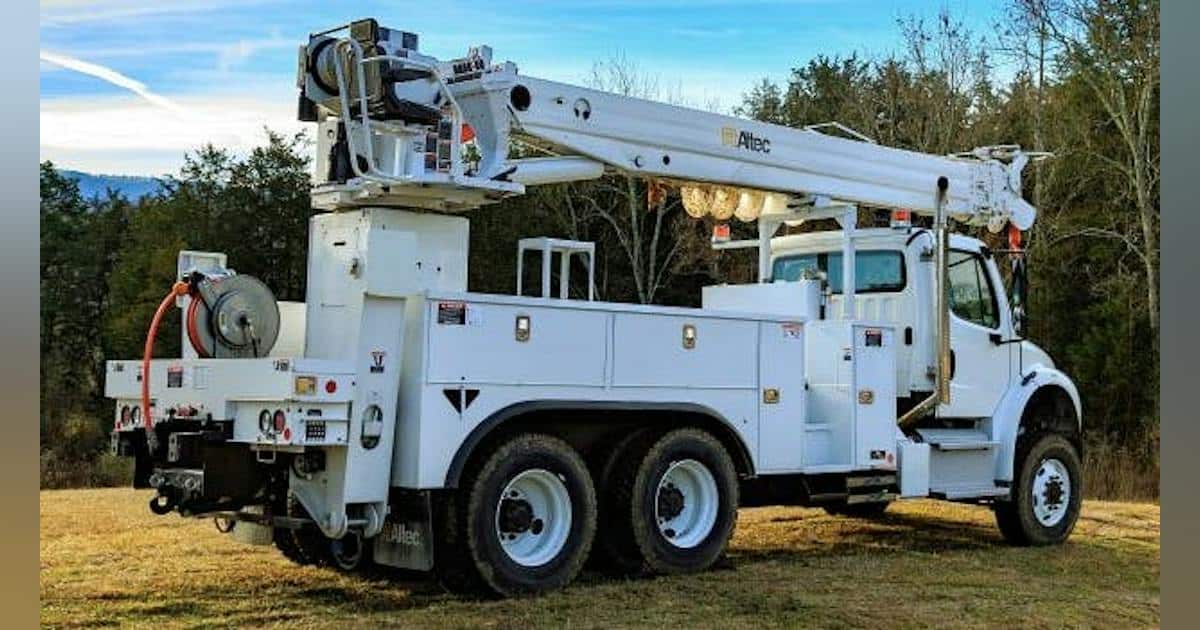
A small black sensor box sits bolted above a utility truck’s bumper, sweeping the road ahead dozens of times every second.
When traffic tightens, it tells the brakes to fire before the driver’s foot moves. Most crews never think about it.
But the sensor’s position, down to the inch, is the whole system. Move it even slightly during a body modification and the math goes wrong.
So why would repositioning a radar box a few inches be enough to make an entire braking system fail?
How a few inches of sensor movement rewrites what the braking system believes about the road
The forward collision system is not simply watching for an obstacle. It runs a live geometry model that assumes the radar sits at a precise height, angle, and horizontal position on the truck’s frame. Every braking threshold, every time-to-collision number that fires the brakes, is baked into that model at the factory.
The radar fires millimeter-wave pulses at the road ahead and times how fast each return echo arrives. From that data, the system calculates closing speed and gap distance continuously.
Move the sensor a few inches without updating those parameters and the model’s picture of the road no longer matches reality. The brakes either fire too late or, in the mirror-image failure, fire without any driver input at all.
Why utility trucks face this risk in ways ordinary pickups do not
A passenger car rolls off the assembly line as a finished product: the radar goes on, the software is calibrated, and the vehicle ships. Commercial utility trucks work differently because the chassis and the body are built by two separate companies. An aerial bucket truck or a digger derrick starts as a bare cab and chassis, then travels to an upfitter who mounts the boom, outriggers, and tool storage.
That upfitting step is where the radar can move. The body builder may shift the sensor housing to clear a winch mount, a bumper reinforcement, or a new wiring conduit. The chassis manufacturer’s calibration, locked in before the body arrived, now points at a slightly different patch of road.
The braking system has no way to know the sensor moved unless someone runs a new calibration routine. Often, nobody does.
What the federal recall covers and where the evidence comes from
Federal safety authorities logged recall number 26V541000, covering 55 commercial utility trucks across the Altec AN Series model years 2019 to 2026, the 2023 AA Series, the 2022 to 2026 Digger Derrick, and the 2025 AM Series. In every case, the Bendix automatic braking system was not recalibrated after the front radar box was relocated.
A related spring recall found the opposite failure on 2025 and 2026 Digger Derrick and Aerial Device vehicles: an improperly installed radar triggered unexpected brake activation with no driver input, affecting 36 vehicles. Both recalls trace to the same root cause.
These are not vehicles parked in a yard. Digger derricks work in active traffic lanes while other vehicles pass at highway speed, and an improperly calibrated system can produce a delayed braking response that raises crash risk in exactly those conditions. This pattern echoes other commercial truck recalls where a chassis-level component passed certification and a body modification introduced the hazard. The 97,400 roof-rack SUVs recalled over detaching crossbars follow the same logic: two separately certified manufacturing processes, and the gap lives between them.
Where the calibration problem can persist even after owners are notified
The remedy requires updated software parameters, a full recalibration, and a test drive before the truck returns to service. Owner notification letters are expected to be mailed October 16, and fleet operators can contact the federal safety hotline directly rather than waiting for the post.
But recall completion rates tell a sobering story. NHTSA’s own data show that completion rates vary widely across campaigns, and a meaningful share of affected vehicles typically keep running with the known defect well after a recall opens. A recall letter can sit in an office mailbox, arrive after the truck has changed routes, or simply miss a vehicle that cycled through a contractor.
Larger fleet operations now use automated VIN monitoring that flags new federal notices the day they publish. Smaller utility contractors still rely largely on the postal system, and the gap between when a recall opens and when the last truck gets fixed can stretch a year or longer.
What this means for the collision systems now standard on every new work truck
Forward collision mitigation is rapidly becoming unavoidable. Federal safety standards finalized in May 2024 will mandate automatic emergency braking on all new light vehicles by September 2029, and NHTSA and the Federal Motor Carrier Safety Administration have proposed a parallel rule that would extend the same requirement to medium and heavy trucks. The calibration sensitivity that created this recall will be present, by design, across a much larger share of the commercial fleet once those mandates take effect.
Industry groups representing upfitters are in active discussion with chassis manufacturers about embedding calibration checkpoints into the body-building certification process, so that any time a sensor-adjacent component is repositioned, a recalibration step is automatically flagged in the work order. That change has not yet been standardized.
Until it is, the safest protection costs nothing: any time a front bumper, grille panel, or forward-facing sensor mount is touched during body work or repair, treat the collision system as uncalibrated and schedule a dealer verification before the truck returns to the road. The radar may look exactly the same. The math it runs almost certainly is not.
