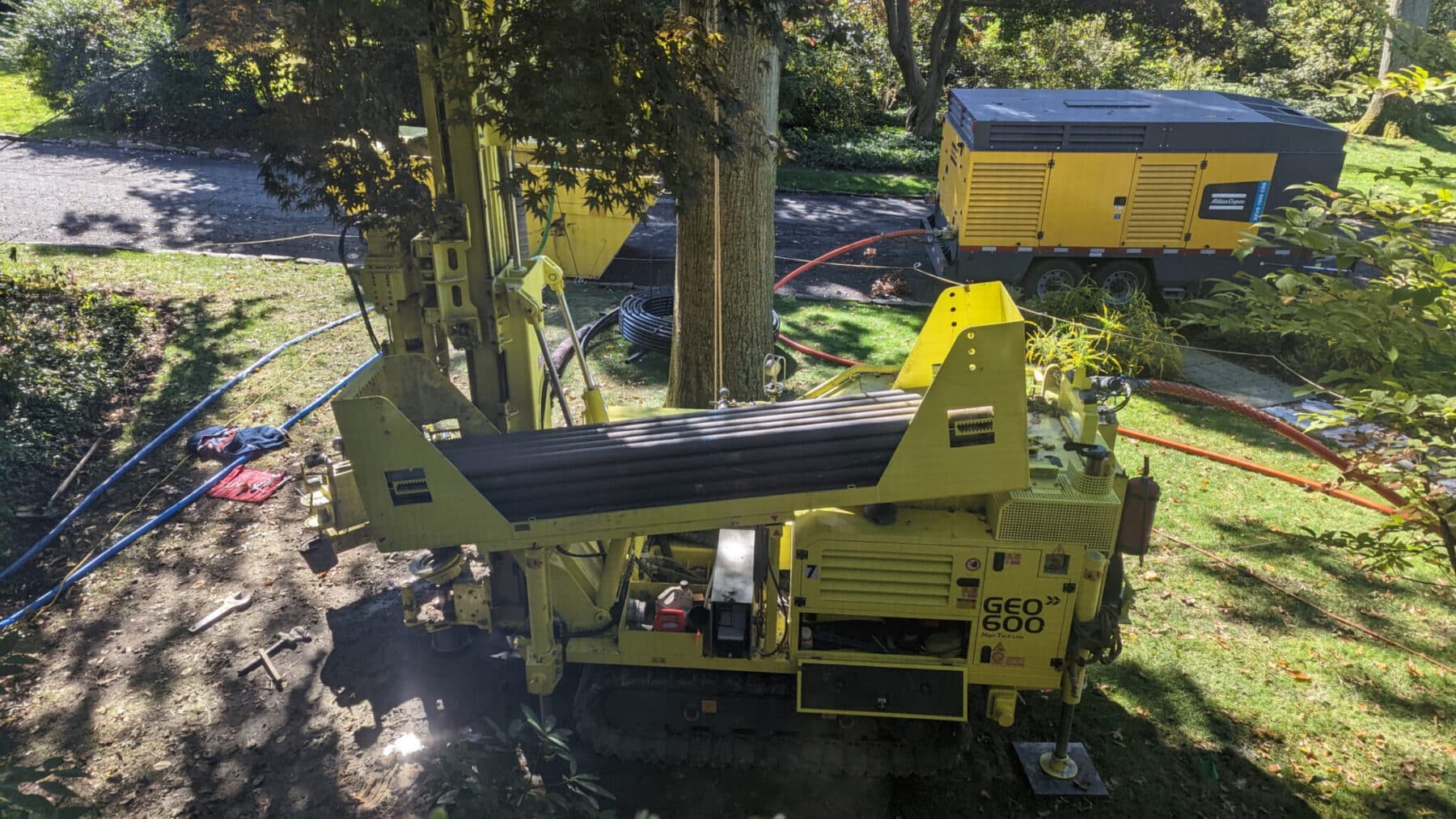
A Vermont natural gas utility will pay the upfront cost of installing geothermal ground loops at a 44-unit affordable housing development, a financing model the companies involved call the first of its kind for a US gas utility.
Vermont Gas Systems (VGS) and geothermal installer Dandelion Energy announced the partnership on October 1 for the Riggs Meadow project in Hinesburg, Vermont.
What the utility is funding
VGS is investing in the upfront cost of installing geothermal ground loops, significantly reducing the barrier to deploying this efficient technology for the developer and for future residents.
The underground pipe networks, known as ground loops, connect to in-home ground-source heat pumps that draw on stable underground temperatures to heat and cool buildings year-round.
VGS said geothermal would serve four multifamily buildings containing 36 of the development’s homes, with each building having its own ground loop.
Under VGS’s broader geothermal offering through Clover Energy, the utility owns and maintains the underground infrastructure while customers own the equipment inside their buildings and pay a monthly fee to use the loops, though the fee for Riggs Meadow has not yet been disclosed.
Who is building Riggs Meadow
Riggs Meadow, located in Hinesburg, Vermont, will feature 44 townhomes and apartments designed for low- and moderate-income renters and owners.
Champlain Housing Trust and Evernorth, the project’s affordable housing developers, explored heating and cooling options with VGS before bringing Dandelion into the project.
Drilling of the geothermal boreholes is set to begin early next year, with residents occupying the homes in late 2027.
Dandelion will handle system design and drilling, while the utility owns the buried pipe network much the way it owns gas lines serving other customers.
Why a gas utility is backing geothermal
The companies describe the arrangement as the first of its kind in the nation for a natural gas utility, introducing an approach where gas utility investment unlocks geothermal systems for residential customers.
Dan Yates, chief executive of Dandelion Energy, said the structure is meant to make the technology routine rather than exceptional.
Yates said the partnership helps expand geothermal access and continues to make it a standard, mainstream solution for developers and builders, calling utility-owned ground loops a practical, immediate solution to decarbonize housing and adding that the companies are proud to support and validate a model that aligns utility infrastructure investment with equitable, clean energy access.
VGS president and chief executive Neale Lunderville said geothermal is one of the best solutions available to make cost-effective, renewable heating and cooling options accessible to more Vermonters.
The project builds on groundwork VGS laid in 2023, when it first began developing a business model for networked geothermal service in the state.
A bigger pattern in geothermal economics
The Riggs Meadow deal addresses a cost barrier that has also shaped larger utility-scale geothermal projects, where heavy drilling expenses dominate total project spending before any heating or power output begins.
Shifting that capital burden to a regulated utility, rather than homebuilders or individual residents, mirrors financing questions that have also surfaced around federally backed exploration and field-test programs aimed at lowering geothermal’s upfront costs nationwide.
Neither company has disclosed the total cost of the ground-loop installation at Riggs Meadow or the monthly fee residents will eventually pay.
The project adds to a small but growing list of US gas utilities testing geothermal ownership models as states look for ways to cut building emissions without directly handing construction costs to housing developers or renters.
