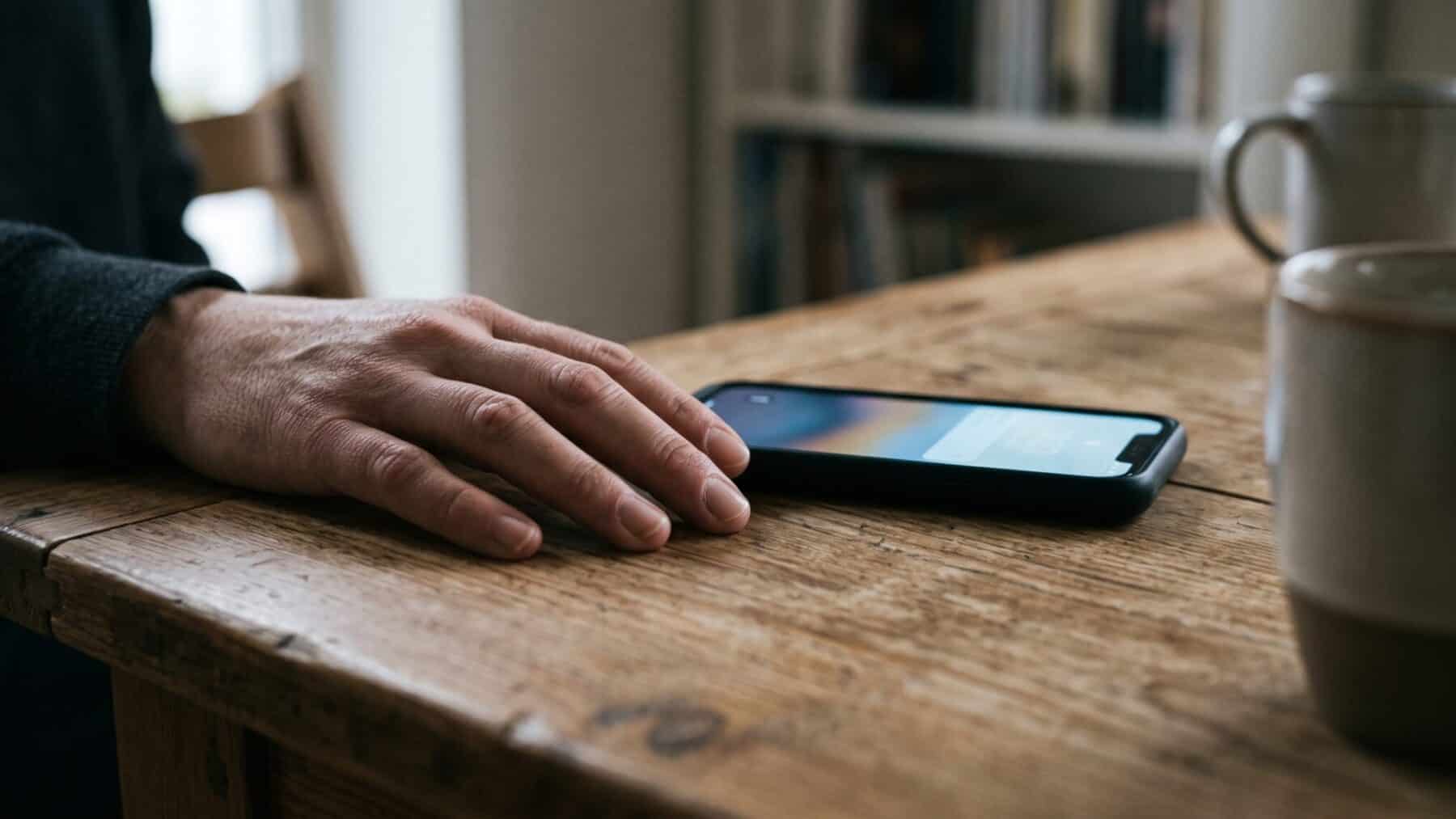
A single smartphone notification is enough to measurably disrupt a person’s concentration, with the effect lasting about seven seconds, according to new research published in the journal Computers in Human Behavior.
The study found that how often a person checks their phone and how many alerts they receive predicts distraction better than the total number of hours spent on a device each day.
What the study found
A new study published in Computers in Human Behavior suggests that receiving a smartphone notification disrupts a person’s concentration for about seven seconds.
The research provides evidence that the frequency of checking a phone and the volume of notifications received are better predictors of this distraction than total daily screen time.
The findings, detailed by PsyPost, point to fragmented digital behavior rather than raw usage time as the real driver of attention problems.
These findings indicate that fragmented digital habits play a significant role in how technology affects human attention.
Why earlier research fell short
Researchers behind the study, which was led by Hippolyte Fournier and conducted at the University of Lausanne, said prior work on notifications and attention had limitations.
While it is well established that notifications can automatically capture attention, much less is known about the cognitive mechanisms underlying this capture and why some individuals may be more vulnerable than others.
To address that gap, the team designed experiments using smartphone-style social media alerts during a standard cognitive task, aiming to separate out the distinct reasons an alert might seize someone’s attention.
Digital notifications are ubiquitous in modern life, yet their impact on cognitive performance remains poorly understood, so the researchers introduced an ecologically valid paradigm to examine how social media notifications disrupt ongoing task performance. All participants completed a Stroop task, which is a classic psychological test that measures mental processing speed and focused attention.
The scale of daily interruption people face helps explain why the researchers focused on this question. People receive a very large number of smartphone notifications every day, more than 100 per day on average in the study’s sample, Fournier said.
A brief but real cost, not permanent damage
PsyPost’s reporting on the research emphasized that the disruption is short-lived rather than evidence of lasting harm to attention.
The slowdown tied to a single alert was transient, lasting approximately seven seconds, driven by the combined influence of perceptual salience, learned associations, and relevance appraisal. The magnitude of this disruption was predicted by the inferred relevance of notifications and by individual patterns of smartphone use, specifically, the frequency of interaction (notification volume and checking behavior) rather than total time spent on the device.
That distinction matters for how the findings should be read. The seven-second figure describes a temporarily measurable cost under laboratory conditions, not proof that every notification permanently damages a person’s ability to focus.
These findings were mirrored in changes in pupil dilation, a physiological marker of arousal, confirming the convergent impact of notification relevance and smartphone habits.
Why it matters for everyday habits
The research adds to a broader conversation about how constant digital interruption shapes daily behavior, a topic Pew Research Center has also tracked closely, including survey data showing that just over half of U.S. adults say they spend too much time on their smartphone, according to a Pew Research Center survey.
Other recent work has found that simply monitoring phone use rarely changes it, echoing a pattern where checking a usage report rarely shrinks how much people scroll.
Taken together, the notification findings suggest that reducing the sheer number and frequency of alerts, rather than simply cutting overall screen time, may offer a more direct way to protect concentration during work, study or conversation.
