American consumers are on track to spend a record $13.5 billion on Halloween this year, according to the National Retail Federation’s annual survey conducted with Prosper Insights & Analytics.
The figure edges past last year’s previous high of $13.1 billion even as shoppers brace for tariff-driven price increases on candy, costumes and decorations.
Spending holds steady despite tariff worries
Consumer spending on Halloween is expected to reach $13.5 billion this year, and while consumers continue to make Halloween a spending priority, they are approaching the season with affordability in mind and looking for ways to maximize value.
NRF’s 2026 Halloween survey found consumers plan to spend an average of $115.14 per person this year, $13.5 billion in total, even as 79% expect tariffs to push prices higher.
The survey, conducted by Prosper Insights & Analytics, surveyed 7,889 U.S. consumers between Sept. 1 and 9. NRF Vice President of Industry and Consumer Insights Allison Zeller said “consumers continue to make Halloween a spending priority, but they are also approaching the season with affordability in mind.”
Where the money goes
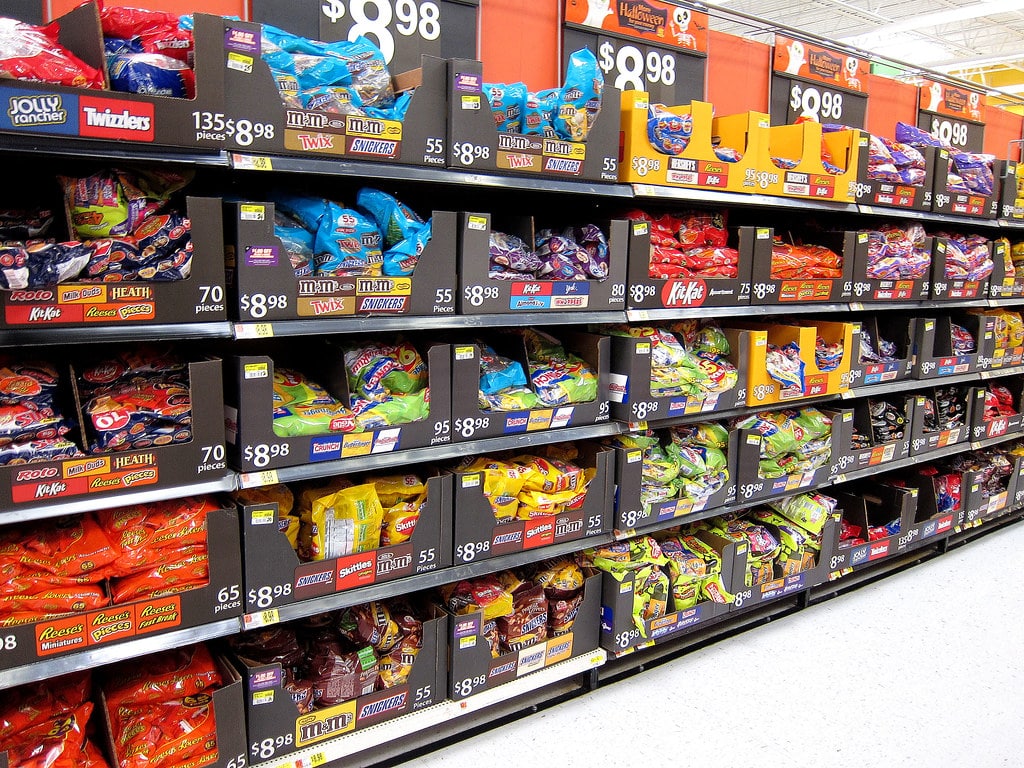
Candy remains the single biggest category. Ninety-six percent of consumers plan to buy sweets, accounting for $4.1 billion in spending.
Decorations follow at 78% and $4.3 billion, while 71% of shoppers are expected to spend $4.4 billion on costumes.
Brick and mortar still dominates the holiday. Discount stores remain the top destination for Halloween purchases at 39%, followed by specialty Halloween and costume stores at 32% and online retail at 27%.
That value-seeking streak mirrors broader patterns GCN has tracked this year in how Americans trim discretionary purchases without cutting the categories they consider essential to the season.
Shoppers plan ahead and stretch dollars
Price sensitivity is shaping behavior well before Oct. 31. Consumers are expected to spend an average of $115.14 per person, in line with $114.45 per person in 2025.
Shoppers are planning ahead; if they encounter higher-than-expected prices on Halloween items, nearly one-third say they will comparison shop, while 26% say they will look for coupons or sales.
Reuse is also a growing strategy. Looking for items to reuse in the future is one of the most popular courses of action overall, cited by 34% of respondents to NRF’s 2026 Halloween survey.
That deal-hunting mindset echoes findings elsewhere about how consumers leave value on the table when they fail to track available discounts, even as they actively seek them out for seasonal purchases.
Early shopping continues to climb too. About half of consumers, 49%, say they began shopping for Halloween in September or earlier.
Talk Business reported that enthusiasm for the season continues to drive much of this early activity, with 42% of early shoppers saying they look forward to fall and 34% citing Halloween as one of their favorite holidays.
A holiday that keeps growing
Participation has climbed steadily for two decades. Participation among those celebrating has grown significantly, with 74% of consumers shopping for Halloween compared with 64% almost 20 years ago.
Participation in the holiday has held steady since its increased popularity during the pandemic and remains notably higher than pre-pandemic levels, when only 68% of consumers planned to celebrate in 2019.
NRF has tracked the holiday’s spending patterns for more than two decades. NRF has conducted its annual Halloween consumer shopping survey since 2005, and the 2026 survey asked 7,889 consumers about their Halloween shopping plans.
The results suggest that even amid tariff-driven price anxiety, Halloween has become resilient to broader economic caution, with households treating costumes, candy and decorations as a fixed seasonal priority rather than a discretionary expense to cut.
