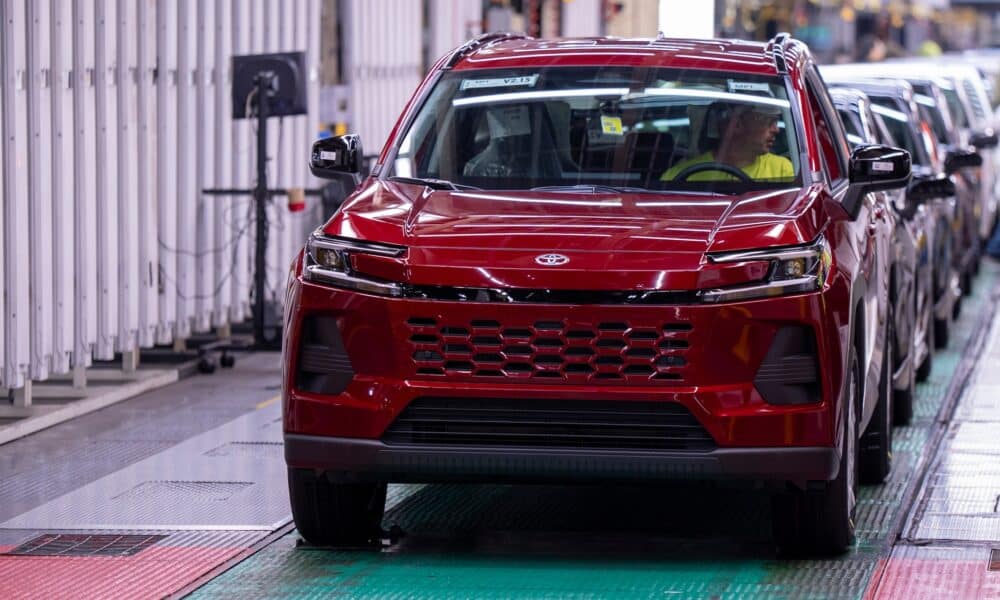
A compact SUV rolled off a Kentucky assembly line in late June, one of thousands built that month alone.
Dealers nationwide could barely keep them in stock.
Some lots measured supply in hours rather than days.
Behind that scramble sits a number that outran every prior month in the nameplate’s history.
So what actually let one gasoline electric crossover outsell its own best month ever, and why now?
How a decades old hybrid system suddenly became a factory bottleneck
The short answer is supply finally meeting demand after years of the opposite problem. Toyota’s compact SUV moved to an all electrified lineup for its newest generation, meaning every version sold now carries a hybrid or plug in hybrid powertrain instead of a conventional gas only engine.
That shift matters mechanically because the automaker’s fifth generation hybrid system pairs a 2.5 liter four cylinder engine with electric motor generators. And no gas only trim exists anymore to pull buyer attention away from it.
Every shopper walking onto a lot for this model is, by design, walking into a hybrid.
Even so, building enough of them proved to be the harder half of the equation. Toyota Motor Manufacturing Kentucky executives announced the launch of the new RAV4 Hybrid vehicle production and unveiled the plant’s “next-generation” paint facility Monday, June 22 , mid way through the very month that then became the nameplate’s best ever.
The plant also unveiled the paint facility the same day, a sign the ramp is still climbing rather than finished.
Inside the numbers that turned a redesign into a record month
Toyota’s own sales report, filed with its June and second quarter results, counted 27,774 RAV4 Hybrid units sold in the United States that single month. That figure marked a sharp year over year jump of more than 83 percent, according to the official sales filing.
Meanwhile the plug in version of the same SUV posted an even steeper climb, with sales up more than 590 percent year over year as that newer powertrain option found its footing.
In the weeks before the June report, trade coverage noted that dealers had only a few days’ worth of the hybrid in stock nationwide, and the plug-in version was similarly thin. That kind of velocity is why industry trackers started describing inventory in hours rather than the usual measure of days on a lot. It is an unusual way to describe a mainstream crossover, but it captures how thin the cushion between factory output and showroom demand had become.
Why the automaker is calling this an all time high, and what the data shows
Toyota’s sales filing for June and the second quarter described two distinct milestones side by side for its Toyota division. One was the RAV4 Hybrid’s all-time best-ever result, and the other was the division’s all-time best-ever electrification mix at 61.4% .
That electrification share means most Toyota brand vehicles sold in the United States that quarter carried a hybrid, plug in hybrid or electric powertrain. Second quarter electrified vehicle sales of 345,791, up 21.1 percent from the same quarter a year earlier.
Not every electrified nameplate shared equally in the surge. Toyota’s hybrid midsize pickup, the Tacoma Hybrid, actually posted TACOMA HYBRID June sales up 13.1 percent and year-to-date sales up 15.2 percent, a reminder that gains varied widely across the electrified lineup even as the RAV4 Hybrid’s record was driven by a specific model changeover. Shoppers weighing a used alternative can see how used hybrids now sell above sticker price elsewhere in the market this year too.
Where the record runs into real world limits on the factory floor
None of this means supply has caught up with buyers. Year to date figures tell a more complicated story than the single record month suggests, since the nameplate’s overall volume through midyear actually trailed the prior year’s pace by more than 30 percent as the old generation wound down.
That gap explains the paradox of a record setting month sitting inside a down year overall. The outgoing generation’s final inventory dried up faster than the new hybrid only lineup could replace it, which is exactly the kind of transition that produces a single spectacular month without yet producing a spectacular year.
Because the Kentucky line only began building the redesigned hybrid in the final days of June, most of that record setting month was still met by existing stock and imported units rather than fresh domestic production. The real test of whether this pace holds arrives once the North American factory reaches its full running speed.
What the record suggests for buyers watching the hybrid market now
For shoppers, the practical takeaway is that patience may be rewarded as Kentucky output climbs toward normal volume and dealer lots refill. A model line this popular rarely stays supply constrained indefinitely once a plant finishes its changeover.
The broader pattern also reinforces something buyers comparing powertrains have noticed elsewhere in the industry, including shifts toward cheaper battery chemistry reshaping what a hybrid or electric vehicle costs to build. Lower input costs upstream tend to show up eventually in what dealers can offer at the curb.
For now, the record stands as a clear marker of how fast buyer habits have moved toward electrified power without requiring anyone to plug in overnight. A single crossover’s best month on record is a small data point, but it points toward a hybrid market still finding its ceiling rather than having already reached it.
