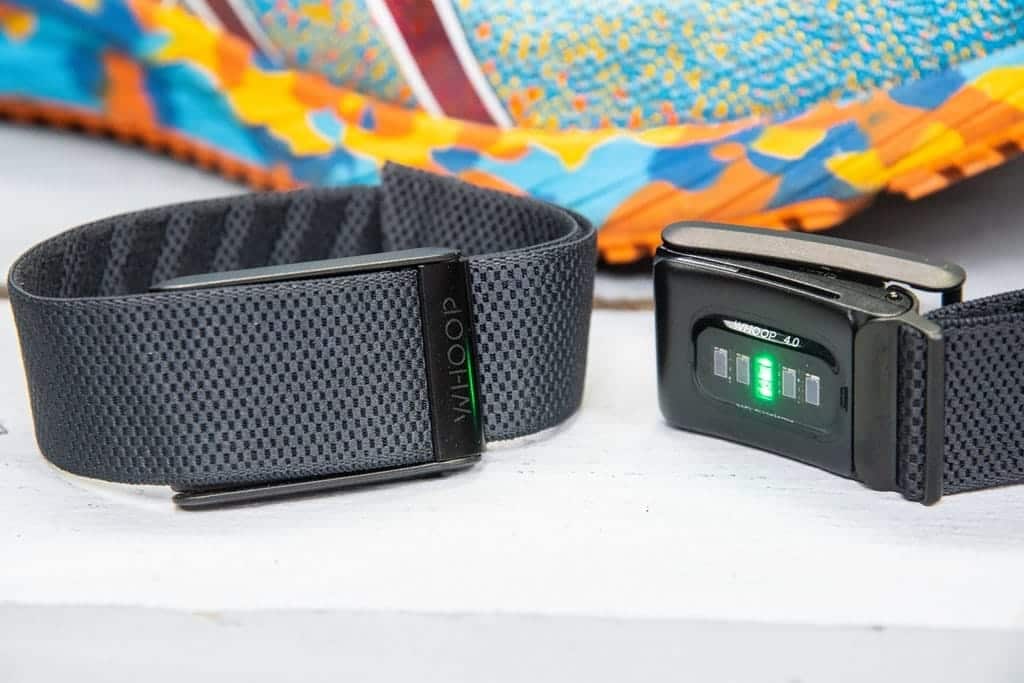
A black wristband sits on a nightstand, screenless and quiet, its tiny light blinking once a day whether anyone is wearing it or not.
It never asked for a credit card at checkout.
It asked for one about a year later instead.
That is by design, not by accident.
And the design raises a question worth asking before anyone straps one on: what actually happens the day the payment stops.
Why the band itself cannot work without a live membership
The mechanism is simple once you see it: the hardware was never really the product. The sensors on the wrist only collect raw signal, and all of the actual work, the recovery scores and coaching, happens on servers that the company controls and meters by subscription. Cut the connection to those servers and the band has nothing left to do.
That is confirmed in plain language by the company itself. Membership must stay active to unlock any feature, since even if your device is connected to the app, your membership must be active to unlock WHOOP features.
One plain-English breakdown of the policy put it bluntly: once that membership lapses, the device stops collecting new data. It basically turns into a rubber bracelet. So the object on your wrist and the service in the cloud are, for practical purposes, one single product with two names.
Compare that with a smartwatch, where the operating system lives on the device itself. This is different from something like a Garmin or the newer Google Fitbit Air, where you pay for the device upfront, and the app works whether or not you subscribe to anything extra.
What the checkout screen actually shows a new buyer
Walk through an actual purchase and the pricing looks almost deceptively simple. Whoop has no upfront device price, you pay a yearly membership and the band is included. As of 2026, publicly reported plans run from about $199 per year for the entry tier up to about $359 per year for the top medical-grade tier.
There is no separate line item for hardware anywhere on the receipt. So the band that lands on your doorstep carries no price tag of its own.
The price is a membership, and the band comes with it at no separate charge; you do not buy a device and then optionally subscribe; the subscription is the product, and the hardware is bundled in. That framing matters, because it means renewing is never optional the way an app subscription usually is.
Meanwhile, rival wearables split the cost differently. This is the opposite of Apple Watch or Garmin, where you pay once for the device and owe nothing after, and it is closer to Oura, except Oura Ring 4 starts around $349 plus a separate membership of roughly $69.99 per year.
Where the evidence for the catch actually comes from
None of this is speculation pieced together from anonymous complaints. The company publicly addressed the policy after a backlash over an upgrade fee last year: in response to mounting criticism, WHOOP reversed course on 10 May 2025, updating its policy to grant free WHOOP 5.0 upgrades to members with 12 or more months remaining on their subscriptions and promising refunds for those mistakenly charged upgrade fees.
A company statement at the time put it this way: “We’re updating our upgrade eligibility to ensure it reflects both our values and your expectations. We heard your feedback, especially from those of you with more than 12 months remaining on your membership,” Whoop said.
Customer reviews echo the same structural complaint across hundreds of entries on independent review platforms. One recent one-star Trustpilot review described the billing timing this way: “They advertise that you get one month free, but what they don’t inform you about is that exactly 30 days after receiving the watch, they charge you for a full one-year subscription.”
So the pattern holds across three separate sources: the company’s own support forum, its own public statements, and its own paying customers. That is about as solid as sourcing gets for a pricing structure that lives entirely inside private billing systems.
Where this model runs into real limits
Even defenders of the approach concede the long-run math gets uncomfortable. Over a few years that can cost more than a one-time-purchase rival like Apple Watch or Garmin , which carries a higher up-front price but no required ongoing fee.
Because the servers hold the intelligence, a band that falls behind on payment does not merely lose extra features the way a streaming account might. The band stops syncing new data the moment your membership ends.
That gap has already pushed outside developers to step in. Whoop is built around a subscription-first model: as long as you’re paying monthly or annually, you get access to all the data and insights the band collects. Stop paying, though, and the device loses most of its usefulness. An Android app called Noop lets you pair a Whoop device with your phone and continue viewing much of the data it collects without paying a subscription , though it cannot waive the upfront membership required at purchase.
None of that erases the convenience many owners genuinely value, the same instinct that drives interest in other wearables with their own hidden running costs.
What it means for anyone eyeing one on a store shelf
The lesson is not that subscription-based hardware is a trap, since plenty of buyers happily keep paying for years and call it worth it. Owners who have stuck with the device for years on independent review platforms often cite continuous feature improvements as the reason they keep renewing.
Even so, the honest framing is that this is rented intelligence wrapped around owned plastic, closer in spirit to daily billed software than to a traditional gadget purchase.
So the fair question before buying is not whether the coaching is good, but whether the household budget can absorb a yearly bill indefinitely. Walk away from the membership, and the hardware does not downgrade gracefully.
It just goes dark. That tradeoff is now written plainly into the company’s own policies and confirmed by its own public statements, so nobody buying one today can say the terms were hidden. The catch was always there, just quieter than the pitch.
