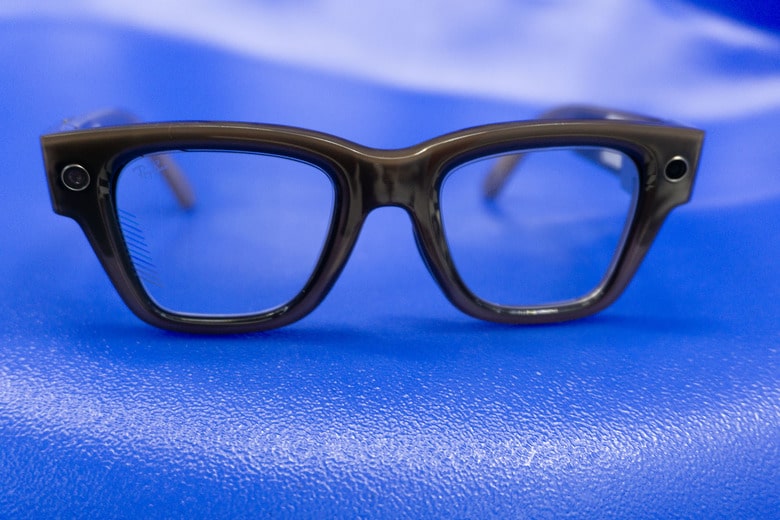
A cracked lens on an ordinary pair of eyeglasses is usually a quick errand and a modest bill.
Pick up a newer kind of frame instead.
One with a tiny screen built into the lens and a wrist worn band sold alongside it.
Drop that pair and the damage does not stop at the glass.
So what actually decides how much it costs to put the pieces back together?
Why the price splits into pieces instead of one flat fee
The mechanism is simple once you see it: a smart glasses frame is not one object for repair purposes, it is three. There is the frame and lens assembly, there is the separate wrist worn band that reads muscle signals to control the display, and there is the electronics stack wired into the frame itself.
Each piece fails differently, so each gets billed differently. Meta’s own coverage page lists hardware categories including in-box accessories and manufacturer defects separately from service fees , treating lenses and the band as three distinct line items rather than one repair category.
A cracked non-prescription lens runs a $100 per claim service fee under the standard limited warranty. Prescription lenses run $150 per claim, and the Meta Neural Band is billed at $30 per claim , according to warranty comparison.
Traditional opticians treat a frame and its lenses as a single unit, with no wristband, no battery and no separate hardware tier to price out.
What the device and the plan actually cost at checkout
The glasses themselves start at $799 for the display model, which Meta’s product page confirms starts at $799 for the bundled purchase. Each pair comes with Meta Neural Band, an EMG wristband that interprets the natural signals created by your muscle activity to navigate the features of your glasses , sold as an inseparable pair with the frame.
Layered on top of that purchase price is Meta Warranty Plus, the company’s optional extended coverage. For protection on the Meta Ray-Ban Display specifically, the plan costs $79.99 for non-prescription lenses and $99.99 for prescription lenses , according to warranty plus pricing.
That plan stretches the included one year limited warranty out to two years and adds accidental damage coverage the base warranty skips entirely.
But even with the plan active, claims still carry those same per-incident fees for lenses and the band. So the upfront plan cost and the per-repair cost are two separate bills layered on top of the original $799.
Where the comparison to ordinary eyewear breaks down
A separate account of standard Ray-Ban Meta prescription pricing, for the camera-equipped line without the in-lens display, describes most VSP and EyeMed plans treating Ray-Ban Meta like any Rx frame, typically about $350 out of pocket . Insurers treat the frame as ordinary eyewear rather than pricing in its electronics, which leaves a gap between what coverage recognizes and what the device actually contains. The Display model itself does not yet offer the same prescription lens path through opticians, which is part of why Meta prices its own prescription lens claims separately rather than leaving it to vision insurance.
Meanwhile the base limited warranty that ships free with every pair only covers manufacturing defects. Accidental damage from handling, including eligible liquid spills is excluded unless a buyer adds the paid plan.
That timing detail matters. Meta Warranty Plus for Meta Ray-Ban Display glasses can be purchased within 60 days of purchasing the device in a store, a window that mirrors other premium electronics. Miss it, and any later repair comes at full price.
How this compares with other wearables already on the market
Smart glasses are not the first wearable to split repair costs this way. A similar logic now governs humanoid machines on factory floors, where a dexterous replacement robot recently took over duties after helping assemble vehicles, with each part priced and maintained on its own schedule.
Wrist worn health trackers show the same pattern in miniature. Industry pricing on devices like smart rings already treats the sensor band and its software as separate cost centers, mirroring how the Neural Band is billed apart from the frame it straps to.
That fragmentation is becoming the default shape of wearable ownership costs generally, showing up even in adjacent categories like coding tools that price cheaper and pricier paths separately instead of bundling everything into one flat rate.
What it means for anyone eyeing a pair
None of this makes the Ray-Ban Display a bad purchase, but it does mean the $799 sticker is only the entry fee. Add the $99.99 warranty plan and a single prescription lens claim, and a buyer can clear $950 before anything else goes wrong.
Even so, that structure is arguably more honest than one bundled price hiding which part actually failed.
A buyer who cracks a lens pays for a lens, not for a wristband that never left their wrist unscathed. What remains open is whether rivals copy this itemized approach or undercut it with a simpler flat fee, but for now the frame, the band and the plan price out as three separate purchases.
