A countertop machine hisses to life on a Tuesday morning, steam curling off a milk pitcher like it does in a real cafe.
The owner paid a few hundred dollars for that ritual, maybe more.
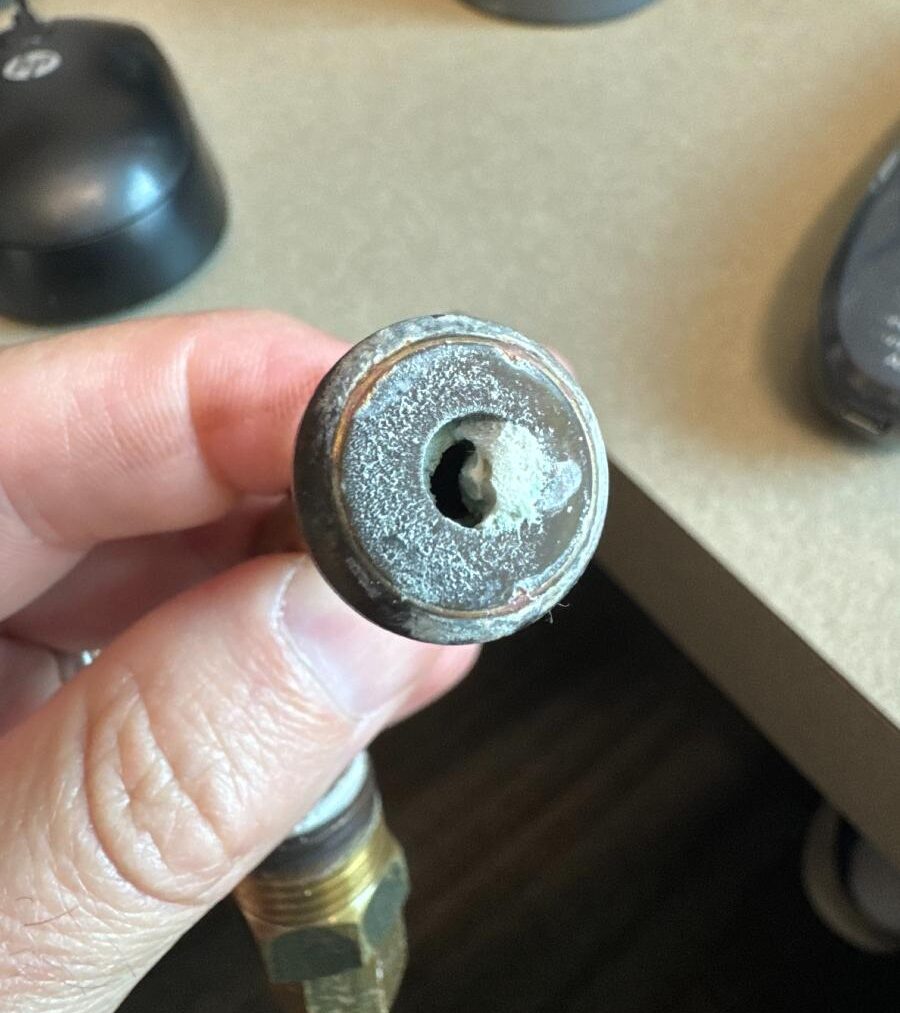
Inside the metal shell, a small boiler is filling with something nobody budgeted for.
It is not coffee grounds or old milk.
It is mineral crust, and it is already writing itself into the machine’s paperwork.
So what actually turns ordinary tap water into the thing most likely to end a home espresso habit early?
How ordinary tap water turns into a machine killer
Every espresso machine boils water again and again, and that repeated heating is exactly what drags dissolved minerals out of solution. Calcium starts precipitating out of solution when heated and depositing inside the boiler, the heating element, and the group head once hardness climbs well past the ideal range.
That buildup has a name, and it is scale, widely cited as the leading cause of early espresso machine failure. The trouble is scale forms invisibly at first.
It clogs tiny passages, coats heating elements and slowly throws off the machine’s internal sensors long before anyone notices weaker shots. By the time scale shows itself as a leak, the damage already sits inside sealed parts nobody can see.
Manufacturers put a number on it. Hardness in the mid double digits of parts per million sits near the safe floor cited by industry water guidance, while anything much higher invites scale that damages heating elements, clogs water lines, and leads to leaks. Most American tap water drifts well outside that narrow band, which is how an appliance marketed as a decade long investment ends up fighting its own water supply from day one.
The kitchen ritual that hides an industrial problem
Picture the machine as it actually gets used, one shot before work, one refill of the reservoir straight from the kitchen tap, repeated for months without a second thought. Nobody tests the water going in.
That gap between daily habit and the machine’s real requirements is where the catch lives. A reservoir filled with municipal water that tests at 150 or 200 parts per million, common in many hard water regions, is already outside the safe range many machine makers specify.
And too pure a water can cause a different failure entirely. Some mineral content is necessary for the best tasting espresso, and also for the machine to run without overfilling the boilers, since reverse osmosis systems typically strip out the minerals the internal sensors need to function.
So owners are stuck threading a needle most never knew existed, using water soft enough to spare the boiler but mineral enough to keep the sensors working. It is a hidden operating requirement more commonly tied to a car’s oil grade than a kitchen gadget, and it rarely makes it onto the sales page.
What the hardest evidence and the fine print actually say
Industry coverage of this exact mechanism has piled up as more home baristas run into it after their first service call. One widely cited maintenance guide lays it out bluntly: problems arising due to poor water quality are not covered by warranty.
Brand specific policies back that up. One repair and warranty provider notes that water quality issues or damage caused as a result of using inadequately treated water will void a machine or grinder’s warranty, with scale sitting squarely inside the water quality clause.
A major Italian machine maker’s own installation manual puts it even more plainly, warning that the warranty is void if water parameters are not kept within the range specified in the installation section. Repair technicians who service home machines routinely describe hardness as the first thing they check before opening a boiler, since scale is behind the majority of the failures they see.
Coverage disputes over a hidden fee or cost are nothing new to American consumers, but here the fee shows up as a denied repair instead of a receipt. Even the fix carries risk, since a botched home descale can void coverage just as fast as neglect does.
Where the fine print runs into real limits
None of this means every machine fails, or that hard water guarantees a claim gets rejected. Plenty of owners run machines for years on untreated tap water with no issue, especially in cities whose supply sits near the safe range already.
The complication is that hardness varies block to block, let alone city to city, and a reading from a neighbor’s filter is not reliable evidence for a dispute. Municipal and well water quality changes seasonally, so one test rarely settles the question for good.
Repair technicians also note that scale related failures can look identical to normal wear. That ambiguity benefits the manufacturer far more than the buyer, since proving the water stayed in range falls on whoever files the claim.
What it means for anyone eyeing a countertop upgrade
The fix, when there is one, is not expensive or exotic. A cheap hardness test strip, a basic filter pitcher, or an inline filter can keep most tap water inside the safe band.
And descaling on schedule remains far cheaper than a boiler replacement. What is still open is how clearly any of this gets communicated at the point of sale.
Most boxes mention warranty length in bold print and bury the water requirement in a manual nobody reads until something breaks, which is exactly backward for a machine that depends on it daily. Treat the water like part of the machine’s actual fuel, not an afterthought, and the few hundred dollar investment has a real shot at lasting as long as the warranty always promised.
