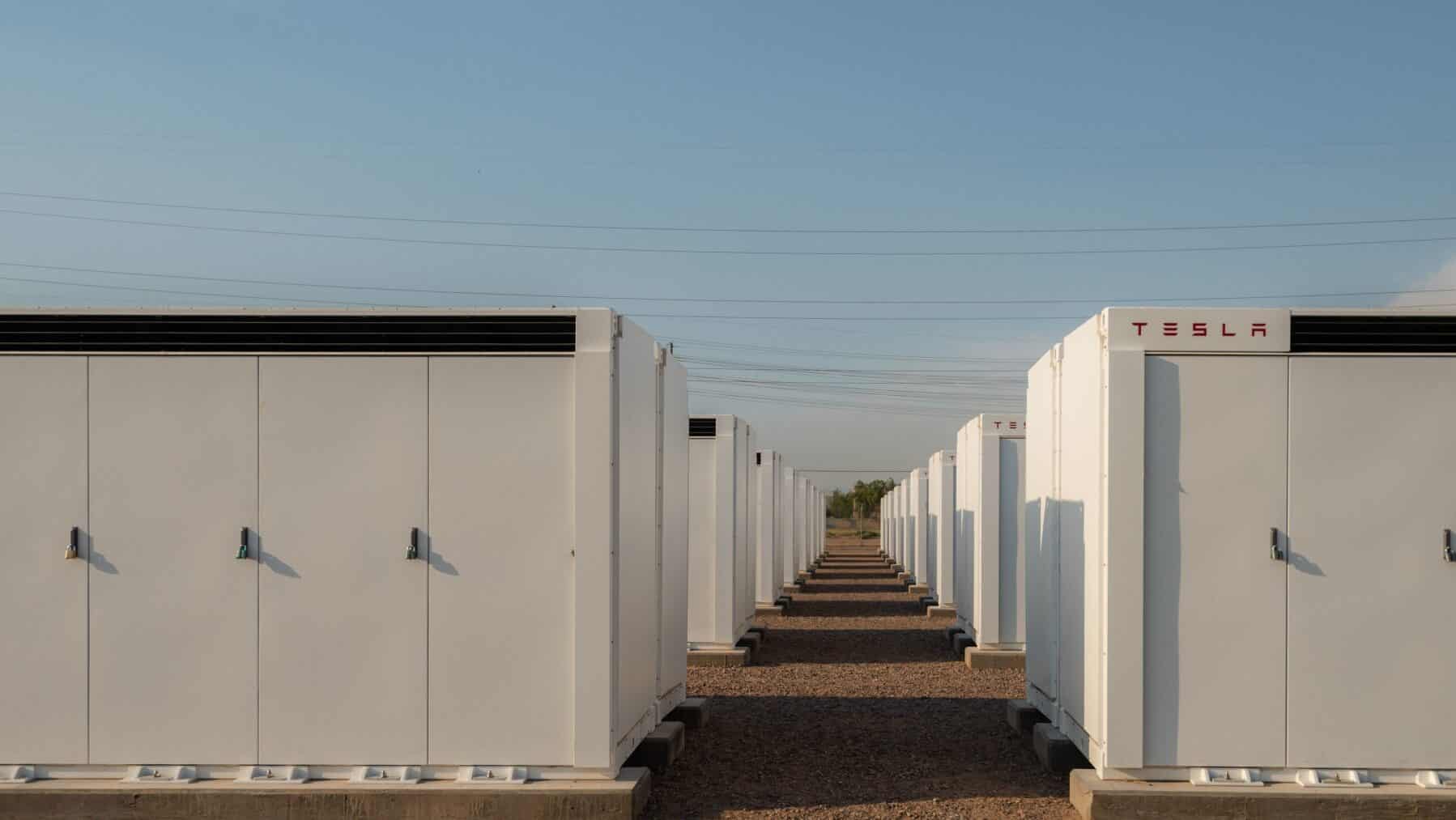
Four-hour battery storage systems reaching commercial operation in the United States this year cost 65 percent to 75 percent less than new natural gas peaker plants, according to a global cost analysis released by Wood Mackenzie.
The levelized cost of electricity for four-hour battery storage is now cheaper than gas peakers in markets across the globe, according to a Wood Mackenzie analysis published Thursday.
A global cost crossover
Wood Mackenzie’s latest global report on levelized cost of electricity (LCOE) shows that advancing technologies and market dynamics continue to drive divergent prices, with four-hour battery storage now less expensive than open-cycle gas turbines in all 43 markets where both technologies were modeled.
The firm said the shift stems from a combination of forces pulling gas and storage costs in opposite directions.
In the United States for a 2026 commercial operation date, 4-hour battery storage can be 65% to 75% cheaper than new open-cycle gas turbine gas peakers, a Wood Mackenzie spokesperson said Oct. 8, 2026 , according to the Wood Mackenzie findings.
Gas turbine shortages push up peaker costs
Much of the shift traces back to a supply squeeze among the handful of companies that build gas turbines.
The three major gas turbine manufacturers, GE Vernova, Siemens Energy and Mitsubishi, each have backlogs ranging from 35 GW to 116 GW as they plan capacity expansions , limiting how quickly new peaking plants can reach the grid.
Gas turbine prices are projected to rise to $600/kW by the end of 2027, a 195% increase since 2019, Wood Mackenzie said in April , a separate analysis from the firm found.
Meanwhile, battery manufacturing capacity keeps expanding, pushing storage costs in the opposite direction.
Ahmed Jameel Abdullah, a principal analyst at Wood Mackenzie, said “this economic shift is decisive and widening.”
Data centers reshape the US investment case
In North America specifically, the firm pointed to a structural change driven by surging electricity demand from data centers.
In North America, investment in gas generation capacity is entering “a supply deficit cycle through the late 2030s,” the firm said, “driven by data centre load growth, a dynamic that keeps thermal capital costs elevated and reinforces the long-term economic case for renewables and storage.”
That dynamic adds another variable for utilities and grid planners already weighing where to route new large electricity users, an issue that has also drawn scrutiny over how EV charging load interacts with the grid during peak demand.
Regional costs still vary widely
The report found sharp regional differences even as the overall trend holds everywhere.
In the Middle East and Africa, where utility-scale solar already leads at US$37/MWh, four-hour storage is forecast to fall a further 33% to US$80/MWh by 2035, displacing gas peaking on cost across every gas market in the region.
China remains the global benchmark, with storage costs more than 55% below the Asia Pacific average excluding China , though markets including Japan, Australia and the Philippines remain at a premium due to import duties, elevated installation costs and domestic manufacturing policies.
The findings arrive as the US Energy Information Administration has separately tracked rapid growth in American battery deployment, with US utility-scale battery storage capacity sustaining an annual average growth rate of 70 percent over the past three years, reaching 43.6 gigawatts of operational capacity by the end of 2025 .
That buildout has already reshaped how utilities plan for peak demand, including efforts such as a Minnesota battery deal that locked in record storage capacity to help manage grid stress during high-demand hours.
Wood Mackenzie cautioned that lower lifetime costs do not eliminate every advantage gas retains, particularly for long-duration backup during extended shortages.
But the firm’s analysts said the broader cost trajectory now favors storage and solar pairings over new gas peaking investment across nearly every market they studied.
