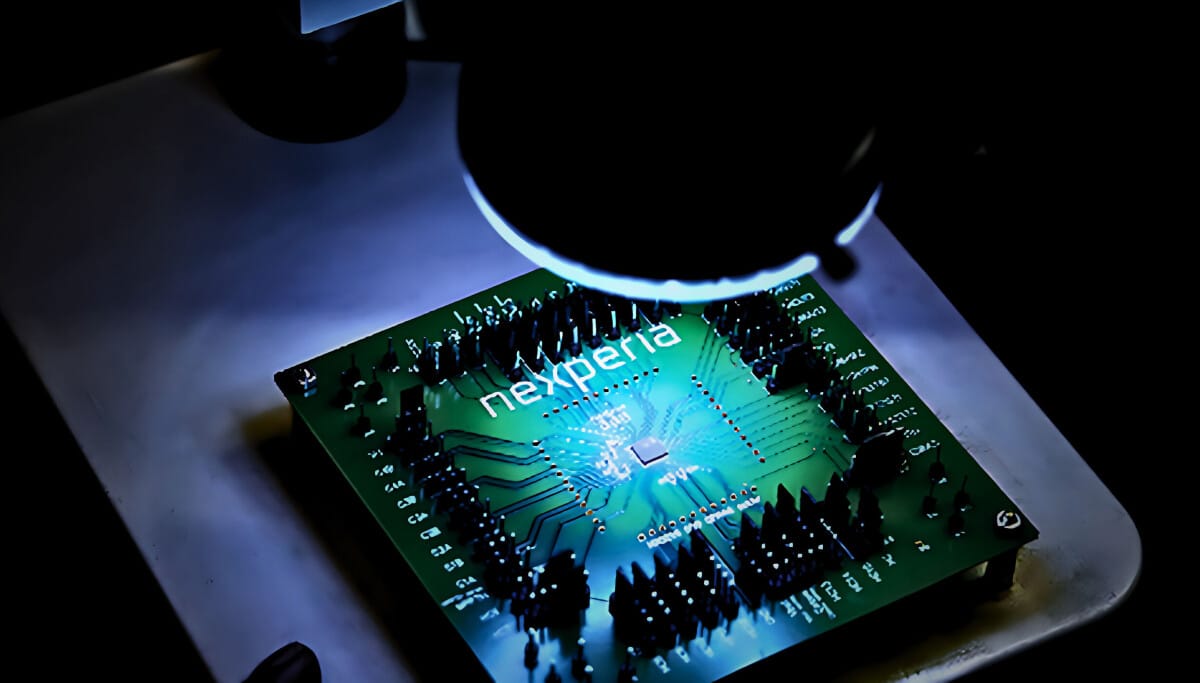
Chipmaker Nexperia suspended shipments of silicon wafers to its own assembly plant in Dongguan, China, in late October 2025, reigniting a global supply crisis that forced Honda to cut vehicle production in North America.
The disruption’s aftershocks are still shaping how automakers do business, with Volkswagen this week naming NXP Semiconductors as a chip supplier in a move tied to the fallout.
Nexperia imposed the suspension on 26 October, citing the local management’s failure to comply with agreed contractual payment terms, according to a letter dated 29 October and signed by interim Chief Executive Stefan Tilger. The suspension followed a payment dispute with the plant’s local management, according to Automotive World.
The move choked off supply at the plant that handles final assembly and testing for a large share of Nexperia’s automotive chips.
Honda cut output in response
Honda was the first automaker to publicly confirm fallout from the disruption. Honda cut production by half at its Alliston, Ontario plant starting October 27, and had planned to halt the line completely on October 30 before easing back in at half capacity on November 6 , which manufactures the CR-V and Civic models.
Nissan CEO Ivan Espinosa told CNBC that the company is setting aside a 25 billion yen ($163 million) provision for supply risks, in part to “absorb” the impact from the Nexperia crisis on production. Mercedes-Benz is “scurrying around the world to look for alternatives,” CEO Ola Kallenius said.
The part at the center of the dispute is not an advanced processor. Nexperia makes roughly 40% of the world’s supply of a basic transistor , a component used in items like door locks, climate control fans and speedometer displays.
While Nexperia may not produce the most advanced semiconductors, automakers widely utilize its chips in systems such as locks, climate control, and speedometers, making it difficult to quickly substitute alternative suppliers even though the chip itself is simple and inexpensive.
Automakers turn to direct chipmaker deals
The 2025 disruption pushed automakers to rethink how directly they deal with chipmakers, a shift already visible in recent moves by Japanese automakers exposed to the same Dongguan packaging bottleneck.
Volkswagen has now moved further in that direction. NXP’s S32K5 family of microcontrollers is intended to serve as an important building block of Volkswagen Group’s future software-defined vehicle (SDV) architecture, supporting zonal control across all brands and vehicle segments. The S32K5 family will serve as the core processing technology for zonal controllers in the architecture being developed by Rivian and Volkswagen Group Technologies (RV Tech), the joint venture between Volkswagen and Rivian. The first vehicle using the architecture is due in 2027.
Choosing a European chip partner follows the 2025 Nexperia export disruption that threatened Volkswagen’s production, though NXP’s advanced automotive chips still rely partly on Asian foundries. That shift toward direct chipmaker relationships, rather than relying solely on tier-one suppliers, has become increasingly common across the industry following the 2025 disruption, as recent supplier software partnerships also reflect.
Why it matters
The Dongguan suspension underscored how fragile the arrangement remained even after Dutch and Chinese authorities later worked to ease export restrictions.
Because many Nexperia parts are soldered directly into vehicle components, automakers could not simply swap in a replacement chip without months of testing and certification, leaving plants vulnerable to even brief interruptions.
Honda gradually resumed operations across its North American vehicle assembly plants as the supply chain strain from the Nexperia dispute began to ease, though the company has not disclosed how long its alternative sourcing measures could sustain production or whether long-term supply agreements were being renegotiated.
A year later, the episode continues to shape industry strategy, with automakers like Volkswagen locking in direct chipmaker partnerships to guard against a repeat of a dispute over a part most drivers will never see.
