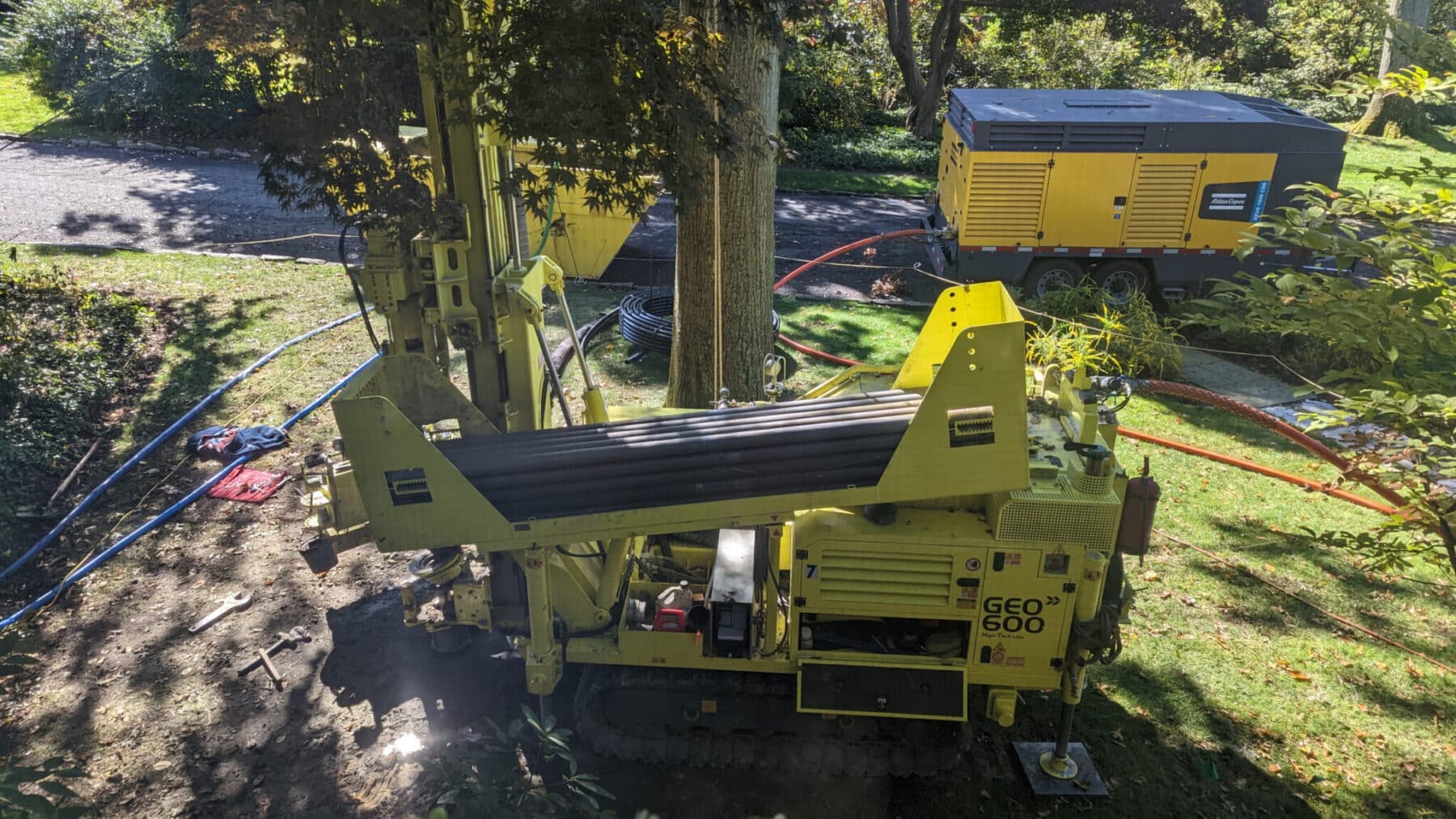
A drilling rig sits in a side yard, its mast angled over a hole barely wider than a dinner plate.
Below it runs hundreds of feet of black plastic pipe, coiled and waiting.
A homeowner watches from the porch, having already signed a contract worth tens of thousands of dollars.
The sales pitch promised the bill would pay for itself within a decade.
That math just got a lot harder to hit.
Why the payback clock just got longer
The whole case for a geothermal heat pump rests on a simple trade. Homeowners pay far more upfront than they would for a furnace or an air-source heat pump, then recover that gap through lower monthly electric bills for years afterward. The federal tax credit was the lever that made that trade work for ordinary households, not an exotic one.
That lever is gone. The Residential Clean Energy Credit equals 30% of the costs of new, qualified clean energy property for your home installed anytime from 2022 through December 31, 2025. The IRS’s own guidance is blunt about the cutoff, leaving nothing for anyone finishing an installation afterward.
Without it, the entire cost premium over a cheaper system has to be earned back through electricity savings alone. That is the hidden catch: the payback window marketed to homeowners for years assumed a subsidy check that simply does not exist for anyone finishing installation now, a timing trap similar to the one that cost one homeowner a $10,500 refund by finishing two weeks late.
What a real backyard installation actually costs
A typical residential system runs anywhere from twenty thousand dollars to well past fifty thousand, depending on whether the loop runs horizontally through a wide yard or vertically down a narrow borehole. The indoor heat pump unit itself is only part of that bill.
So the real expense sits underground, literally. Drilling or trenching for the loop, the buried piping that exchanges heat with the earth, routinely makes up close to half the total installed price on a vertical system. That cost barely moves no matter how efficient the equipment above ground becomes.
Yet the upside is real and long lasting. The inner components of these systems last for approximately 25 years. The ground loop can last 50 years or more. That durability is the entire argument for treating this as a decades-long bet rather than a simple appliance purchase, a logic that echoes how homeowners in a shared ground loop deal elsewhere have had to weigh long contracts against upfront savings.
What the government’s own numbers actually say
The Department of Energy’s consumer guidance has long been the industry’s favorite talking point. DOE’s Energy Saver program states that the additional cost of a geothermal system compared with a conventional alternative is typically recovered in energy savings within 5 to 10 years, depending on local energy prices and available incentives.
That range, though, was built with the tax credit baked in. One detailed cost breakdown drawing on that same guidance separates the two scenarios clearly: payback without incentives runs 8 to 15-plus years, against a shorter window when rebates apply.
Other independent estimates land in a similar place. A guide comparing geothermal against air-source alternatives found that a vertical loop system costing $15,000 more than an air-source heat pump before rebates needs 19 to 30 years to pay back the premium through operating savings alone. A mid-range estimate for a $20,000 premium without incentives put payback near 16.7 years replacing gas heat.
One field case makes the gap concrete. A university campus conversion tells a slower story: a national lab measured a simple payback of 16 years against the baseline system, shortening to 9 years at the regional average ground loop cost, a difference the analysis attributed to the gap between list price optimism and installed cost reality.
Where the math still holds up fine
None of this means geothermal stopped working as a heating and cooling system. The underlying physics has not changed: pulling heat from stable underground temperatures instead of cold winter air still means dramatically lower electricity use per degree of comfort delivered.
Even so, the fuel being replaced matters enormously now that the subsidy cushion is gone. Homeowners swapping out propane or heating oil still see the fastest realistic paybacks, sometimes under ten years even without a credit. Those replacing cheap natural gas face the slowest math of all.
Climate and how long someone plans to stay matter just as much. A long cold winter with real summer cooling load runs the loop hard enough to close the gap faster.
That is why installers increasingly frame this as a fifteen-year-plus commitment rather than the decade once advertised, a dynamic familiar from the long-term lease disclosures now required in shared geothermal lease arrangements sold alongside new construction.
What buyers should weigh before signing anything
For anyone currently pricing a system, the lesson is less about avoiding geothermal and more about pricing it honestly. The sales literature quoting a flat 5 to 10 year payback was never wrong exactly, it was simply describing a world where the credit still existed.
So the smarter move is asking installers for a site-specific estimate that assumes zero federal credit, then checking whether state or utility rebates can close part of that gap. Some states and utilities still offer meaningful incentives that stack, even with the federal piece gone, a pattern already visible in shared geothermal pilots in Maryland that spread costs differently across neighbors.
And the long view still favors patient owners. A buried ground loop good for half a century effectively outlasts two or three furnace replacements, meaning a homeowner who clears the new, longer payback eventually runs a system at a fraction of ordinary operating cost for decades afterward.
That tradeoff has not disappeared, it has simply gotten more honest. Anyone comparing bids this year is better served treating the old decade-long payback figure as history, and asking every contractor to show the math without the credit built in.
