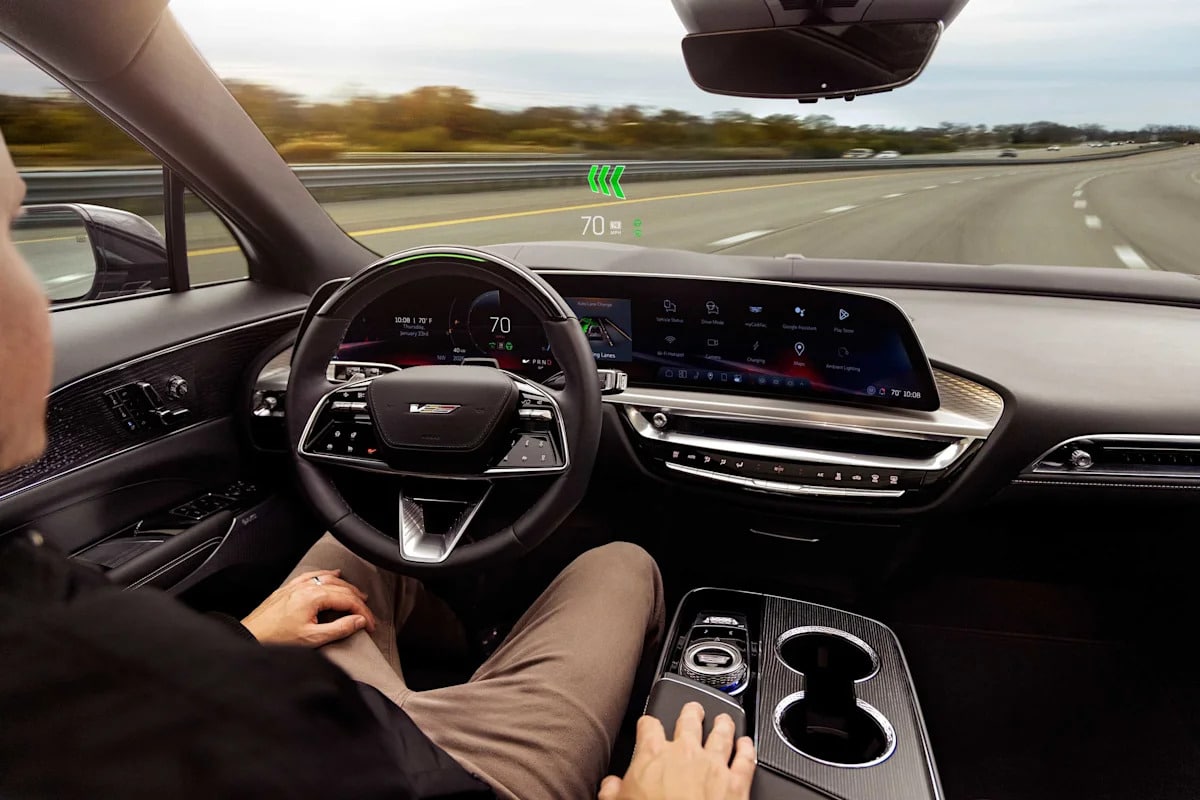
The steering wheel lights up a thin ring of color, and the driver’s hands drift into their lap.
That small glowing ring is the whole sales pitch. It arrives bundled into the window sticker, framed as a gift already paid for.
Three years pass before anyone thinks about it again. Then a renewal notice lands in an inbox, and the math changes fast.
How the free years actually work under the hood
The hands-free system in question is General Motors’ Super Cruise, a camera and radar based driver assistance feature built into select Cadillac, Chevrolet, Buick and GMC models. The system uses Global Positioning System sensing, GPS-enhanced data, a high-precision map and a network of cameras to maintain control of vehicle steering on compatible roads , and the hardware comes installed at the factory.
It is bundled with connectivity that keeps the maps current. That connectivity is the real product being sold, not the steering itself.
Every new vehicle equipped with Super Cruise includes three years of connectivity, and after this period ends, owners must purchase an eligible OnStar Super Cruise plan to continue using the service , a window that feels generous on day one. Once those three years end, the car still has every sensor it was born with, but the software will not drive itself without an active connection paying to keep the maps and system checks alive.
So the “free” years are really a prepaid subscription folded into the purchase price, not a permanent feature. Which is exactly why the bill that shows up later catches so many owners off guard, even though the automaker disclosed it from the start in the fine print of the window sticker.
What the renewal notice actually says
Picture a Cadillac Escalade or a Chevy Equinox EV three years down the road, still humming along fine, when an email arrives asking for a decision. The monthly plan runs $39.99 a month in the US , with an annual option that saves a little but still adds up over time.
That is not pocket change. Owners who leaned on the system for long highway commutes tend to see the value immediately.
Hands-free highway stretches are exactly what the camera and radar suite was built to handle, so Super Cruise makes the most sense for drivers who spend a lot of time on the interstate, whether that means a long commute, frequent road trips, or regular multi-state driving, while for someone who does not have a long commute and uses their vehicle for short trips and quick errands, the value just isn’t there . But owners who mostly drove around town, the way plenty of Bolt and Equinox EV buyers do, often find the subscription hard to justify once the free clock runs out.
One detail that rarely makes the brochure is that Super Cruise capability transfers with the car, so a used buyer could inherit either an active subscription or a lapsed one, a wrinkle that now shapes pricing much like the trend seen as wholesale prices firm up across the used market.
The real number behind the renewal decision
Here is the figure that turns this from a minor annoyance into a genuine catch. In 2024, about 20% of roughly 18,000 users signed up for a Super Cruise subscription after the complimentary subscription ended , GM’s own leadership said at the time. Since then, renewal has climbed as the program has matured: GM’s most recent earnings disclosures put the attach rate after the prepaid period at 30 to 40 percent , including a “low 40% range” among customers who bought pre-owned Super Cruise vehicles .
Put plainly, even with that improvement, something close to three out of five drivers who got three years of hands-free highway driving bundled into their purchase still let it lapse rather than pay to keep it going.
That is a notable reversal for a feature GM has marketed as one of the most capable systems on the road, even as the trend line is moving in the automaker’s favor. It ties closely to owner renewal behavior rather than any flaw in how the system actually drives, and GM still counts the subscription business as a win.
The company has said more than half of owners use it weekly, and close to 85% use it at least once a month , among those who do keep paying. The gap between heavy use among subscribers and a renewal rate still below half suggests the system works well for a narrower group of drivers than the showroom pitch implies.
Where this sits against the rest of the industry
GM is far from alone in building a car around a feature that quietly expires. Ford’s BlueCruise followed a similar shape for a time: on 2024 model-year vehicles, activation cost $2,100 for three years at purchase, after a free 90-day trial. Ford has since discontinued the three-year subscription option and lowered its ongoing pricing to $49.99 a month or $495 a year , with new buyers now also able to pay a one-time fee for permanent access instead.
Tesla took the opposite structure entirely, selling no free years at all.
It instead charges a flat monthly fee from day one for its most advanced driver assistance tier, with no complimentary runway built into the purchase at all. Mercedes has now joined the pattern too, with a three-year access period to its upcoming driver assist system priced at $3,950, or offered as a monthly subscription instead.
So the pattern crosses nearly every brand chasing this technology. Resale buyers increasingly care whether a subscription on a used EV is active or lapsed, a detail that now shapes pricing the way extra options once did, not unlike how used EV values have defied expectations elsewhere in the market.
What buyers should actually weigh before the trial runs out
None of this means the technology itself disappoints. Reviewers and safety researchers have consistently found the camera based attention system does a credible job of keeping drivers engaged, addressing a real safety gap that regulators and consumer groups have pushed automakers to close for years.
Even so, the lapse rate is the number every buyer weighing a Super Cruise equipped trade-in or new purchase should know before the three years start counting down.
A commuter logging long interstate miles every week gets a very different return than a driver who mostly sees stoplights and side streets. That is why the smartest move is treating the subscription like any other recurring cost tied to a car, weighed against actual driving habits rather than the glow of a free trial.
The feature works. The question the renewal email forces is simply whether it is worth paying for once the free years run out.
