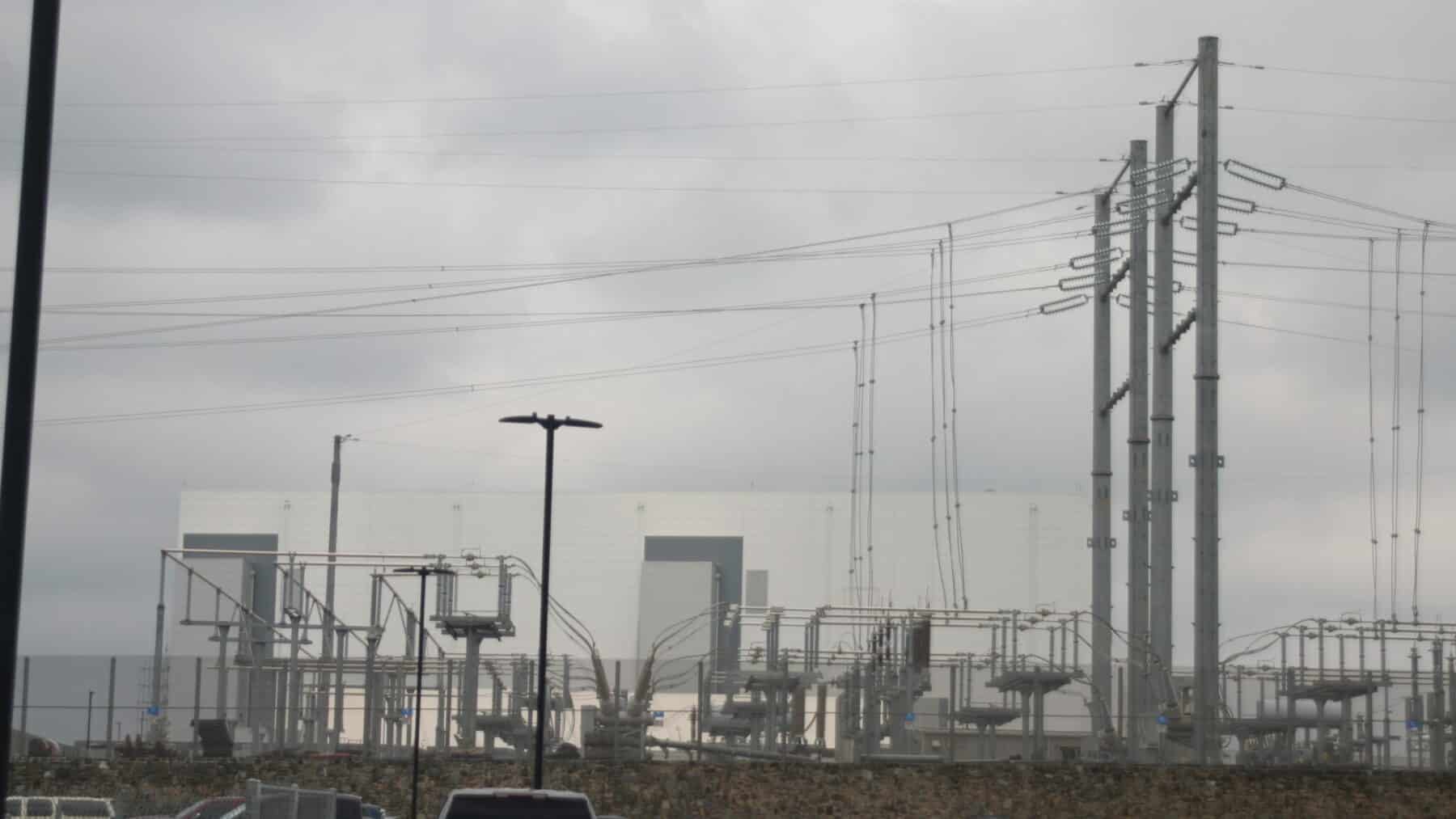
Soybean rows once covered the ground where steel now rises in rural Washtenaw County.
Transmission crews have spent months widening the lines feeding one unfinished building.
Nothing about the site looks unusual from the road.
But a single clause buried in the paperwork behind it carries more financial weight than most state budgets.
So what happens if whoever eventually fills that building ever decides to leave?
Why utilities started pricing the cost of a customer leaving
Utilities build power plants, substations and transmission lines years before a giant customer ever flips a switch. When that customer is a single massive data center, the utility may need to add hundreds of megawatts of new generation and wiring just to serve one address. If that customer later shrinks its order or leaves altogether, the utility is stuck holding infrastructure nobody else needs.
So commissions and utilities have begun writing exit fees directly into large load contracts. The idea is simple: make the leaving customer pay for the capacity it asked for, even if it stops using it.
Without that clause, the stranded construction costs would otherwise land on ordinary residential and small business ratepayers who never asked for the new plant. That is the mechanism behind the Michigan number, and it is now showing up in filings nationwide.
An analysis of regulatory filings reported that a Primary Supply Agreement between DTE Electric and Green Chile Ventures LLC, an Oracle subsidiary, documented a month-by-month schedule of minimum monthly charges and termination payments running from December 2027 to February 2045, for the 1.38 gigawatt Saline Township campus built to supply OpenAI’s Stargate program.
A data center the size of a small power plant’s entire output
To picture 1.38 gigawatts, think of a facility that could draw as much power as a mid sized nuclear reactor running flat out. That is the scale DTE is planning around in a county that recently grew soybeans and corn, and the surrounding grid is being rebuilt to match it.
Even before the termination number, the ongoing commitment is enormous. At full ramp, the 1.38 GW Saline Township data center operated by Oracle carries a minimum monthly charge of $19 million, whether or not the data center actually draws that much power every single day.
That minimum bill exists because DTE cannot simply build generation and transmission for a load this large and then hope the customer sticks around. Michigan regulators put the termination payment at roughly $2.3 billion if the contract were cancelled at the outset, with the DTE filing cited in the regulatory analysis pricing it at $2.26 billion. Regulators describe the underlying mechanism more simply: DTE’s contract with the data center requires a termination payment equal to up to 10 years of minimum billing demand if the data center stops operations earlier than contracted, and that formula is what produces the multibillion dollar figure at Oracle’s full contracted load.
Regulators did not stop at this single deal. One of the DTE data center contracts includes requirements for cost allocation and rate design proposals that ensure future large load interconnection customers pay the cost of interconnection, with a standard large load tariff for future customers of similar size now moving through its own review.
How other states are writing the same math into their rulebooks
Michigan is not alone, and the broader pattern shows up clearly once you compare states side by side. In Minnesota, the MPUC-approved termination provisions require the customer to provide at least 24 months’ notice before terminating its contract and pay a termination fee equal to 80 percent of its on-peak demand charges, over the lesser of the remaining contract term or 120 months from the date of termination.
Ohio regulators have been running similar math since 2024, when AEP Ohio first proposed a large load tariff with multi-year exit fees for data centers; the state’s Public Utilities Commission ultimately approved a version in July 2025 requiring data center customers of 25 megawatts or more to pay for at least 85 percent of their subscribed capacity over a 12 year term, with an exit fee equal to three years of minimum charges.
Oregon’s commission has been weighing competing proposals for large load tariffs, with consumer advocates pushing for stronger exit-fee protections so that a departing data center, rather than other ratepayers, covers the cost of capacity it leaves behind.
Advocates in these proceedings have argued that ordinary families should not be left underwriting a data center’s decision to walk away. The common thread across every state is the same worry that shapes nationwide debates over rising electricity bills, the kind already visible in a $456 million rate hike playing out in the same state: regulators trying to keep one category of customer from quietly reshaping what everyone else pays.
Where the collateral requirements get even more demanding
Exit fees only work if a utility can actually collect them, which is why newer proposals pair the fee with upfront financial security. Ohio utility AES Ohio proposed in 2026 combining ramp period minimum charges, three years of service term minimum charges and an exit fee into a single collateral package a data center must post before construction even begins.
That collateral would remain payable through curtailed, reduced, suspended or terminated service, unless the customer formally exits by paying the fee outright.
Even so, these mechanisms carry real limits. A formula on paper supplies no actual dollar figure until applied to a specific contract, so every new data center deal still needs its own negotiated number. Smaller utilities without Michigan or Ohio’s bargaining leverage may struggle to extract equally strong terms.
The same pressure is reshaping how utilities treat other large flexible loads, a theme echoed in how grid operators are rethinking record summer peak demand tied to EV charging elsewhere on the grid.
What the $2.26 billion number ultimately protects
None of this guarantees electricity bills stay flat for everyone else. But the exit fee shifts the financial risk of a canceled or shrinking data center back onto the company that asked for the power in the first place, rather than spreading it across every household on the grid.
That is a meaningful change from how utilities handled large industrial customers a decade ago, when fewer contracts spelled out what happened if a factory or server farm simply shut its doors early. The scale of today’s data center loads made that old silence too expensive to keep.
Michigan’s final order on DTE’s broader large load tariff is still pending, and other states are watching closely before finalizing their own versions. For now, the roughly $2.3 billion termination figure in the DTE-Oracle contract stands as the clearest public example yet of what regulators think one data center’s exit is actually worth.
