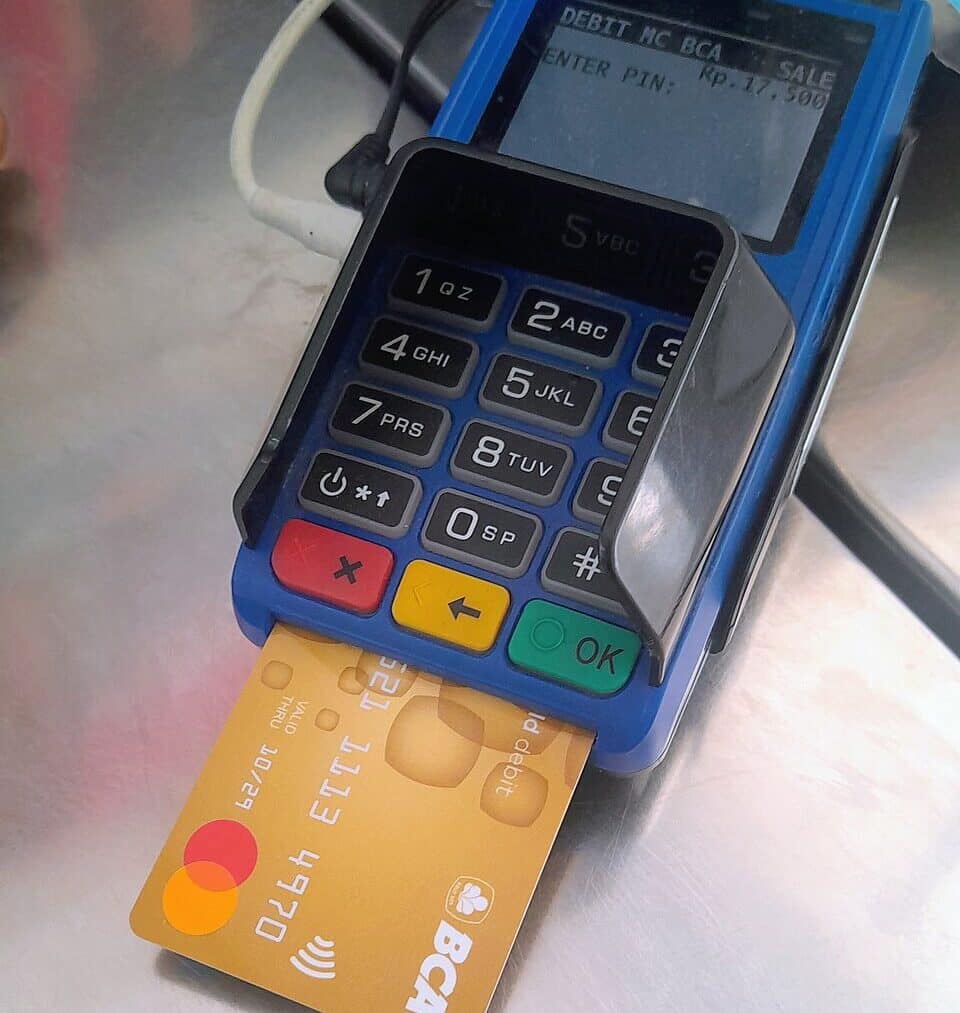
Credit cards have become the most commonly used payment method in the United States, accounting for 34 percent of consumer transactions in 2025, while cash has fallen to a distant third at 14 percent, according to a Pew analysis published September 30.
A decade-long reversal in how Americans pay
Cash tends to be used for smaller purchases, averaging $58 per transaction in 2025, compared with $74 for debit cards and $80 for credit cards , according to the Federal Reserve survey.
The shift marks a sharp reversal from a decade ago, when cash was the dominant way Americans paid for things.
Cash was still the most commonly reported payment type in the 2015 Federal Reserve survey, accounting for a third of payments that year. Then came credit cards, at 18% , with debit cards the second most popular.
Cash lost the top slot to debit cards in 2018, and credit cards then took the lead in 2022. Today, credit cards account for 34% of payments, with debit cards close behind at 31%.
Cash is a distant third at 14%.
Pew’s analysis draws primarily on the Federal Reserve Bank of Atlanta’s annual Survey and Diary of Consumer Payment Choice , which asked participants to report every transaction they undertook over a three-day period, including how much they paid and how.
Preference and habit do not always match
The data also reveals a gap between what payment method Americans would prefer to use and what they actually reach for. Nine out of 10 in-person credit or debit card payments are by people who want to pay that way.
But when it comes to cash, 70% of payments are made by people who would prefer another method, typically credit or debit cards.
That disconnect suggests cash persists less out of preference than circumstance, whether a merchant does not accept cards, a fee applies to card use, or a shopper simply lacks another option in the moment.
When shopping in person, more than three-quarters of Americans (78%) say they prefer using a credit or debit card, compared with just 16% who prefer cash. Cards are even more dominant online, where 92% prefer credit or debit.
The move toward cards and away from paper money mirrors how little friction now stands between a checkout tablet and a completed sale, with tap-to-pay and stored card details cutting the steps once required to hand over bills and coins.
Going cashless splits sharply by income
A separate Pew survey conducted from May 26 to June 1, 2026, found that a growing share of Americans are skipping cash entirely in a typical week.
Today, 42% of U.S. adults say they don’t use cash for any purchases in a typical week. This is up from 24% in 2015. Fewer, 12%, say they use cash to pay for all or almost all of their purchases in a typical week , down from 24% in 2015.
That shift is far from uniform across income groups. Pew found that 58% of people in households earning at least $100,000 make no cash purchases during a typical week, compared with 24% of those earning less than $30,000.
Age also plays a role, with about half of adults under 30 (51%) say they don’t use cash for any of their purchases in a typical week .
Even so, cash has not vanished from everyday life. Despite the decline, cash has not disappeared. Another 46% of Americans said they still use cash for some purchases.
The continued, if shrinking, reliance on paper money has fed a broader debate in several cities and states over whether retailers should be allowed to refuse cash altogether, a question tied to concerns about access for shoppers who lack bank accounts or credit cards.
Why the trend matters for retailers and shoppers
For merchants, the swing toward cards carries real costs, since card networks and banks collect interchange fees on every swipe or tap that cash transactions avoid entirely.
For consumers, the shift raises its own tradeoffs, as card spending has long been linked to looser budgeting than cash in hand, even as rewards programs and fraud protections keep pulling shoppers toward plastic.
The change also lands amid broader financial strain. A separate survey, reported by GCN, found that seventy percent of US adults say they have cut back on spending for extras such as eating out, streaming services or other entertainment in the past year , a reminder that how people pay is only one part of a wider story about how carefully households are watching every dollar.
