A row of solar panels stretches toward the horizon, but the real story sits just behind it now.
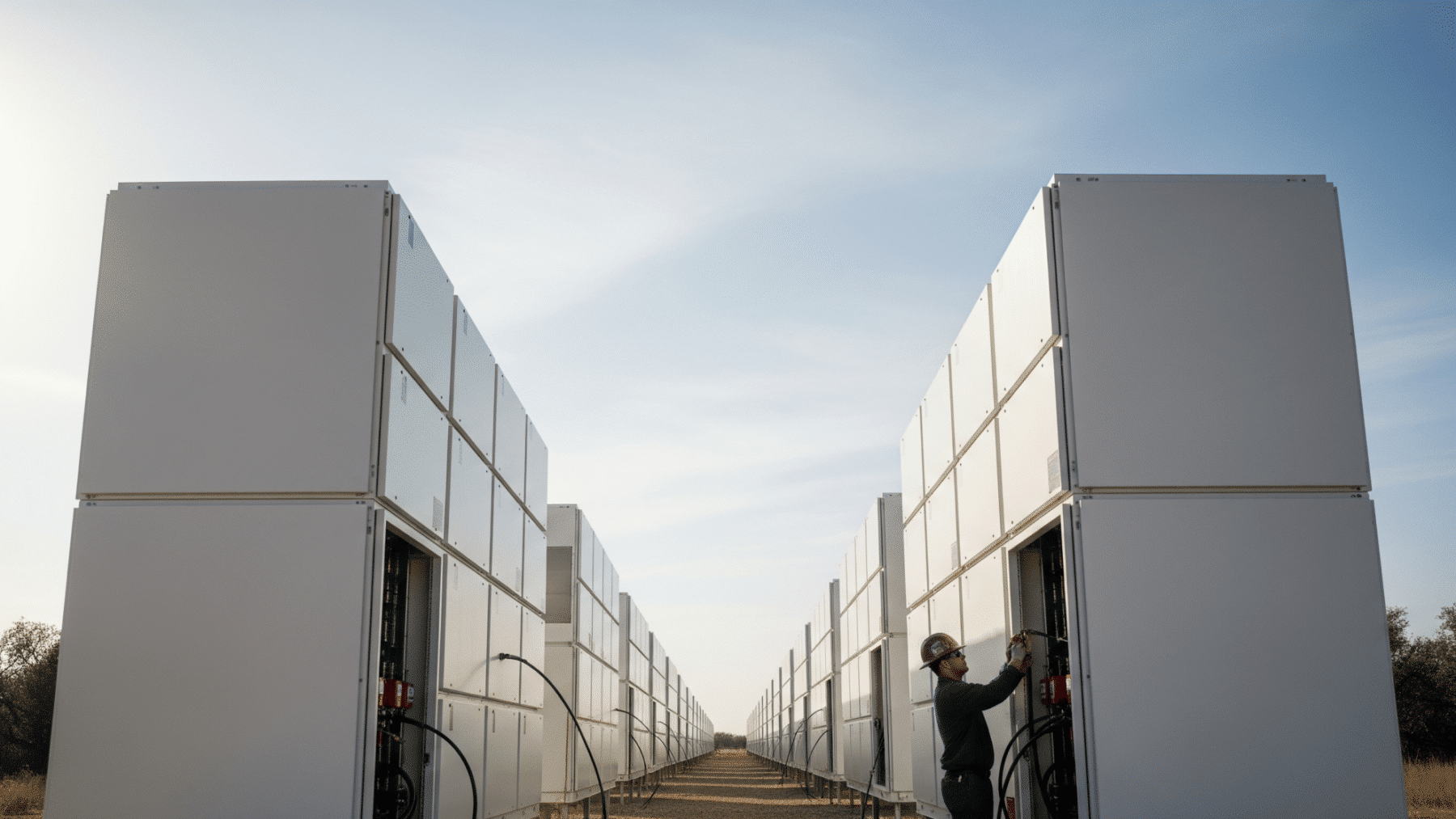
Parked beside the panels is a cluster of white steel boxes the size of shipping containers.
Inside each one, thousands of battery cells wait for the sun to drop.
Crews used to build the panels first and add storage later, if ever.
That order has flipped faster than almost anyone in the industry expected.
So what changed to make batteries the default add-on rather than the exception?
Why solar farms now arrive with batteries built in from day one
The physical logic is simple once you see it: a solar panel only makes money while the sun shines, and the sun shines hardest in the early afternoon when the grid often needs power least. A battery parked next to the panels lets a plant capture that midday output and release it hours later when demand, and prices, climb back up.
That timing mismatch used to force developers to build storage as a separate project, often years after the solar array itself.
Now the two are increasingly designed and wired together from the start, sharing the same substation and the same grid connection permit. Interconnection queues are long almost everywhere, which has made pairing storage with solar on one application the more practical path, giving developers two revenue streams off a single piece of land and a single grid hookup.
A grid milestone years in the making, not an overnight shift
The shift shows up clearly in the latest federal tally of every utility-scale solar project added to the American grid this year. Plants reporting data to the government now show batteries riding along with the panels far more often than they used to, a reversal of how projects were built even a decade ago, back when panels were cheaper relative to storage and batteries made little financial sense.
Solar projects without any storage still dominate older parts of the grid.
New construction looks nothing like that older stock. California, Arizona, New Mexico and Nevada anchor most of this pairing today, since the share of solar generation co-located with battery capacity in those four Southwest states runs more than double the national average, where sharp midday price drops make storing sunlight for the evening especially valuable.
What the federal numbers actually show, and where they came from
According to the Energy Information Administration’s October 30 analysis, over 16 percent of new solar capacity added so far this year is co-located with operable battery storage, compared with just 2 percent nine years earlier. The figures come from monthly filings that plant operators must submit to the agency.
That climb did not happen in a straight line. It tracked the collapse in battery prices and the arrival of federal tax credits that made pairing storage with a new solar array pencil out for the first time at scale, and four-hour storage has since gotten cheap enough to undercut gas peaker plants outright.
Developer plans on file point further. The agency’s analysis notes the co-located share could climb to 19 percent of this year’s additions once planned fourth-quarter projects come online, though the data set still does not break out how many megawatts of storage ride along with each array.
Where the trend runs into limits worth knowing
Not every solar project needs a battery bolted on. Plenty of smaller rooftop and community arrays skip storage entirely because the economics only work at utility scale, and the 16 percent figure covers only the large fields feeding the regional grid.
Timing also complicates the picture. The agency’s own analysts note that battery storage and solar units at the same plant often enter commercial service at different times, so a project counted as co-located today might have spent its first year running on panels alone.
Grid congestion is a separate hurdle. Even a plant with batteries ready to charge can be blocked from selling power if local transmission lines are already full, and slowing EV charging growth in some markets changes how much evening demand a paired plant can actually capture.
What the climb from 2 percent to 16 percent means next
None of this means every future solar project will automatically come bundled with batteries. Land costs, local interconnection rules and state incentive structures still vary enough that some developers will keep building solar alone where storage does not pay for itself yet.
Even so, the direction is unmistakable.
Nine years of steady movement from a niche practice to a mainstream default suggests pairing has become the industry’s standard playbook. A grid stocked with paired solar and storage plants can lean on stored sunlight during the evening crunch instead of firing up an extra gas unit, which eventually tends to show up as a steadier bill. The open question is how big these batteries actually are, and how many hours each one can run once the agency starts reporting it.
