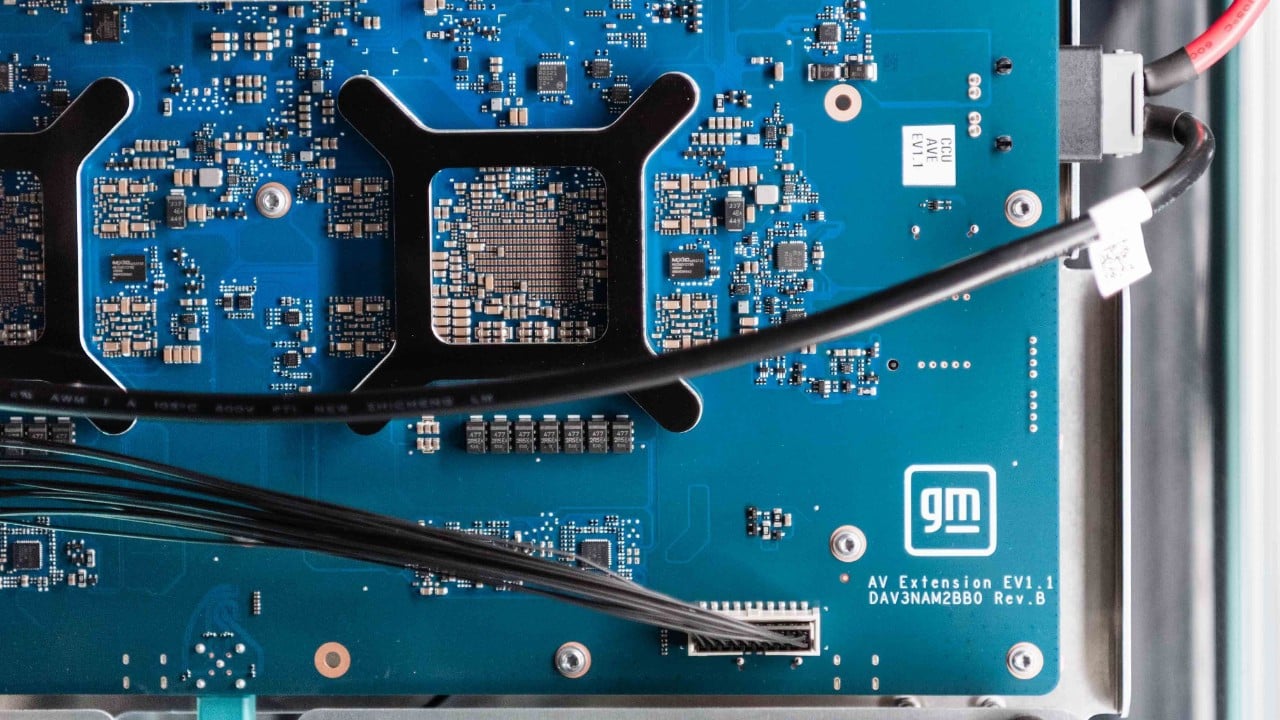
A new SUV dashboard hides something the dash cluster never shows the driver.
A single block of liquid cooled silicon now does the job once split across the whole vehicle.
Wiring once snaked for miles behind the panels, a tangle few owners ever saw.
Each wire once answered to its own small computer, buried near whatever switch or sensor it served.
That approach is now being ripped out at the frame.
How one processor absorbed the work of dozens of scattered computers
For decades, engineers solved every new feature the same way: bolt on another small computer. A heated mirror got its own controller, a power seat got another, and a modern luxury vehicle ended up with dozens of separate electronic control units each running its own narrow slice of code, deaf to everything around it.
A major Detroit automaker is now rebuilding that logic around a single core. Its new central compute unit gathers perception, propulsion, steering, braking, and active safety software onto one high speed processing core, replacing the patchwork of single purpose modules that used to run those jobs in isolation.
Because everything now reports to one brain instead of dozens of small ones, the car no longer needs a dedicated wire run to every switch. Regional hubs called zonal aggregators collect nearby sensors and actuators, then pass that data down a shared line.
That single design choice is why the automaker claims roughly 30 percent less wiring.
What the new hardware actually looks like inside the vehicle
Picture the old system as a city with a separate phone line strung to every house. The new one works more like a shared fiber trunk, where a liquid cooled module sits at the vehicle’s core and three zonal hubs branch out to the front, rear, and cabin.
Those hubs are deliberately dumb. According to the automaker’s own account of the next-generation computing system, the aggregators function as smart junction boxes that marshal data but execute no control logic themselves, leaving every real decision to the central unit.
That central unit is no small step up. The new core delivers 40 times more computing power than the modules it replaces, with enough headroom to run sensor fusion and in-cabin AI assistants on the same chip.
The data pipe feeding it grew just as fast, carrying 36 times more data than the old wiring.
The hard numbers behind the redesign and where they came from
The automaker detailed the architecture in a series of releases tied to a recent technology event, and outside reporting has confirmed the scope since. Coverage from one industry outlet’s review of the announcement noted that GM has concluded that the old approach to electronics, which scattered computer chips throughout the vehicle, was holding it back .
The rollout plan is specific rather than aspirational. It debuts on a flagship Cadillac SUV in 2028, then spreads to the automaker’s full size SUVs and trucks, its three row crossovers, and its next generation EVs, according to the automaker’s own platform announcement.
Because the architecture works with both gas and electric powertrains, the cost spreads across nearly the whole lineup. That overlaps with a broader platform push, including the new battery chemistry arriving on the same fourth generation EVs.
Where the approach still runs into real limits
Centralizing everything onto one chip sounds elegant, but it also creates a single point of failure that never existed before. Dozens of small computers once meant dozens of small risks; one powerful core now carries the whole vehicle’s intelligence on a handful of processors.
Even so, the automaker is not alone in making this bet. Rival automakers have pushed similar zonal designs for years, with electric vehicle makers already running leaner electrical systems.
That shift changes what a chip shortage could threaten going forward. A vehicle built around interchangeable microcontrollers can often swap a part during a crunch; one built around a single custom processor may have no easy substitute. The automaker has set its sights on roughly a two year vehicle development cycle industry wide, and the 2028 debut for this architecture sits on that same horizon.
What it means for buyers and for the chips inside every future vehicle
For an ordinary driver, the payoff should be invisible in the best way: fewer electrical gremlins, faster over the air updates, and features that reach older models rather than staying locked to one flagship SUV. The automaker frames the redesign as a way to close the software gap with electric vehicle leaders and fast moving Chinese rivals.
For suppliers, the shift reshuffles who wins the contract. A single powerful core sourced from a handful of chipmakers concentrates both the risk and the leverage in far fewer hands than the old model ever did. The automaker has leaned on centralized hardware for driver assistance before, including the hands free highway system it already sells across several brands, and the new architecture is built to carry that kind of feature further.
So the real test arrives when the flagship Cadillac ships, not in a press release. If it delivers the wiring savings and software gains promised, expect the rest of the industry to follow.
