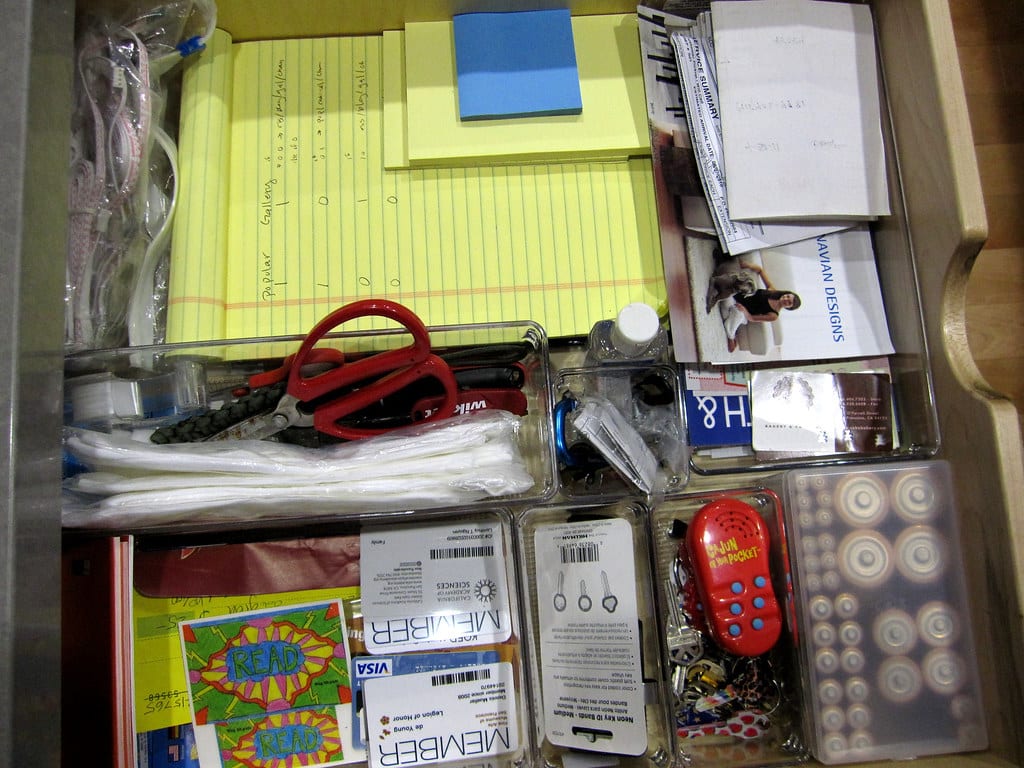
A plastic card sits wedged behind the napkins in a kitchen drawer, forgotten since last winter.
Its barcode has faded slightly, but the balance is still live. Nobody remembers exactly how much is loaded on it.
That small mystery is playing out in millions of American households right now, in wallets, glove compartments and junk drawers everywhere. The real total attached to all of it would surprise almost anyone who stopped to add it up.
Why gift cards keep slipping through the cracks
The mechanism is almost embarrassingly simple. A gift card removes the two things that normally force a purchase to happen, which are urgency and a due date, and without either one the money just sits.
Brand specific cards make it worse, since a shopper has to actually want something from one particular store on one particular day. If nothing on the shelf appeals, the card goes back in the drawer and the clock resets.
Multiply that pause by tens of millions of cards given every year and the drawer becomes a national warehouse of stalled spending.
There is also a quieter psychological trap at work. Many people treat a gift card as too special to spend carelessly, so they hold out for the perfect purchase instead of an ordinary one, and that instinct is exactly what causes so many cards to never get used at all.
What a stuffed wallet actually looks like in dollars
Picture the scene multiplied across the country, a stack of cards for a coffee chain, a clothing retailer and a hardware store, each with a few leftover dollars that never quite cover a full purchase. That image is not rare, it is closer to the American norm than the exception.
Holiday shopping guarantees the pile keeps growing every year, since gift cards remain one of the most requested presents on wish lists nationwide.
So the supply of fresh cards refills faster than the old ones ever get spent down. The backlog compounds instead of shrinking, year after year, drawer after drawer.
Meanwhile the amounts involved are not pocket change. Industry estimates put tens of billions of dollars in gift card value sitting unredeemed in the United States at any given moment.
The survey numbers behind the forgotten balances
A Bankrate survey fielded by YouGov found that more than 2 in 5 Americans have at least one unused gift card, and the average value per person is $244 , which is not a trivial rounding error but real spending power sitting idle in a drawer somewhere.
The trend line is climbing fast. The average amount per person is $244, up from $187 in 2023, $175 in 2022, and $116 in 2021 , so the average forgotten balance has roughly doubled in just a few years.
Nationally, that is about $27 billion in outstanding value nationwide, according to a new Bankrate survey , drawn from a sample of 2,373 U.S. adults, of which 1,010 have unused gift cards, gift vouchers, or store credits in the survey’s methodology.
One generation carries far more of that weight than any other. Millennials have the highest average outstanding value at $332, followed by $255 for Gen Xers , $227 for baby boomers, and $142 for Gen Zers, a gap wide enough that Rossman added, “Gift cards represent real money. It’s disappointing that the amount of unused value continues to grow,” rather than expected.
Where the pattern breaks down and who actually loses the most
Here is the twist that complicates the easy story about forgetfulness. It is not low income households losing the most money, since Bankrate’s own data shows higher earners are actually worse offenders, despite having every reason to use found money quickly.
Wealthier households hold the biggest stacks of unused value, with 55 percent of households with annual incomes of $100,000+ having at least one unused gift card, more than any other income bracket, and an average amount for this income bracket of $348 .
That runs against the common assumption that financial pressure drives people to spend a card down fast.
Lower income households hold fewer unused cards and smaller balances, likely because every dollar gets put to work sooner. Which flips the usual narrative, since scarcity forces action while comfort invites procrastination, and the card that could matter least ends up mattering the most.
What it means for the cards sitting in your own drawer
This mirrors a broader pattern researchers see elsewhere in household finance, where convenience tools meant to save money quietly become ways to lose track of it instead. The same dynamic shows up in how Americans now pay for things, where moving away from physical cash makes small amounts easier to lose track of entirely.
That same habit also shows up in how households handle everyday extras and discretionary purchases, where small recurring choices add up without anyone noticing the total.
None of this makes gift cards a bad gift.
It just means the fine print rarely matters as much as checking a drawer before the holidays roll around again. A five minute search through old wallets could put real money back into circulation for tens of millions of people, long before another card joins the pile unused.
