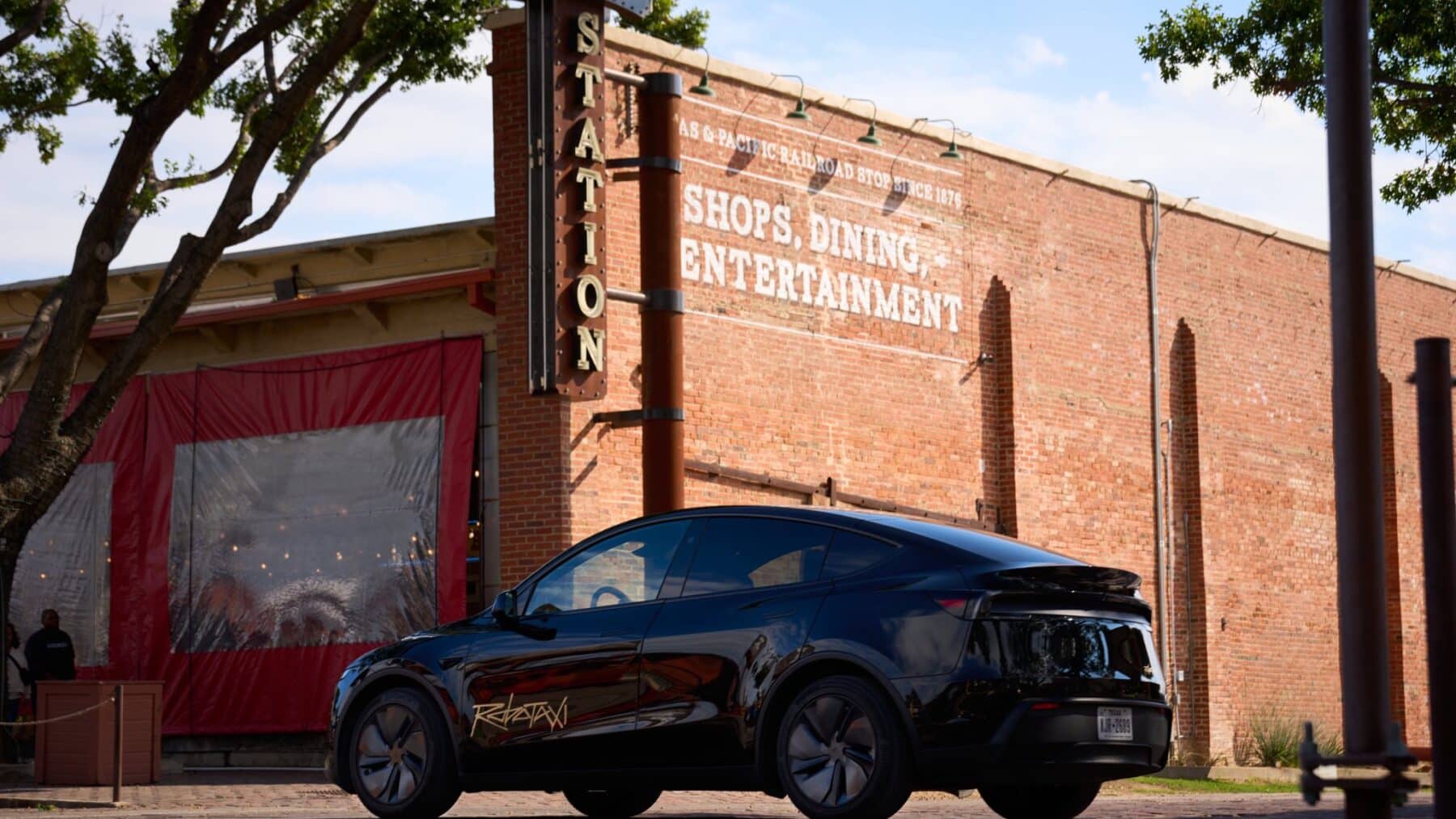
Tesla began offering driverless robotaxi rides in San Antonio on Monday, extending its unsupervised self-driving service to an eighth US city.
The company did not disclose fleet size, hours of operation or whether human safety monitors would be aboard.
The rollout was announced just after midnight on the company’s official Robotaxi account on X, and started at 5 a.m. local time.
What launched in San Antonio
Tesla is deploying modified Model Y vehicles with no safety driver on board. The approach replicates what it did in Austin, where it removed safety monitors from the fleet in January.
San Antonio becomes the fifth Texas city for the company’s robotaxi network, following launches in Austin, Dallas, Houston and Fort Worth.
The launch also marked Tesla’s broader eighth US robotaxi market overall, with unsupervised service also running in the Florida cities of Miami, Orlando and Tampa, according to Teslarati’s coverage of the launch and local reporting from CBS Austin. Tesla separately runs a supervised pilot, with a human safety driver, in the San Francisco Bay Area, which is not counted among the eight unsupervised markets.
The launch in San Antonio marks the largest initial robotaxi zone for Tesla to date and points to the rapid growth of unsupervised self-driving services in major Texas cities.
Tracking sites cited by CBS Austin estimated only about seven Tesla robotaxis were circulating in San Antonio in the service’s early hours. Other reports, including one citing the site Robotaxi Tracker, said Tesla has not disclosed how many vehicles will serve the zone, and as of Monday morning, no Robotaxis were recorded in San Antonio , underscoring the uncertainty around the fleet’s actual size.
Key details left undisclosed
As with past expansions, Tesla offered little operational detail alongside the announcement.
The company did not say what hours the service runs, whether it uses the two-seat Cybercab or modified Model Y vehicles, or whether safety monitors ride along, as reported by TechCrunch.
That ambiguity matters because Tesla’s earliest robotaxi markets launched differently. Tesla’s Austin service, which began in June 2025, launched with human safety operators in the car, before the company removed in-vehicle monitors from parts of that fleet earlier this year.
Expanding footprint and a weather fix in the works
The San Antonio debut came alongside other network growth. Tesla launched unsupervised Robotaxi service in San Antonio on Monday, its eighth city, and expanded its Austin service area to roughly 443 square miles on the same day , according to Teslarati.
Tesla has also signaled new engineering work aimed at the robotaxi program’s weak spots. Tesla VP Lars Moravy says focused lasers could keep robotaxi cameras clear instead of wipers , though no firm timeline has been set for any such changes, per the same report.
Separately, Tesla chief executive Elon Musk has continued to frame the purpose-built Cybercab as central to the company’s driverless ambitions. In a post on X on November 10, Musk said “Cybercab will do a majority of all passenger miles in any jurisdiction where it is not prohibited by law.”
Competitive backdrop in Texas
Waymo, which recently resumed service following a five-month pause due to vehicles getting stuck in floodwaters, currently runs its robotaxi operations in San Antonio, Austin, Dallas and Houston.
Tesla’s entry puts the two companies in direct competition across all four of those metro areas.
The push into more cities comes as Tesla works to diversify its business beyond vehicle sales, a strategy that has coincided with other major shifts inside the company’s US manufacturing operations, including plans to wind down Cybertruck production.
Tesla’s robotaxi ambitions also arrive at a moment when the broader EV market is adjusting to a world without federal purchase incentives, a shift that has reshaped electric vehicle sticker prices nationwide and rippled into wholesale used car values as well.
Tesla has not responded publicly to questions from reporters about staffing or vehicle mix in San Antonio, and the company’s robotaxi account on X has not posted additional operational updates since the initial launch announcement.
