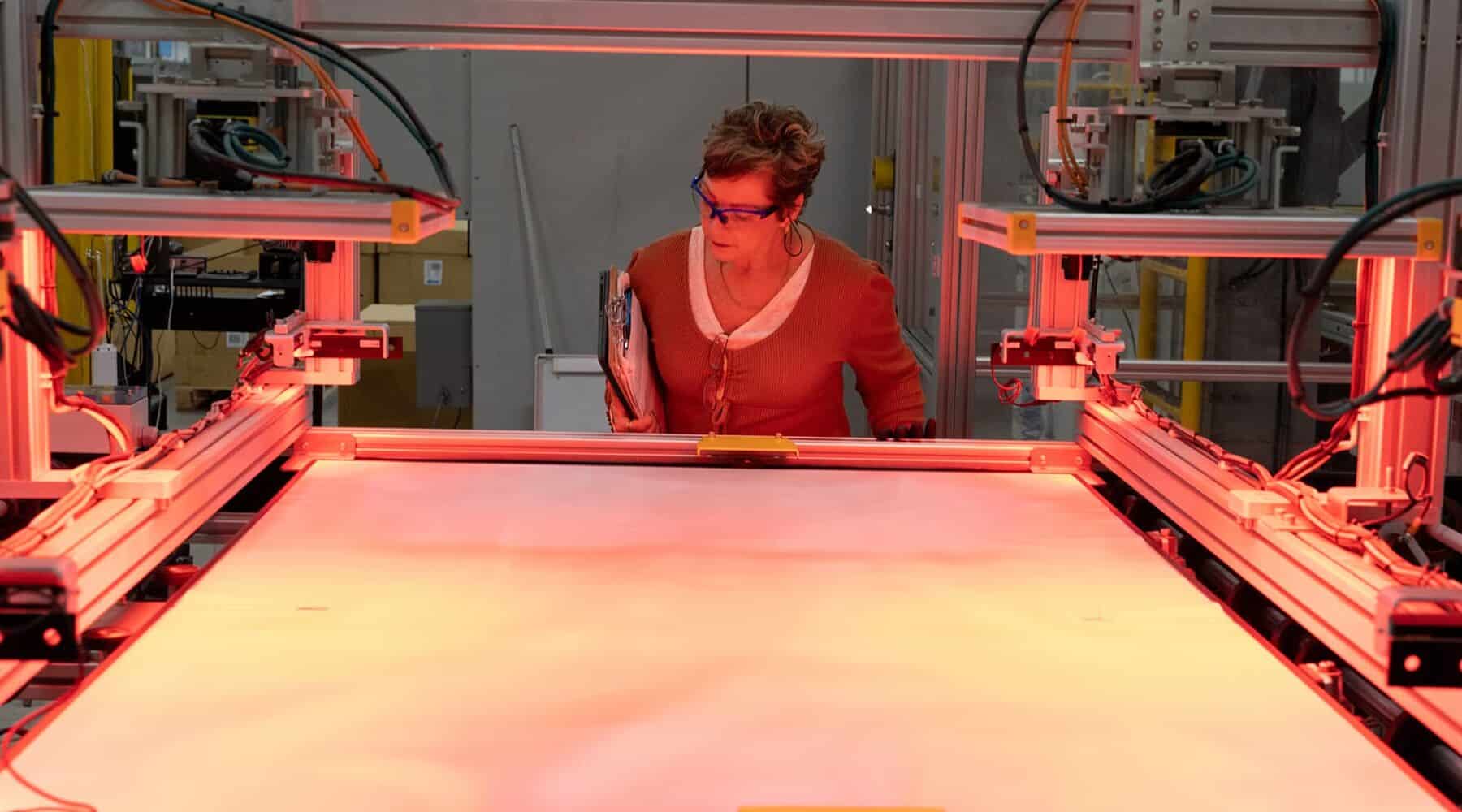
Tesla has applied for a Texas property tax break to build a $3.1 billion polysilicon refinery near Robstown in Nueces County, according to a filing with the Texas Comptroller’s office.
Tesla has applied for a Texas property tax limitation for a proposed $3.1 billion polysilicon refinery near Robstown, Nueces County, saying it would not build the plant in the state without the incentive, as it seeks to produce solar’s most China-dominated material at home.
What the filing describes
Tesla filed the application with the Tuloso-Midway Independent School District under the state’s Jobs, Energy, Technology and Innovation (JETI) program, and it has been published by the Texas Comptroller of Public Accounts.
The plant would sit along State Highway 44, between FM 1694 and County Road 61 , in an area that serves part of the Corpus Christi area.
The equipment list includes a hydrochlorination and trichlorosilane synthesis unit, chlorosilane distillation and purification trains, silicon tetrachloride recycling loops and Siemens chemical vapor deposition reactors. The filing does not state the plant’s production capacity.
In the application, Tesla framed the project in strategic terms. Tesla’s application says more than 90% of the world’s solar-grade polysilicon supply is produced outside the United States , and that the material would support manufacture of N-type, high-efficiency solar cells.
Tesla describes the plant as under consideration for development and as the upstream component of its vertically integrated domestic solar manufacturing platform, according to the filing.
Tax terms and jobs on the table
The JETI programme could provide up to US$104 million in public incentives , and Tesla is seeking a 50% JETI appraised-value tax limitation for a proposed $3.108B polysilicon refinery in Nueces County, Texas, with 515 jobs planned by 2032. Tesla says it would hire 515 workers by 2032.
The requested JETI benefit would provide a 50% appraised-value limitation for eligible property when calculating school-district maintenance and operations taxes from 2031 through 2040.
Even with the abatement, local officials project a net gain. Tesla’s numbers show the district would collect about $222 million in taxes from the plant from 2028 to 2065.
A separate analysis cited in the filing estimated a larger cumulative impact. EY’s application analysis estimates $63.479 billion in cumulative Texas economic output from construction and operations between 2027 and 2065, including about $46.3 billion in Nueces County.
The Comptroller’s office will review the application and make a recommendation , and both the Office of the Governor and the school district’s board must approve an agreement before it takes effect.
Why the timing matters
Tesla’s push comes as Washington tightens trade rules around solar’s most sensitive input.
Raw polysilicon itself is subject to the minimum import price mechanism but is exempt from the 15% tariff that applies to derivative products such as ingots, wafers, solar cells and modules, with the measures scheduled to take effect on December 4, 2026. Tesla says more than 90% of the world’s solar-grade polysilicon is made in China.
The Nueces County refinery would not stand alone. The application follows Tesla’s JETI filing for Project Crystal Sun, a proposed solar cell and module factory in Fort Bend County, Texas, with planned investment of about $10.1 billion. That project is expected to create thousands of construction and permanent jobs in suburban Houston.
The Fort Bend project already cleared a key hurdle in September, when the Lamar Consolidated Independent School District board voted to approve a tax break for Tesla’s proposed solar power cell manufacturing facility.
The polysilicon push lands amid a broader wave of domestic solar investment nationwide, following moves such as Nextnova’s new plant in Oklahoma and a federal tariff floor price set earlier this year.
If approved, the Nueces County refinery would give Tesla a domestic source for the raw material that underpins solar cell production, reducing its exposure to Chinese supply chains ahead of the new import rules set to take hold next month.
