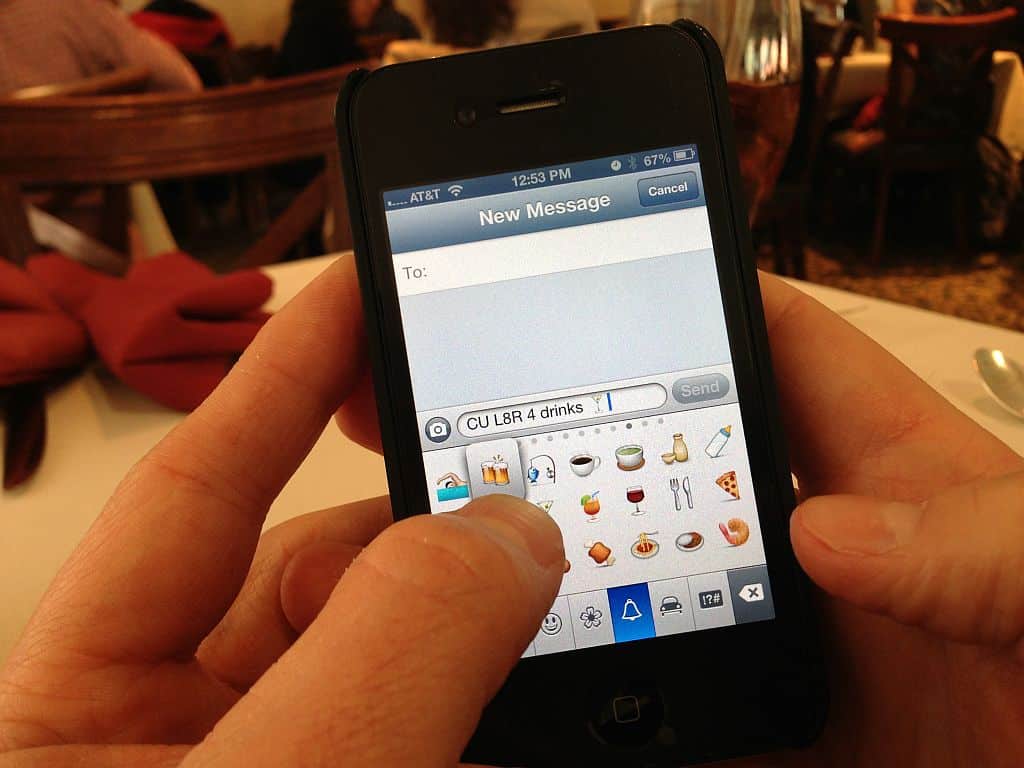
A reply lands on the lock screen with nothing but three plain words and a period.
No punctuation flourish, no little yellow face, just text.
Across town, a nearly identical reply lands with one small emoji tacked on at the end.
Neither sender spent more than four seconds typing.
Yet volunteers reading both exchanges rated the second sender as a fundamentally different kind of friend.
So what is that single picture actually doing inside a conversation that words alone are not?
Why one small icon changes how a reply is read
Texting strips out almost everything a face-to-face conversation carries for free. There is no raised eyebrow, no warmth in the voice, no pause that signals someone is really listening. An emoji, it turns out, quietly fills that gap by acting as a stand-in for a facial cue, giving the reader something to react to beyond bare words.
That matters because readers are constantly, almost unconsciously, scoring every reply for one thing: does this person actually care what I just said. Psychologists call that judgment perceived partner responsiveness, and partner responsiveness is a key predictor of likability and overall relationship quality , whether that relationship is romantic or a close friendship.
An emoji appears to work as a cheap, fast signal of exactly that kind of attention. It may serve not only as an expressive device but also as a signal of attentiveness and emotional engagement. That reading then ripples outward into how likable and how satisfying the whole exchange feels.
Picture the exchange that researchers actually tested
Imagine two versions of the same text thread. In one, a friend writes back “that sounds rough, hope you feel better” with nothing else attached. In the other, the identical sentence arrives with a small sad or caring emoji sitting right after it, matched carefully to the tone of the words.
That matched pairing is the whole trick. Researchers kept the emoji emotionally congruent with the text, pairing upbeat words with upbeat icons and somber words with somber ones, so readers were never confused about what the symbol meant.
The emoji itself did not have to show a face. The specific type of emoji, whether a face or a non-face symbol, does not influence perceived responsiveness; emoji use significantly improved perceptions of partner responsiveness compared to non-emoji use, regardless of the emoji type. A small but telling detail for anyone who assumes only cartoon faces carry emotional weight in a text.
What the hardest evidence actually shows
The finding comes from a study published this year in the journal PLOS One by Eun Huh from The University of Texas at Austin . A sample of 260 participants viewed 15 text-based conversations in which they assumed that they received responses from their friends , with ages ranging from 23 to 67 years . Notably, although the term partner is used throughout the paper, it refers specifically to a close friend with whom participants are exchanging text messages , so the effect documented here is about friendships rather than romance.
Participants were randomly assigned to one of two experimental conditions, a text-only condition and a text-and-emoji condition, for each message, and viewed each conversation in only one format. That design kept the comparison clean rather than relying on memory or guesswork.
The pattern held up cleanly. Perceived responsiveness, in turn, significantly predicted higher ratings of closeness and relationship satisfaction. The emoji itself barely mattered except through the feeling it created.
The type of emoji barely moved the needle either. It’s not the type of emoji but simply their presence that makes people feel closer to their partner , suggesting a fairly universal reading of digital tone.
Where the effect gets complicated and who it may not apply to
None of this means every text needs decoration to succeed. Face to face time still carries weight that pixels cannot replace. In a separate daily-diary study tracking romantic couples’ communication, the more face-to-face communication participants had with their partners, the more understood they felt and the more satisfied they were with their relationship.
Texting, by contrast, did not predict relationship satisfaction in that same research. This lines up with a related pattern seen elsewhere: a thumbs-up reply can read as cold or dismissive rather than warm, depending entirely on context.
So the emoji effect is not a blanket rule that more symbols always equal more warmth. It works because the icon matches the emotional register of the words around it, reinforcing a feeling that was already there. A mismatched or sarcastic emoji could plausibly backfire, though that was not tested directly here.
People who lean on texting more heavily to sustain a relationship, whether a friendship or a romance carried out at a distance, may have the most to gain, much like younger texters who have already reshaped what a quick message is supposed to signal.
The calm, useful takeaway for anyone holding a phone tonight
None of this requires overhauling how anyone texts. The lesson is modest and oddly comforting: a reply someone already meant warmly can land as warmer simply by matching a small picture to the feeling already in the sentence.
That is a far cry from the usual advice to text less or text more. Instead it points toward small deliberate pauses, noticing when a reply reads flat on the page even though the sender felt plenty, then closing that gap with one well chosen symbol.
For friends and couples juggling long distances or just a habit of short replies, that costs nothing. It simply asks a sender to pause half a second longer before hitting send, the same instinct behind friendships that start online and grow solid through small, consistent signals of attention.
