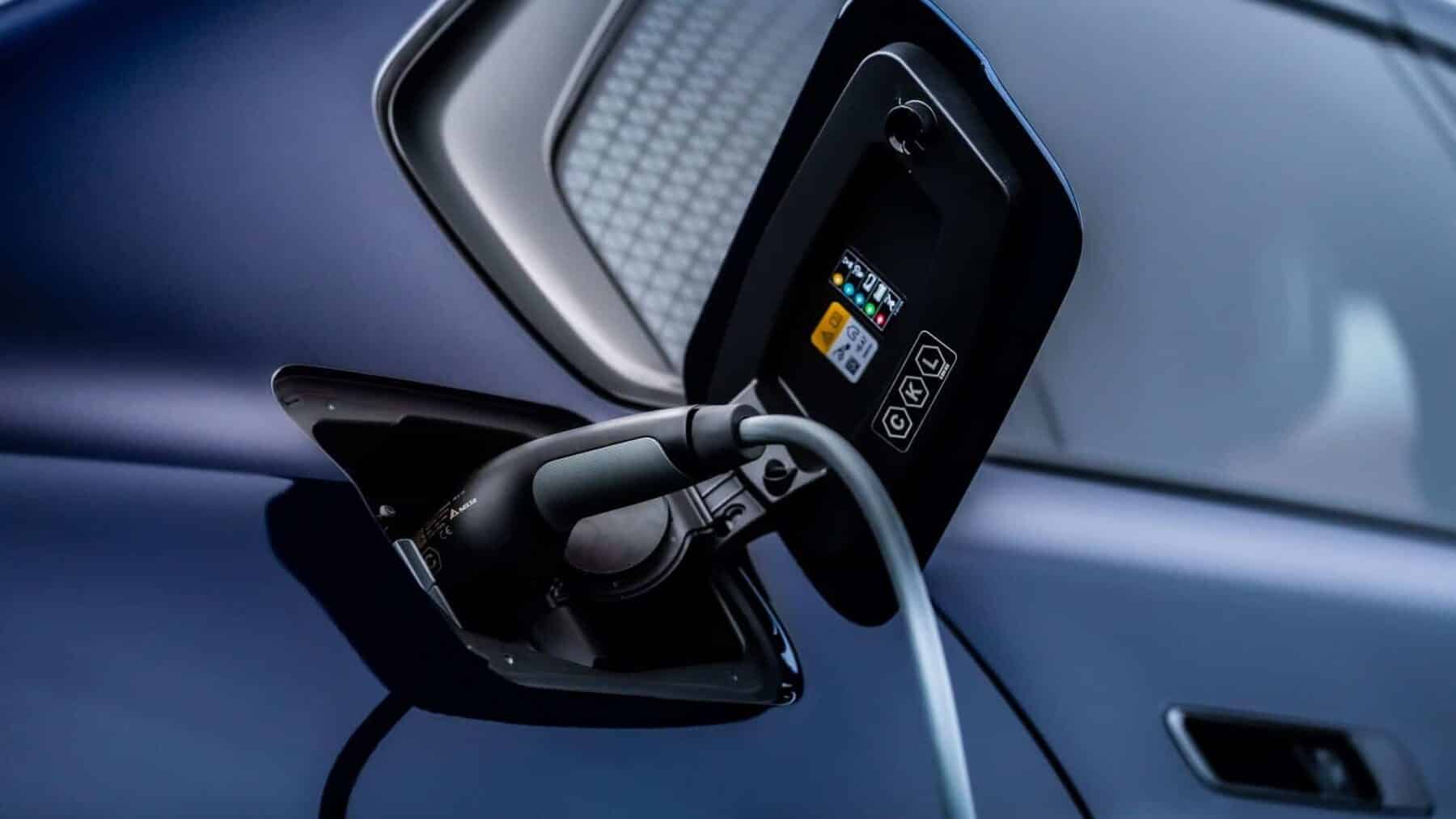
BMW is recalling 286 i5 and i7 electric sedans in the United States after discovering that some charging components may have shipped with testing software instead of the approved production version.
The automaker says the defect could in rare cases raise the risk of electric shock during charging.
The recall, filed with the National Highway Traffic Safety Administration as campaign 26V731, is one of the smallest BMW has issued in years, but regulators flagged it as a safety concern tied directly to the act of plugging in.
What triggered the recall
BMW submitted the recall documentation for campaign 26V731 with the National Highway Traffic Safety Administration earlier this month, with the filing identifying TE Connectivity Solutions GmbH as the supplier of the charging port software.
BMW became aware of the issue on October 8, after charging port supplier TE Connectivity Solutions GmbH alerted the company. BMW decided to conduct the voluntary recall on October 28, 2026.
A bunch of i5 and i7 sedans have rolled off the assembly line with development rather than production charging software. The development charging port software does not meet specifications, meaning the outcome in rare cases may come in the form of an electric shock.
The issue centers on the hardware that governs high voltage battery charging rather than the battery cells themselves.
Which cars are affected
The recall covers 286 potentially affected vehicles, including 236 examples of the 2026, 2027 BMW i5 and 50 examples of the 2027 BMW i7.
The affected variants include the i5 eDrive40, xDrive40, and M60, alongside the i7 xDrive50 and xDrive60.
BMW estimates that only about 0.2 percent of the whole actually possess the defect, making this recall about as small as they come.
The affected cars were built over a narrow window this year. The i5 vehicles were manufactured between May 12 and July 22, 2026, while the affected i7 sedans were built between June 15 and July 23.
That timing lines up with the period BMW says the faulty test software could have reached assembly lines before being caught.
How BMW plans to fix it
Authorized BMW dealerships will update the affected vehicles’ charging software at no cost to owners, with no hardware replacement required.
The automaker says it is unaware of any accidents or injuries linked to the problem.
Owner communication is moving on a longer timeline than the repair itself. BMW notified dealers on November 4, the same day it filed the recall. Owner notification letters are scheduled to start being mailed to customers on December 25. Starting that same date, owners can also check their vehicle’s recall status through the NHTSA recall website by using their VIN.
Owners can also contact BMW customer service directly or check the automaker’s site for VIN specific status ahead of that mailing.
Part of a busier recall season for EV makers
The BMW filing lands amid a wave of electric vehicle recall activity across the industry this fall.
GM recently issued a recall for 67,380 Cadillac LYRIQ, Chevrolet Blazer EV, Cadillac CELESTIQ and Cadillac VISTIQ EVs because software in the brake system control module may cause a temporary loss of braking at low speeds , an issue prompted by an incident involving a 2024 Cadillac Lyriq, which crashed into a garage at low speed , a low speed crash the company linked to software.
Charging infrastructure itself has also drawn scrutiny and investment this year, with automakers including GM expanding plug and charge features at public stations even as federal regulators keep a closer watch on the software layered into EV charging systems.
For BMW, the i5 and i7 recall is tiny in scale compared with its earlier fire risk campaigns, but it underscores how a single supplier software mismatch can still force a nationwide safety filing even when only a couple hundred vehicles are involved.
