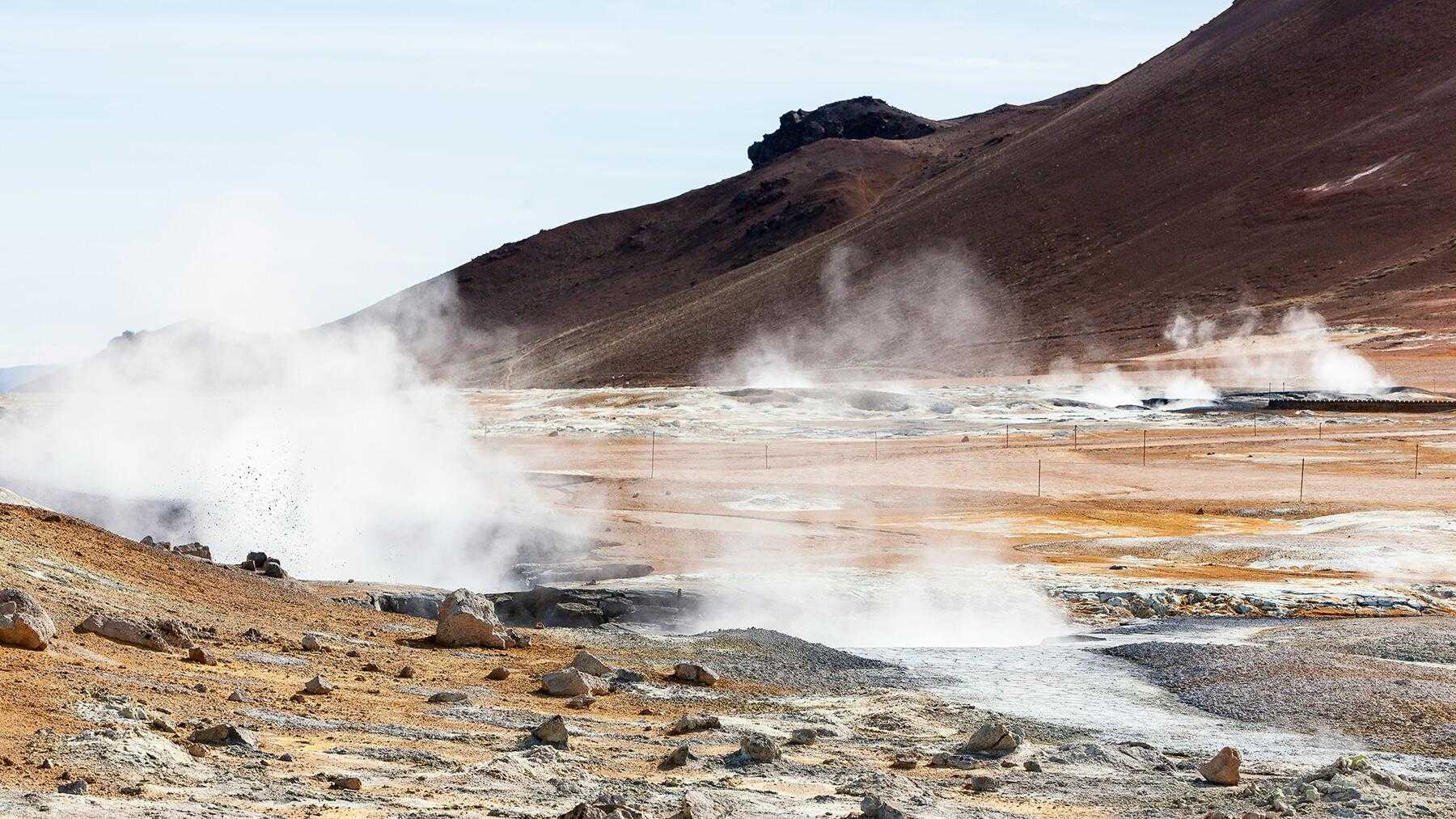
A large number of factors now exist in the market that create an opportunity for AI-geothermal development companies to develop a viable solution to add enough reliable, low-carbon electricity to meet the ever-growing demand for electricity while improving the resilience of our nation’s electric grids. Moreover, investors are beginning to pay close attention to start-up companies that utilize data-intensive software and machine learning to reduce the risks associated with exploring geothermal resources.
Why AI may be a scalable lever for geothermal development
Some investors are beginning to take an interest in earlier-stage companies that develop new ways of discovering and developing geothermal resources using large amounts of data as well as machine learning, in terms of their application for data-intensive software.
Historically, the major constraint on expanding geothermal energy was the risk associated with the discovery phase of development. Developers may spend large amounts of money on exploratory surveys and drilling, only to fail to locate a commercially viable geothermal resource, thereby limiting their ability to raise capital for additional projects.
The uncertainty about geothermal resources is directly related to the fact that they lie below the Earth’s surface. Thus, decisions made in the exploration phase often rely on incomplete information, such as surface temperature anomalies, past well completions, and limited geological history. Machine learning and data analysis techniques have the potential to enhance the decision-making process during the exploration phase by combining multiple types of data sets and recognizing patterns in prior discoveries.
An example of the change in investor focus is Zanskar, a U.S.-based geothermal exploration and development company that received $115 million in Series C financing in order to expand its AI-driven geothermal resource discovery platform and advance a number of commercial geothermal energy projects in the western United States.
What do large funding rounds mean for execution in U.S. projects
Zanskar is in a position to pursue a multi-site campaign and apply the lessons it learns from one site to the next with its new $115 million war chest; this will allow for the reduction of overall project schedule risk at the corporate level as opposed to reducing the geological uncertainty associated with each individual site.
To develop a geothermal resource, the developer must go through a series of complex permitting processes, complete interconnection studies, acquire all of the necessary equipment, and demonstrate that each new well confirms the viability of the development model, including confirming that the model performs as expected in practice.
As a result of the funds received, the company will be able to transition from the exploration phase of its development program to the development phase of its program. Rather than waiting until the first site is completed before commencing another, it will be able to advance multiple sites simultaneously.
Impact on the energy transition and market confidence
If continued advancements in the application of AI-enabled exploration reduce the risk of discovering a “dry” hole, the total size of the geothermal market will increase. As a result, many additional areas around the country will have the ability to utilize geothermal as a reliable complement to both wind and solar.
At the same time, investors and partners will require demonstrable proof of the progress being made.
The $115 million provided by Zanskar’s investment is as much about confidence in the application of artificial intelligence (AI) in geothermal exploration as it is confidence in geothermal potential to transition from a resource of limited utility into a feasible resource for planning and operation for utilities and grid managers. This funding event represents a significant milestone in the transition of geothermal from a small, niche resource to a scalable component of clean energy planning. Success in this model will ultimately be based upon the results of future drilling operations.
