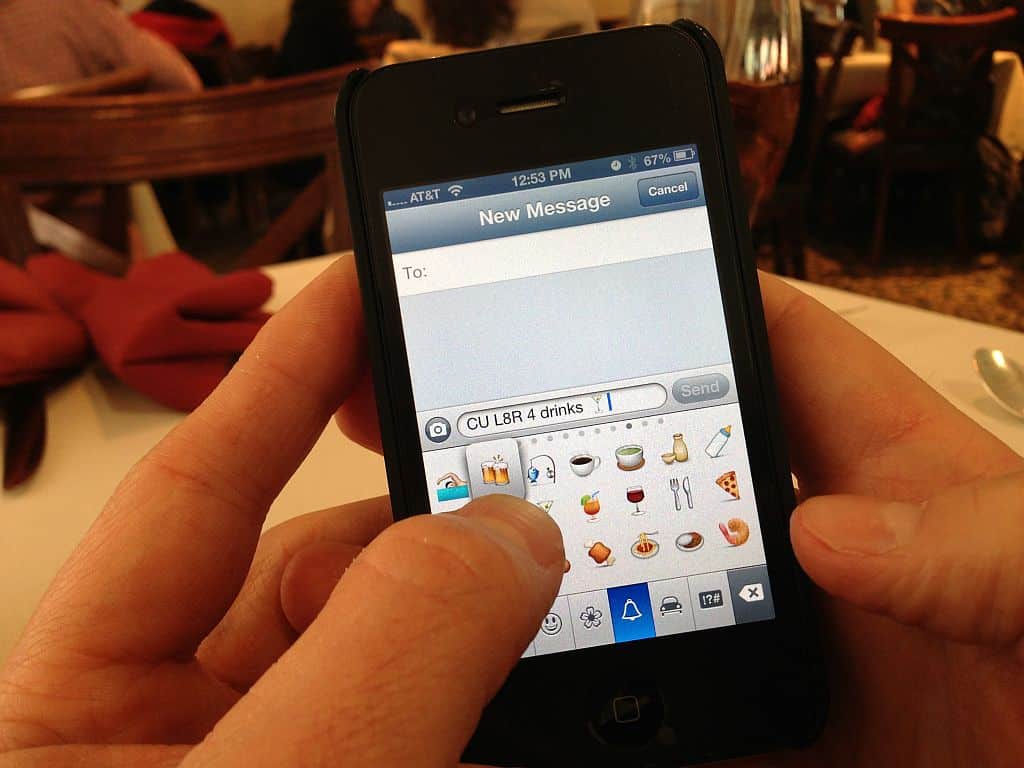
Adding a negative emoji like an angry face to a workplace message makes the sender appear less competent and the communication less appropriate, according to a new psychology study from the University of Ottawa.
The research, published in the journal Collabra: Psychology, found that messages without any emoji at all were rated as the most professional option overall.
What the study tested
This study examined how using positive and negative emojis in simulated workplace instant messages (IMs) influenced perceptions of the sender’s competence and communication appropriateness.
In the main experimental study, participants (N = 243; 134 men, 109 women) read IMs varying in sentence valence (positive, negative, neutral), emoji valence (positive, negative, no emoji), and sender gender (man, woman). Researchers paired positive, negative, and neutral text with a positive emoji (i.e., 😀; “grinning face”), negative emoji (i.e., 😠; “angry face”), or no emoji, then asked readers to judge the person who sent it.
According to the University of Ottawa, the study found messages with no emojis were “clearly the winner, making the sender appear more competent and professional.”
Participants perceived the sender as more competent and less norm violating when messages displayed no emojis or positive emojis.
Angry faces backfire the most
Adding an angry face or a similar negative emoji to a workplace email or text message are “considered inappropriate” for professional communications, as they make the sender “seem less competent,” according to the study.
The authors found that when positive or neutral messages were paired with a negative emoji, that mismatch was associated with some of the lowest competence ratings observed, according to the study’s results.
The findings echo other recent research on how small digital habits, like the choice of punctuation in a text, can shape whether a message comes across as sincere, a pattern GCN previously reported in a study on how a single period changed how genuine a text reply felt to readers.
Gender added another layer
The study also explored whether the sender’s gender changed how emojis were judged.
Researchers found that, compared to men, women judged negative messages from women (but not men) senders as less appropriate, but not less competent. The authors wrote that “women may have judged women more negatively for violating gendered expectations of ‘appropriate’ emotional expression for women in the workplace.”
It’s a modest finding, but it aligns with other research cited by the authors suggesting women report experiencing more incivility from other women than from men, an effect that is amplified for women who are more expressive of negative emotions at work.
For competence ratings, the study found no significant effect tied to sender or participant gender, meaning the broader effects of emoji use on perceived competence held regardless of who sent or read the message.
Why it matters for everyday messaging
The study arrives as instant messaging and chat apps have become the default way many coworkers communicate, a shift that mirrors broader trends in personal texting habits, including messaging replacing most phone calls for a large share of Americans.
With so much workplace communication now happening in short typed exchanges rather than face to face, small stylistic choices like emoji use can carry outsized weight in how colleagues size each other up.
Lead author Erin L. Courtice writes that “this study highlights the importance of being mindful about the potential impact of emojis on professional interactions.”
For workers weighing whether to tap that smiley or frowny face before hitting send, the research suggests that the safest option in workplace messaging is often the plainest one: no emoji at all , and if one is used, matching its tone carefully to the message.
