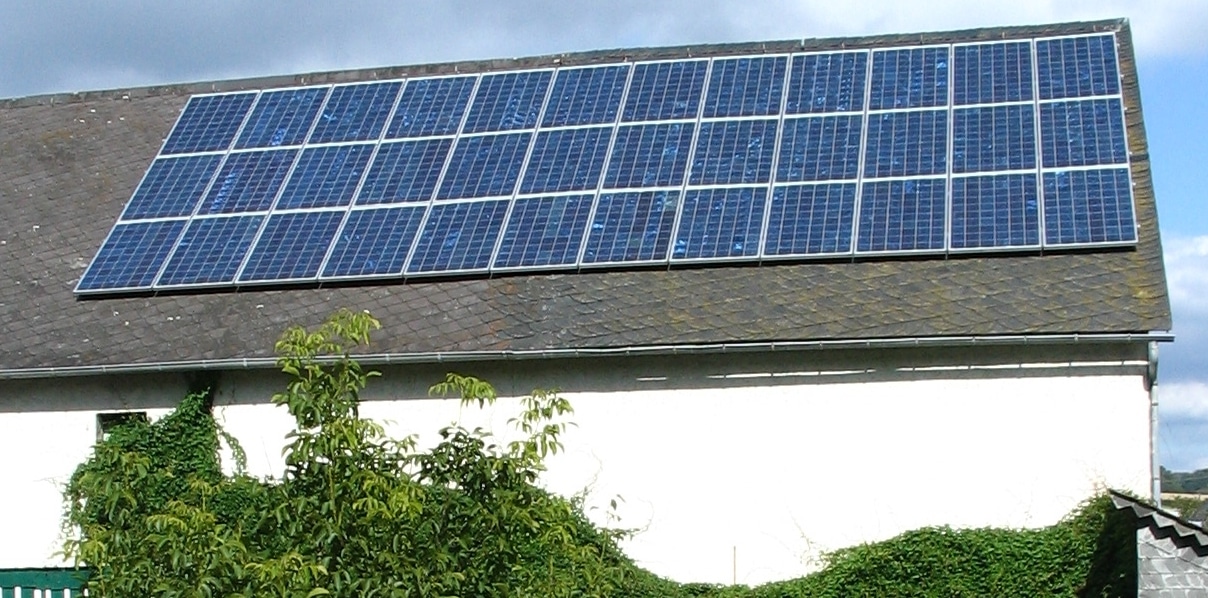
An Arizona Court of Appeals panel has again refused to let Arizona Public Service collect an extra monthly charge from customers who have rooftop solar panels, keeping the fee suspended as the utility pursues a separate rate case seeking roughly 14 percent more from all customers.
The court’s October 30 decision rejected requests from APS and the Arizona Corporation Commission to reconsider a June ruling that found the charge was adopted without proper public notice, according to KJZZ.
What the fee covers and why it was struck down
The Arizona Corporation Commission originally approved the fee as part of an APS rate increase in 2024, allowing the utility to charge solar customers an extra $2 to $3 per month to cover what it characterized as “extra costs” to provide power to those residents if their panels fail or don’t generate enough electricity.
Known as the Grid Access Charge, it applies to customers with rooftop systems across the utility’s territory.
The charge was never proposed by APS or disclosed in the public notice of APS’s 2022 rate case, yet was approved anyway. The Court also held the Commission wrongly placed the burden on the State and its co-challengers to disprove the charge, when the law required APS to prove that substantial evidence supports the charge.
The Court of Appeals then blocked the fee in June after finding regulators didn’t give opponents the opportunity to argue against that fee before they approved it, and that APS never provided evidence that solar customers are responsible for increased costs. A rehearing the commission held afterward did not fix the problem, the appeals panel found. The commission ultimately upheld the fee after that hearing, but the Court of Appeals found the commission still didn’t give opponents “a full and fair opportunity to contest the solar-specific charges.”
What happens next
The decision negates the extra fee on solar customers, though the Corporation Commission can hold another rehearing to give opponents a better opportunity to make their case.
An APS spokesperson said the company plans to appeal the decision to the Arizona Supreme Court, and said the company “would like additional review so that we can ensure appropriate rates for residential customers with rooftop solar.”
The ruling leaves the broader question unresolved rather than settled for good. The court’s decision does not reject the concept of grid access charges for residential solar projects in general.
Rather, it finds that the legal process between 2019 and 2024 was flawed due to the absence of a cost-of-service study demonstrating higher costs for serving residential solar customers.
A much larger rate case looms
APS filed this application on June 13, 2025, proposing a net base rate increase of $579.52 million, representing a 13.99% net increase, which would become effective no earlier than July 8, 2026.
Consumer Reports told Arizona regulators on October 6 that Arizona Public Service customers would pay about $240 more a year on average if the commission grants the utility’s request for a 16% residential rate increase.
At the same time, APS and Tucson Electric Power are seeking higher electric rates, and APS has proposed to increase the fees to roughly $6 per month in its current rate case, which is under consideration at the ACC. That means the fate of the fee could get intertwined with the larger case even as it remains tied up in court.
New rates are expected in early 2027, after a Commission vote due by December 31, 2026.
The fight over compensation and charges for rooftop solar customers mirrors disputes playing out in other states, where regulators have wrestled with how to balance grid costs against incentives for distributed generation.
As US small-scale solar generation has grown sharply over the past decade, utilities nationwide are similarly adjusting rate structures, a dynamic that has also shaped debates over battery storage economics and how utilities price rising electricity demand more broadly.
For now, Arizona solar customers do not owe the disputed charge, but the underlying policy question of how much rooftop solar owners should pay for grid access remains before both the courts and the commission.
