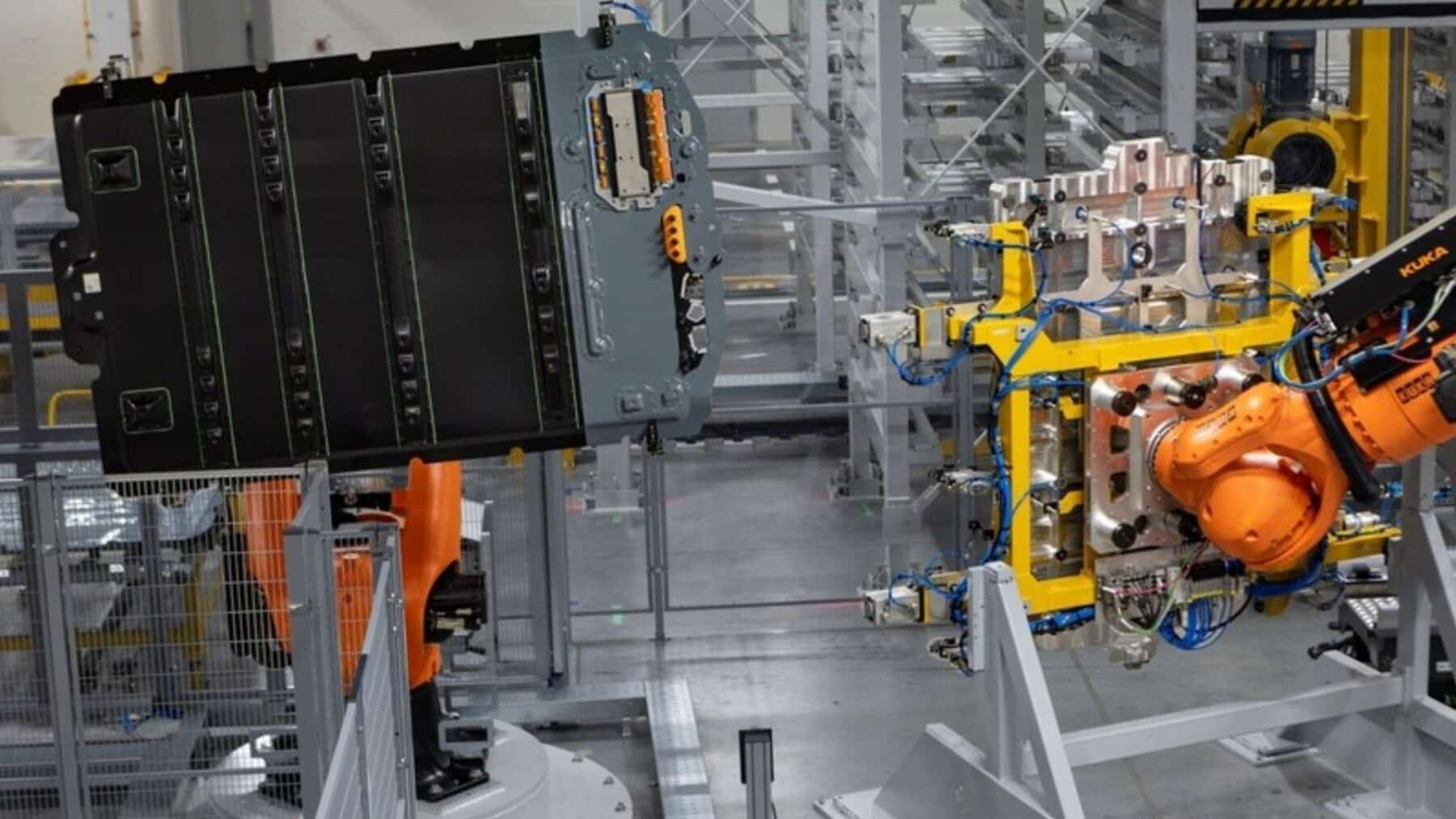
BMW Group has officially opened Plant Woodruff in South Carolina, its first high-voltage battery assembly facility in the United States.
The opening, held Nov. 13, marks the start of series production for the automaker’s next generation of American-built electric SUVs. BMW Group opened Plant Woodruff in South Carolina on Nov. 13 and started series production of Gen6 high-voltage batteries for the iX5 and future EVs built at nearby Plant Spartanburg , according to a BMW Group press release.
A new link in BMW’s US production chain
The Woodruff facility sits about 15 miles south of BMW’s main regional factory in Spartanburg County , where the batteries will be installed into finished vehicles. Finished batteries move from Plant Woodruff to BMW’s auto assembly plant just 15 miles away.
BMW describes the arrangement as part of a “local for local” strategy, which brings supply chain operations closer to the point of production rather than shipping components across continents.
The iX5 is BMW’s first fully electric model to be assembled in the United States , and BMW plans to expand its fully electric suite of vehicles assembled at Plant Spartanburg to six by 2030 .
The batteries are set to power the iX5 and the next generation of fully electric BMW X models built at Plant Spartanburg, which has long served as BMW’s largest manufacturing plant worldwide and its export hub. That role was detailed in reporting on how the automaker paid over $1 billion in duties on vehicles shipped from the US last year.
Built on former farmland in three years
Built on a 315-acre site that was formerly a peach farm, according to a local news report on the opening ceremony in Spartanburg County.
Construction moved quickly by industry standards. BMW broke ground on the former peach farm in June 2023 and started construction that September , meaning just over three years elapsed between the start of construction and the start of series production.
Robert Engelhorn, president and CEO of BMW Manufacturing Co., marked the occasion by noting the shift in the land’s purpose, saying “And where peaches once left this property, high-voltage batteries now leave from Woodruff.”
The quick turnaround comes as BMW and other automakers have separately pressed Washington for relief from tariffs that have weighed on cross-border vehicle and parts trade. It is an issue the company has raised directly with officials as it presses for tariff relief on its US exports.
Part of a wider battery network
Woodruff is the fourth facility in BMW’s global Gen6 battery assembly network to enter series production, following Debrecen in Hungary in October 2025 and Irlbach-Straßkirchen in Germany and Shenyang in China in October 2026.
Raymond Wittmann, the BMW board member responsible for production, said “With the opening of our Woodruff plant, we are expanding our global Gen6 network,” noting that high-voltage battery assembly is now established across Europe, Asia and North America.
A fifth site in Mexico is also planned, with a fifth facility in San Luis Potosí, Mexico, scheduled to follow in 2027 . Rich Everly, vice president responsible for manufacturing at Plant Woodruff, said the rapid buildout shows how quickly we can scale a new battery concept to industrial production.
The facility is heavily automated. BMW employs 300 staffers at the factory who utilize 250 robots as well as “AI assistants and agents” to assemble the EV batteries.
Each high-voltage battery also undergoes a 100-percent end-of-line inspection before being shipped to Spartanburg, according to BMW.
Why the factory matters
The Woodruff opening lands at a moment when automakers across the industry are racing to localize battery production and reduce dependence on imported components. That shift has reshaped factory investment decisions across several states.
BMW’s approach, pairing a dedicated battery plant with an existing vehicle assembly complex just miles away, mirrors strategies other manufacturers have pursued as they retool domestic plants for electric production.
The timing also matters for BMW’s broader US strategy, coming as rivals adjust their own electric lineups and production footprints, and as trade policy continues to shape where automakers choose to build.
With Plant Spartanburg already serving as BMW’s top vehicle exporter by value, the addition of in-house battery assembly next door gives the company tighter control over a critical and costly part of the electric vehicle supply chain, right as the industry grapples with shifting tariffs and incentive structures.
