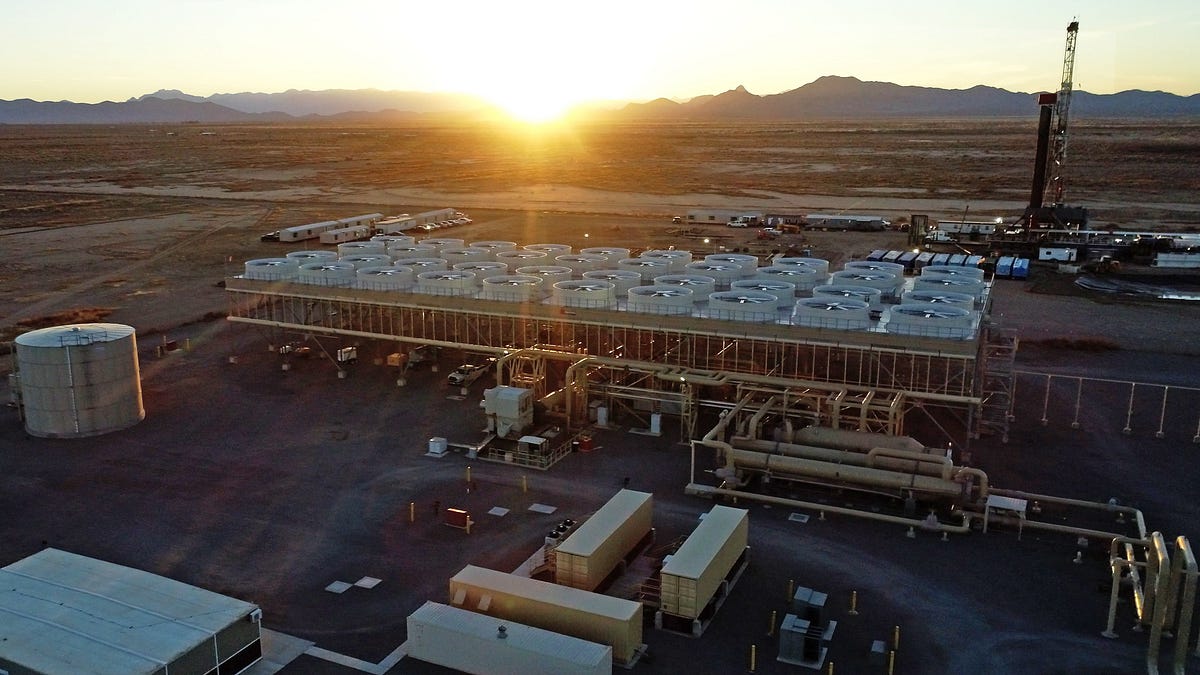
California will make nearly $20 million available to explore new geothermal power sites beyond its existing fields, the California Natural Resources Agency announced this week.
The goal is to identify fresh underground heat resources that could add round-the-clock clean electricity to the state’s grid.
The California Energy Commission said the funding, delivered jointly with the state Department of Conservation, will flow through the Geothermal Grant and Loan Program.
California is taking another step toward expanding its clean energy future. The California Natural Resources Agency today announced it is making a nearly $20 million investment in geothermal projects through the California Energy Commission and the Department of Conservation. The California Energy Commission (CEC) plans to make up to $18 million available for geothermal exploration and drilling projects across the state. Additionally, the Department of Conservation (DOC) is directing $1.1 million to expand geothermal resource mapping and improve publicly available geologic data.
A dollar-for-dollar match requirement
Applicants will be required to provide at least a dollar-for-dollar match , effectively doubling the impact of the state money.
This initial state investment could support at least $36 million in combined state and matching funds for geothermal exploration.
The commission laid out a timeline that stretches into next year. The CEC published a Notice of Intent on November 23, 2026, announcing the anticipated funding opportunity; the CEC expects to formally open the competitive solicitation in January 2027; and the CEC anticipates approving three to four awards between May and June 2027.
A separate analysis from the Clean Air Task Force, published ahead of the formal announcement, noted that the funding originated in the state budget process.
California’s 2026 budget included $20 million for geothermal exploration, mapping, characterization, and development. The total program size is $20 million with a statutorily-mandated 50% cost share.
Looking past the Geysers and Salton Sea
California already hosts some of the largest geothermal installations in the country. The state’s established geothermal resources include operations in Northern California, the Imperial Valley and the Eastern Sierra.
State officials say the new round of funding is meant to look beyond those legacy sites. New exploration and advanced technologies offer opportunities to unlock additional resources beyond these established regions.
The Clean Air Task Force argued the program should push into territory the state has not yet tapped. The group’s October 2026 analysis argued the $20 million in state funding can help kickstart a next-generation geothermal industry and crowd in additional private capital, and called the demonstration financing program a crucial step toward abundant clean firm energy in California.
Governor Gavin Newsom framed the investment as part of a broader push for firm power supply. “California is leading the clean energy transition, and we’re building on that progress by tapping into the power beneath our feet,” said Governor Gavin Newsom. “This investment will help unlock new geothermal resources and deliver more reliable, around-the-clock clean electricity.”
California Energy Commissioner Noemí Gallardo cast geothermal as a complement to the state’s existing wind and solar fleet. “Geothermal is a vital part of the energy portfolio that will get California to its goal of 100% clean energy. It provides clean firm, baseload power that can run 24 hours a day to support the electrical grid,” said CEC Commissioner Noemí Gallardo.
Unlike intermittent solar and wind power, geothermal energy taps heat beneath the Earth’s surface to generate continuous, 24-hour electricity regardless of weather conditions.
Part of a wider national push
The state program lands amid a broader federal and industry push to expand geothermal beyond its traditional footprint, including next-generation drilling techniques designed to reach deeper, hotter rock formations at lower cost.
That trend has already drawn tech-sector interest, as seen in Google’s first commercial superhot geothermal deal. The Department of Energy has separately funded early-stage demonstration wells aimed at proving out these advanced systems.
California’s push also follows a pattern of states and utilities weighing how to add firm generation capacity as electricity demand climbs, a dynamic that has also shaped recent battery storage buildouts such as a major California solar-storage expansion now underway elsewhere in the state.
The CEC and DOC are planning a joint agency workshop on December 15, 2026 from 10:00 a.m. to 12:00 p.m. via Zoom, an opportunity for the agencies to update the public on recent and upcoming geothermal work ahead of the formal solicitation opening in January.
