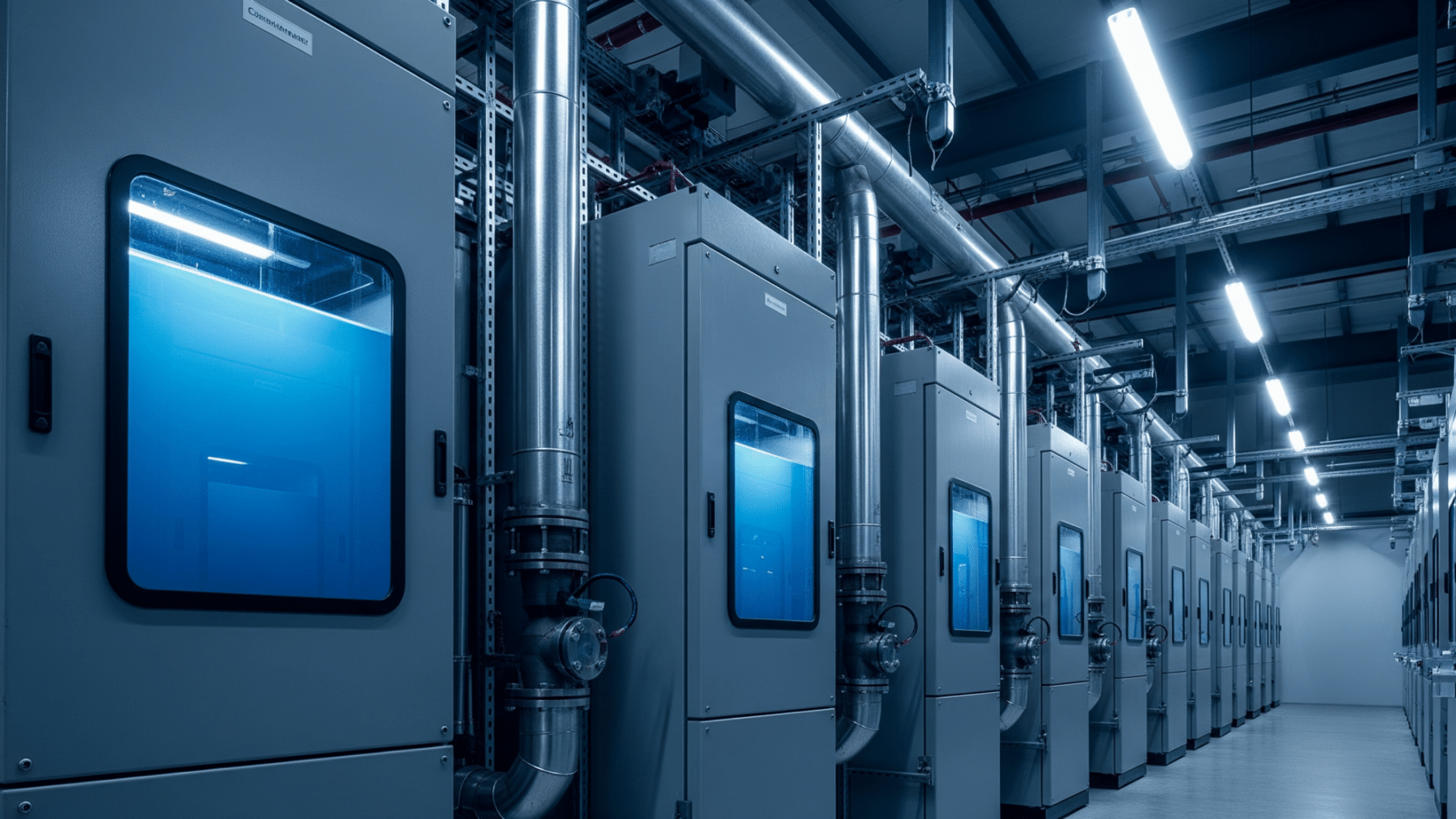
California has awarded a $15.7 million grant to the Schatz Energy Research Center at Cal Poly Humboldt to build a vanadium flow battery system co-located with solar photovoltaic generation and lithium-ion batteries, in support of the Hoopa Valley Public Utilities District.
The project is the latest disbursement under the California Energy Commission’s Long-Duration Energy Storage (LDES) Program, which invests in demonstrations of non-lithium-ion technologies to create a diverse portfolio of eight-hour-plus energy storage technologies.
What the project will build
The CEC awarded the Schatz Energy Research Center, part of Cal Poly Humboldt Sponsored Programs Foundation, a $15.7 million grant to install a front-of-the-meter vanadium flow battery system, co-located with solar photovoltaic generation and lithium-ion batteries to support the Hoopa Valley Public Utilities District. The LDES system will participate in energy markets during normal grid operations and provide backup power to the distribution-level circuit during outages, demonstrating LDES technology’s ability to deliver wholesale market revenue while providing reliability and resiliency. The system is expected to be operational in 2029.
Vanadium flow batteries store energy in liquid electrolyte tanks rather than solid cells, a design that allows them to be discharged repeatedly over long periods without the capacity degradation that affects conventional lithium-ion systems.
Typical battery storage, which mostly encompasses lithium-ion technology, has an industry standard of two to four hours of discharge, while long-duration energy storage can provide power for significantly longer periods.
California’s storage gap and why it matters
The state projects that more than 48,000 MW of battery storage and 4,000 MW of long-duration storage will be needed by 2045. The Schatz project directly targets that second, harder-to-fill category.
California’s battery storage capacity has expanded rapidly, reaching a total of 13,391 MW as reported by the Office of Governor Gavin Newsom in October 2024. Within the past five years, California has grown its battery storage capacity by more than 15 times, up from just 770 MW in 2019.
That rapid lithium-ion buildout has helped firm up short-duration needs, but grid operators and state planners have flagged a persistent gap in multi-hour and multi-day storage, particularly for periods when both solar and wind output falls for extended stretches.
The LDES program has been allocated over $270 million to invest in demonstration and deployment of non-lithium-ion long-duration energy storage technologies across California, paving the way for a diverse portfolio of storage technologies that will contribute to a safe and reliable future grid. Vanadium flow, compressed air, iron-air, and other chemistries are among the alternatives regulators are funding to avoid over-reliance on a single technology.
Utility customers who have seen transmission charges climb for more than a decade could ultimately benefit from storage assets that reduce peak-demand stress on the grid.
Schatz Center’s role and project structure
Since 1989, the Schatz Energy Research Center at Cal Poly Humboldt has been a leader in applied research and project development for clean and renewable energy. The center is located on the campus of Cal Poly Humboldt in Arcata, California. It has a track record of applied energy projects on remote and tribal lands.
Siting a front-of-the-meter storage system there allows the project to export power directly onto the transmission grid during normal operations, while also providing backup power to the local distribution circuit, giving California grid operators a dispatchable resource in a region with limited existing storage infrastructure.
The vanadium flow battery’s electrolyte can be refreshed and its capacity restored without replacing core hardware, a feature that makes the technology attractive for installations where multi-decade asset life matters as much as upfront cost.
Researchers at the Schatz Center are expected to publish performance data as the system operates, providing benchmarks that other developers and utilities can use when evaluating flow battery procurement.
Program context and next steps
The LDES Program invests in demonstrations of non-lithium-ion technologies to create a diverse portfolio of eight-hour-plus energy storage technologies; as of December 2024, $170 million had been awarded across seven projects. The Schatz grant adds to that portfolio.
The award comes at a moment when California’s afternoon solar surplus and evening demand peaks are making long-duration storage an operational priority, not just a policy ambition.
EIA data already show U.S. battery storage capacity expanding rapidly nationwide even as long-duration alternatives are still being demonstrated.
A ribbon-cutting ceremony on June 18, 2026, in Kern County, California, marked the commissioning of the Tumbleweed Energy Storage facility, the first eight-hour battery energy storage system in California. The project was described by CPUC Executive Director Leuwam Tesfai as “the first eight-hour long duration energy storage project developed under the California Public Utilities Commission’s Integrated Resource Plan procurement requirements,” a sign that demonstration-phase investments are beginning to transition into utility procurement contracts.
The Cal Poly Humboldt project, once online in 2029, is intended to supply similar evidence for flow battery technology at grid scale.
