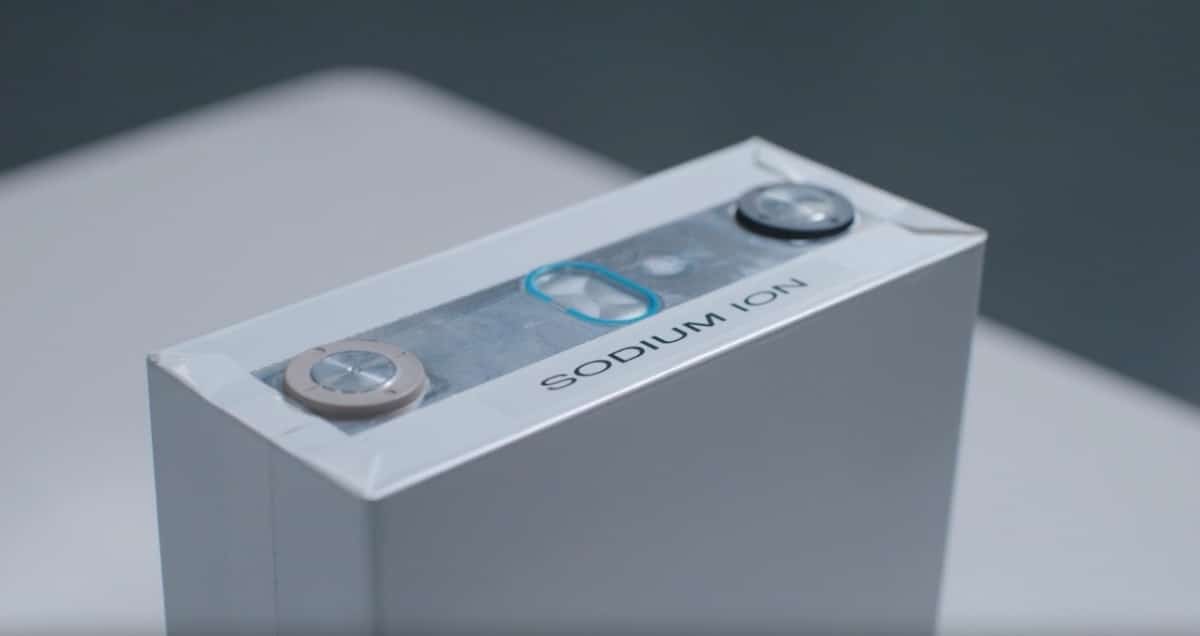
A battery lab in Michigan is quietly building a chemistry that answers a question EV shoppers keep asking about range, mostly by refusing to touch it.
One project inside that lab is built to push a car farther on a single charge.
It uses a different chemistry entirely, one based on manganese rather than salt.
The other project is built to sit still for decades inside a warehouse sized battery, using ordinary table salt chemistry instead of the metals that fill today’s EV packs.
Only one of them is headed anywhere near a driveway, and it is not the sodium one.
Why sodium chemistry only makes sense once a car is out of the picture
The mechanism comes down to a simple tradeoff between how much energy a cell can pack into a given weight and how cheaply and reliably it can sit under constant stress. Sodium-ion batteries eliminate the need for lithium, cobalt, and nickel and utilize widely available sodium instead, promising significantly lower production costs, enhanced safety, and high performance even in extreme temperatures.
That is because sodium is far more abundant than the lithium, cobalt and nickel that fill a typical EV pack. So the tradeoff matters less on a concrete pad than it does inside a car.
A stationary storage system does not care about shaving pounds or squeezing extra miles out of a tank sized battery. When you’re talking to a utility, a hyperscaler, or other power providers in need of energy storage solutions, their priority is not maximizing range or minimizing weight, which is why General Motors is steering its new sodium-ion cell toward that job and that job alone.
In a post on its own newsroom, GM’s battery team framed the decision around a utility or hyperscaler shopping for storage, one that is not trying to maximize range or minimize weight at all. Sodium-ion batteries are uniquely suited to meet the demands of grid-scale storage, where safety, reliability, affordability, and low maintenance are critical.
Inside the partnership building cells nobody will ever plug a car into
The deal itself is concrete. Backed by a strategic investment from GM Ventures in Peak Energy, the partnership combines Peak’s passively cooled storage technology with GM’s battery cell development expertise to deliver affordable, reliable stationary storage.
Under the partnership, GM will develop the sodium-ion cell in its Michigan battery labs and retain exclusive manufacturing rights, while Peak will incorporate the cell into its proprietary energy storage systems.
Peak is not a brand new name in this market either. The company has an agreement to supply up to 4.75GWh of its industry-leading sodium-ion battery energy storage systems to Jupiter Power, for deployment between 2027 and 2030. So GM is plugging its cell development into a buyer that already has utility scale customers lined up.
What the two companies are promising is a cost argument, not a range argument. Peak Energy’s proprietary passively cooled battery storage system has disrupted the conventional energy storage market by eliminating energy-intensive cooling systems that increase costs, and Peak’s sodium-ion system reduces energy storage costs by 20% compared to conventional systems and delivers more than 99% uptime.
The numbers that explain why this never touches an EV lineup
Here is where the methodology gets specific enough to matter. GM’s vice president of battery and sustainability, Kurt Kelty, framed the decision around chemistry fit rather than ambition.
“At GM, we know that the application should determine the battery, and for grid-scale stationary storage, sodium-ion is the right solution,” said Kurt Kelty, VP of Battery and Sustainability at General Motors.
So why not cars. The density numbers explain it bluntly. The energy density of sodium-ion remains too low for automotive use, so GM is not developing these cells for EVs.
Independent reporting on China’s first sodium-ion production car puts the batteries inside the car completing 248 miles on a single charge, with the cells packing an energy density of 175 watt-hours per kilogram, below the density of lithium chemistries that power American EVs today. That gap sounds small on paper, but across a 300 mile pack it can be the difference between a sedan and a golf cart. Meanwhile GM already has a separate lithium manganese rich platform doing the range work in its lineup inside that same Michigan complex, a project the automaker has said separately adds 20 percent more range per kilowatt-hour without any sodium involved at all.
Where this fits next to everything else racing toward the same plug
None of this happens in isolation. Overseas, a Chinese automaker has already put a sodium-ion pack into a mass-produced passenger car, with the batteries completing 248 miles on a single charge, with the cells packing an energy density of 175 watt-hours per kilogram.
That number undercuts most lithium powered sedans sold in the US today. So the chemistry clearly can move a car, just not very far by American highway standards, and that figure comes from a more generous Chinese test cycle besides.
Even so, the same reporting found the real strength shows up when temperatures crash. The cells retain over 90% capacity at, 40°C and operate down to, 50°C, a cold-weather performance that lithium packs struggle to match once the thermometer drops.
That single advantage is why some forecasts still expect sodium to claim a meaningful slice of the smallest, cheapest EVs sold globally within a few years, almost entirely overseas for now. Which is also why GM’s decision reads less like a retreat and more like a sorting exercise between two different jobs, the same way different plugs and speeds keep settling into different use cases across the public charging network.
What drivers should actually expect from this split for years to come
For anyone shopping an EV this year, the practical takeaway is reassuring rather than disruptive. Range focused buyers are not about to see a cheaper, shorter range sodium trim show up at a Chevrolet dealership.
That is because GM has said outright that job belongs to lithium chemistries for the foreseeable future, with the new LMR platform doing that work instead. Instead the payoff from sodium shows up somewhere quieter, in the price of electricity itself.
If sodium backed grid batteries really do cut storage costs by a fifth, utilities absorbing that savings could eventually soften the electricity bills that power home chargers in the first place. That is a slower, less visible kind of progress than a new range number on a window sticker.
But it still touches the same driveway. The bigger story is a battery industry that no longer wants one chemistry to do every job, with lithium keeping the range promise on the sticker while sodium keeps the grid cheap and steady behind it.
