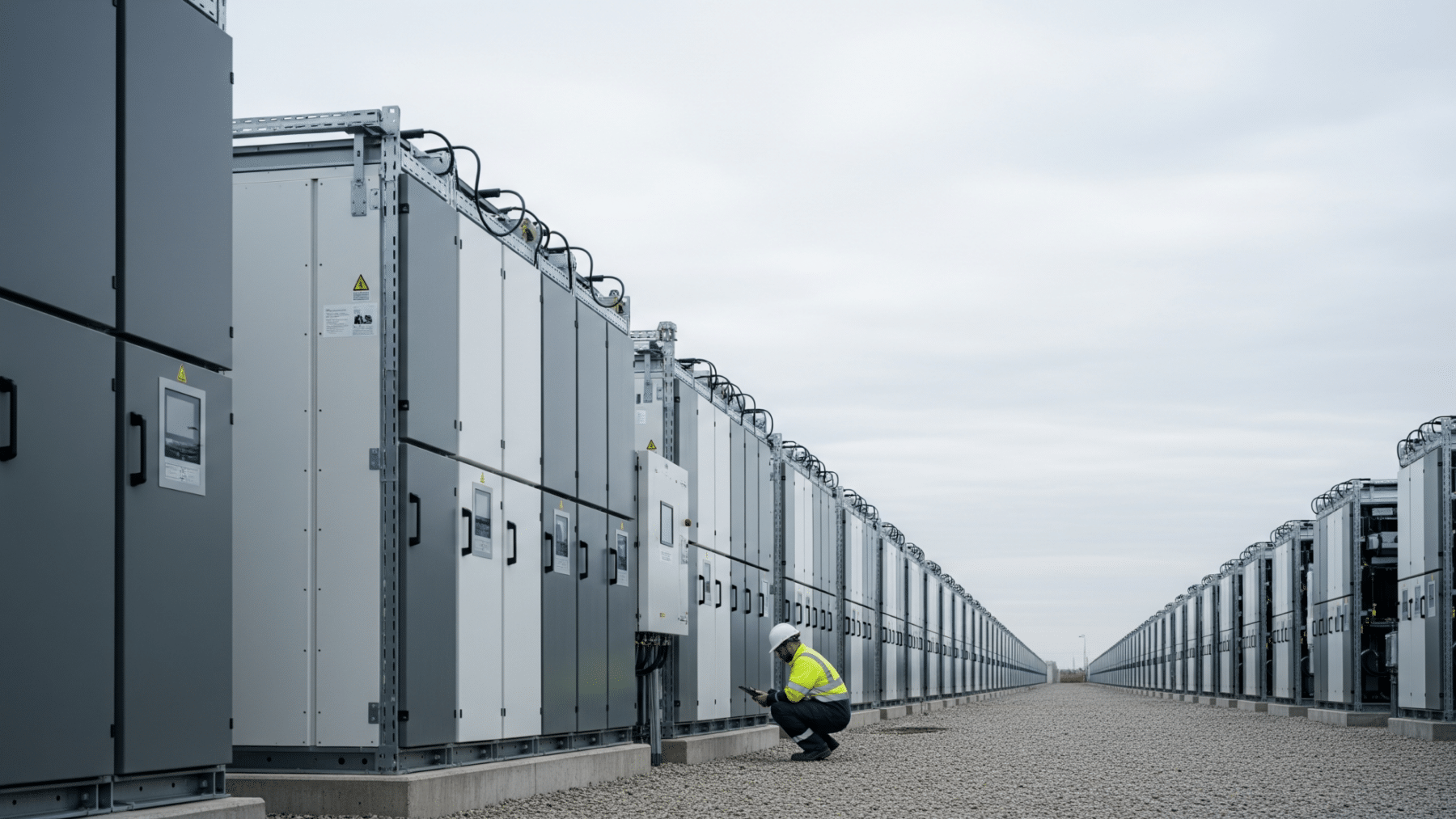
The United States is set to increase its utility-scale battery storage capacity by more than 50 percent within roughly two years, according to federal data published in early 2026. Developers plan to add a record 24 gigawatts (GW) of utility-scale storage in 2026, up significantly from the 15 GW added last year.
The EIA projects total U.S. battery storage capacity will rise from 44.6 GW to over 67 GW by the end of the first quarter of 2027.
What the EIA data show
The U.S. electric grid is on track for a record-breaking year overall, with developers planning to add 86 GW of new utility-scale capacity in 2026, according to the latest data from the U.S. Energy Information Administration. The trends are documented in the agency’s Electric Power Monthly, which shows fossil fuel capacity facing a net decline.
Battery storage accounts for 28 percent of total planned capacity additions this year, at 24.3 GW, trailing only solar at 51 percent and ahead of wind at 14 percent. Natural gas accounts for approximately 7 percent of the planned additions.
That share represents a measurable shift in how grid operators and developers are approaching the infrastructure buildout needed to handle rising electricity demand from data centers and other large commercial loads.
The rapid scaling follows five years of exponential growth; developers plan to add 24 GW of utility-scale battery storage to the grid this year, compared with a record 15 GW added in 2025, and U.S. battery storage capacity has grown exponentially over the last five years with more than 40 GW added to the grid during this period.
Texas leads, with California and Arizona close behind
The 2026 battery storage buildout is highly concentrated in a few states. Texas leads with 12.9 GW, representing 53 percent of new capacity, followed by California with 3.4 GW (14 percent) and Arizona with 3.2 GW (13 percent).
Major storage projects scheduled to reach commercial operation this year include the 621 MW Lunis Creek BESS in Jackson, Texas, and the 500 MW Bellefield 2 Solar and Energy Storage Farm in Kern County, California.
Another significant project, the Tehuacana Creek 1 Solar and BESS in Texas, is set to pair 418 MW of battery storage with 837 MW of solar capacity , reflecting the growing appetite for co-located storage in the U.S. renewable energy market. The Tehuacana Creek 1 project is located in Navarro County, Texas.
Texas’s outsized share stems partly from the structure of its grid. The state has more battery storage projects planned than any other, with large concentrations of projects clustered in the ERCOT region.
Battery storage systems have demonstrated value to the Texas market by supporting grid reliability and enabling greater integration of renewable resources.
Where the investment is coming from
Solar and battery storage together account for 79 percent of all planned capacity additions. The buildout is also being shaped by regulatory and policy pressures. New federal rules have made supply chain compliance a condition of tax credit eligibility, while import tariffs have raised equipment costs substantially since early 2025.
Developers are working to secure supply agreements and financing structures that can accommodate those higher input costs while still qualifying for available incentives.
The scale of activity marks a measurable break from recent history. Battery storage capacity in the United States was negligible prior to 2020, when electricity storage began growing rapidly. EIA data tracking 250 years of U.S. energy put that turning point in sharp relief: the country went from essentially no grid-scale battery capacity to a projected 67-plus GW in less than a decade.
Grid reliability and demand growth driving the pace
Electricity generation by the U.S. electric power sector totaled about 4,260 billion kilowatt-hours in 2025, and EIA’s latest Short-Term Energy Outlook expects U.S. electricity generation will grow by 1.1 percent in 2026 and by 2.6 percent in 2027. The EIA’s June 2026 Short-Term Energy Outlook forecasts U.S. summer solar generation up 19 percent and wind up 10 percent, meeting a 3 percent rise in electricity generation this summer.
Demand is surging in part due to data centers dedicated to artificial intelligence and cryptocurrency, and as homes and businesses use more electricity and less fossil fuel for heat and transportation. That demand picture is pushing storage into a central role on the grid.
Battery systems can absorb surplus midday generation and discharge it during evening peaks when solar output drops, a function that is increasingly valuable as solar’s share of the generation mix grows.
EIA’s latest outlook, which also captures the agency’s data on record U.S. energy output across multiple fuel types in 2025, shows battery storage emerging as one of the defining infrastructure investments of the current decade.
Utility-scale solar, wind, and battery storage are projected to add more than 80 gigawatts of new generating capacity in the U.S. by February 28, 2027, while total fossil fuel and nuclear power capacity will fall by almost 5 GW , according to EIA data reviewed by the SUN DAY Campaign.
