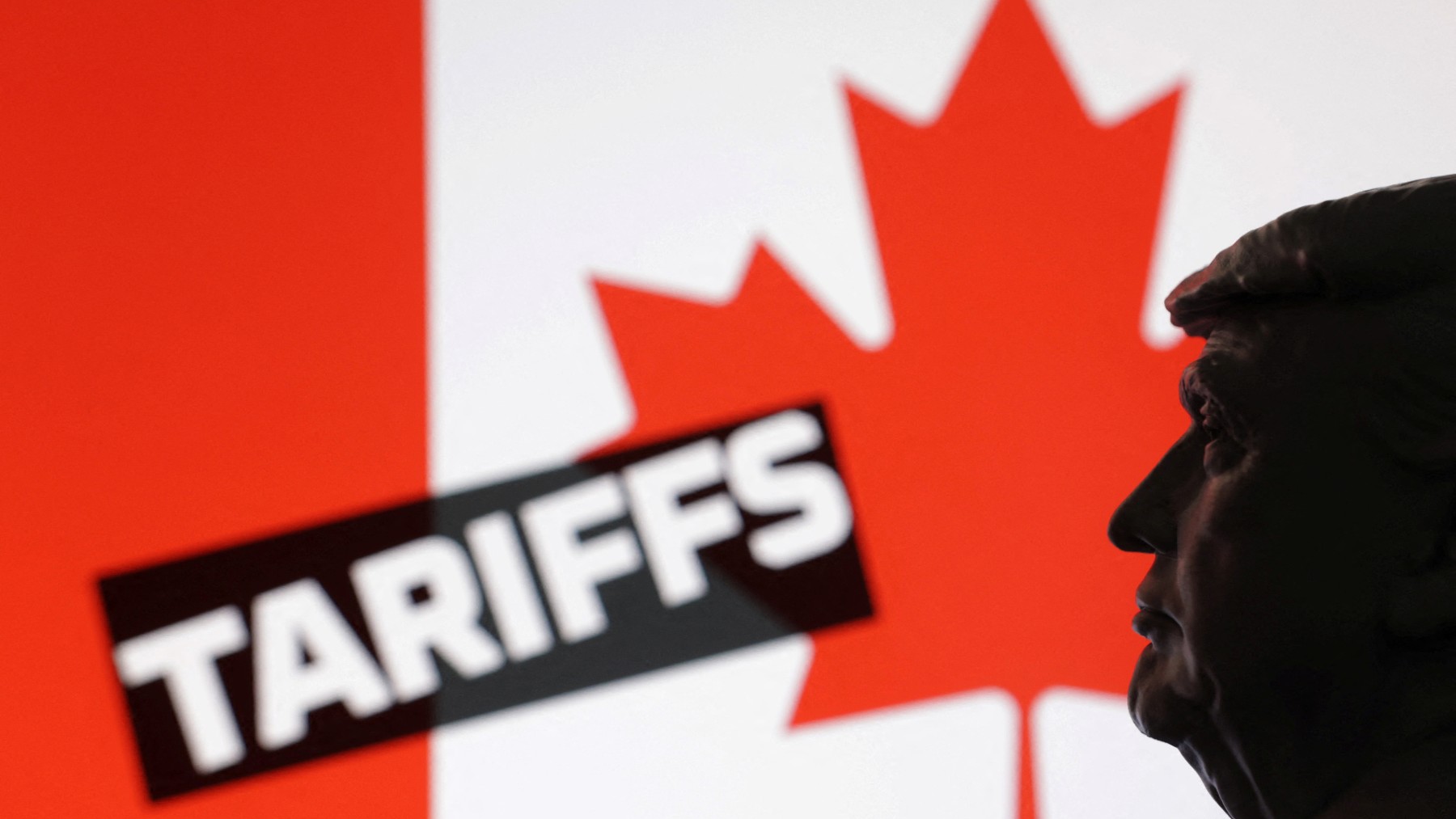
The United States is experiencing trade tensions with a new country: Canada. These tensions reached a new level after the imposition of 35% tariffs on Canadian products. Trump has sparked outrage and concern among Canadian leaders, who have even considered abandoning negotiations with the country.
The climate is one of rupture as negotiations are at risk
The Canadian team working on a trade deal with the United States could walk away from talks in the wake of a U.S. decision to impose a 35% tariff on some goods from Canada, an adviser to Prime Minister Mark Carney said on Friday. Flavio Volpe, a member of Carney’s hand-picked Council on Canada-U.S. Relations, told CBC News that the negotiators would stay in Washington for the time being. President Donald Trump on Thursday signed an executive order increasing tariffs on Canadian goods to 35% from 25% on all products not covered by the U.S.-Mexico-Canada trade agreement.
The White House cited what it said was Canada’s failure to stop fentanyl smuggling and a failure to address U.S. concerns about trade barriers. “Team Canada is still in Washington working on a deal, and they’re going to be there until we either have a conclusion of a good deal for Canada or that it’s time to take a pause and walk away,” said Volpe, president of Canada’s national Automotive Parts Manufacturers’ Association. Carney wants a new deal to reset bilateral relations, saying Trump’s move to impose tariffs had irrevocably upended the decades-old trading and security ties between the two neighbors.
Washington is also unhappy about Canada’s refusal to drop its own countermeasures, which were first imposed by former Prime Minister Justin Trudeau. He resigned in March to be replaced by Carney, who won an April election on the back of a promise to stand up to Trump. In June, Carney had threatened to ramp up counter tariffs in July unless there was progress on the deal. A statement he issued early on Friday did not mention retaliation at all.
Economic pressures challenge the Canadian response
Different fronts are putting pressure on the Canadian government. Some advocate a firm stance against the US, while others are already warning about the potential economic risks this approach could pose. There’s a sense of urgency to protect the Canadian economy, but there’s no guarantee the US will be willing to negotiate fairly.
The offices of Carney and Dominic LeBlanc, the federal cabinet minister leading the Canadian team in Washington, were not immediately available for comment. Carney’s talk about needing to stand up to Trump cannot hide the divisions between those in Canada advocating for a hard line and those who worry about the potential economic damage.
“As someone said to me, Canada is playing chess, but there’s nobody playing chess with it at the other end. We’ve got to make sure that we are thinking through: ‘What have we been doing and what do we need to do?’,” he told CBC News. “We’ve got to move with greater urgency, because our own economy is very fragile,” Goldy Hyde told CBC News.
Uncertainty and fragility put Canada under pressure
The tariff hike further exacerbates the climate of insecurity in Canada. The lack of a retaliation plan has been seen as a lack of internal consensus on what to do or a strategic reassessment. Diplomatic relations are fragile, and this hesitation could lead to problems for the country, especially in a context where the industrial sector and exporters are pressing for immediate responses.
What’s at stake for Canada in this tariff dispute?
Canada finds itself in a difficult situation diplomatically. Dealing with the US’s rising tariffs will require a clear strategy, one that aligns with the country’s economic interests. Carney is expected to confront the US, uniting the country before internal divisions over divergent opinions and the economic impacts compromise it.
GCN.com/Reuters
