Friendships and marriages are not simply a product of chance proximity or random mixing. A new mathematical model built by physicists at Graz University of Technology shows that social bonds form according to strict, measurable selection patterns.
The model is based on an analysis of tens of thousands of real relationships across the United States.
What the researchers found
The team, publishing in the journal Communications Physics, built a model called MAPS to simulate how people choose friends and partners.
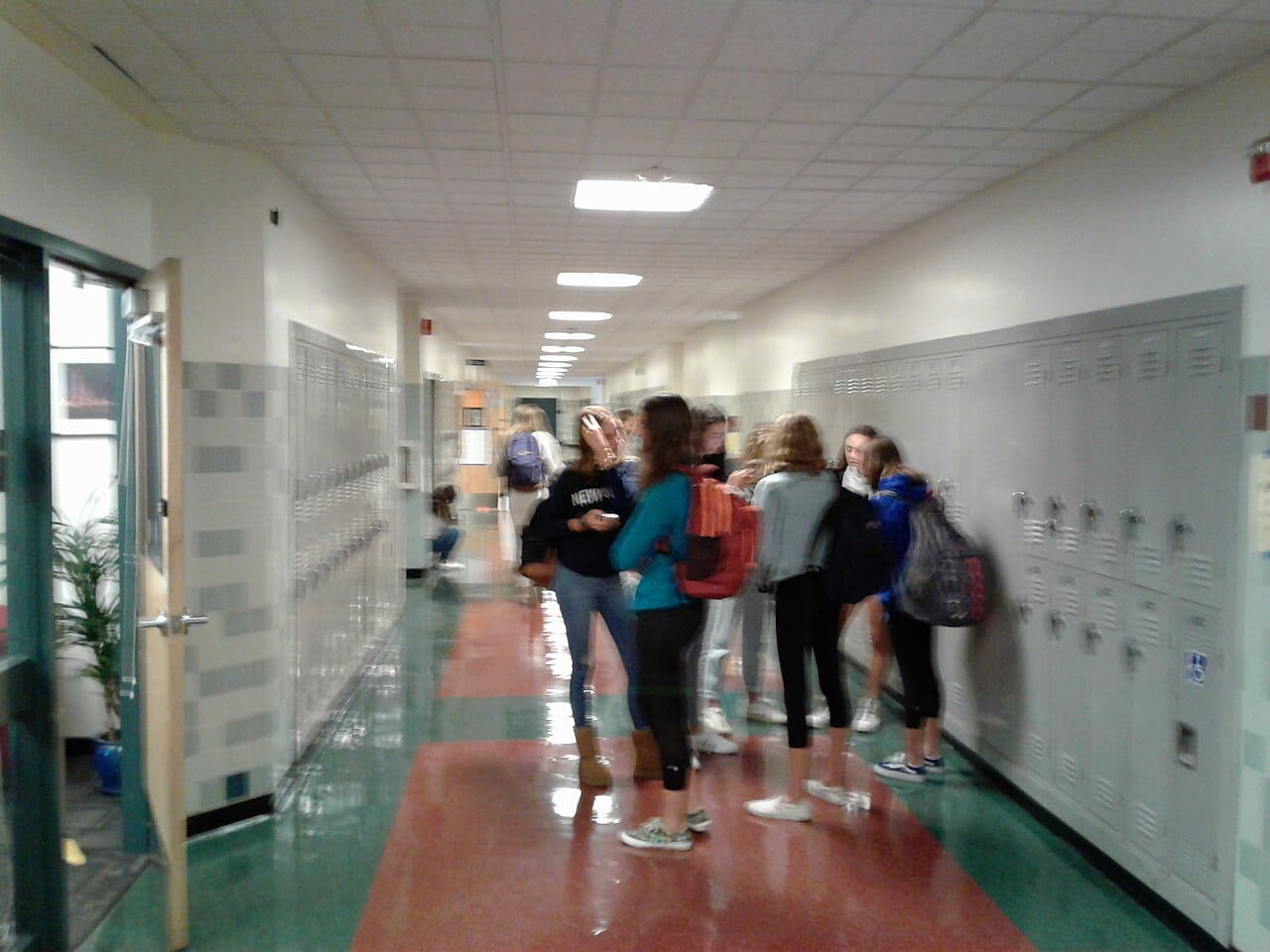
The researchers validated their MAPS model using data from the Add Health study on friendship networks, comprising a total of 41,800 high school students, as well as marriage databases from the 50 largest cities in the United States.
By comparing the model’s predictions against those two very different real-world datasets, one tracking teenage friendships and the other adult marriages, the researchers could test whether the same underlying selection rules applied across different types of relationships and life stages.
Why this adds to the friendship conversation
The finding lands as researchers and pollsters increasingly probe how Americans connect with one another outside the home. Pew Research Center has separately reported that 44% of adults say they trust all or most of the people in their neighborhood, while another 46% trust some of the people in their neighborhood , a dynamic that speaks to how localized and selective everyday social bonds tend to be.
That broader interest in who people choose to trust and befriend has also shown up in GCN’s coverage of how young adults lead both joining and leaving online communities, suggesting that the mechanics of forming and dropping social ties are shifting across different settings, not just inside a single friend group or school hallway.
The Graz findings suggest those choices are not haphazard. Instead, friendship formation follows patterns precise enough to be captured mathematically and to hold up when tested against a completely separate, much larger dataset of adult marriages in major American cities.
How the model was built and tested
Rather than treating friendship as a simple matter of people liking those similar to themselves, the MAPS model incorporates structural selection effects. These are essentially rules about who is even available to become friends or partners with whom, given school structures, neighborhoods and social circles. According to the study, people evaluate each identity dimension independently and form ties mainly when all evaluations are favorable , a mechanism the researchers describe as a “picky chooser” model.
Testing the model against the Add Health network of high schoolers and against marriage records from 50 of the largest US cities let the researchers check whether the same selection logic held across adolescence and adulthood, and across friendship and romantic partnership. In school friendships, grade level and ethnic background proved to be the most important drivers of long-term connections. In marriage data, age, gender, and ethnic background were the decisive factors for accurately reproducing observed marriages mathematically.
That cross-validation across two very different life stages and two very different relationship types is what distinguishes this study from smaller, single-sample friendship research. It points to selection forces that operate similarly whether two teenagers are choosing lab partners or two adults are choosing a spouse.
Why it matters
Social scientists have long debated how much of friendship and partnership comes down to chance encounters versus deliberate, patterned choice. A model that performs consistently across a national high school friendship survey and city-level marriage data offers evidence that the deliberate, rule-bound side of social bonding is stronger than casual proximity alone. “This selective behaviour explains the tendency towards the formation of highly segregated, homogeneous groups in our society,” says Fariba Karimi, who leads the Computational Social Science group at TU Graz and who member of the Complexity Science Hub faculty.
For everyday social life, the research reinforces something many people already sense. Who ends up in a person’s circle of friends, or who they eventually marry, is shaped by structured, somewhat predictable dynamics rather than pure randomness.
That has implications for how schools design social environments, how cities think about housing and community mixing, and how researchers model the long-running conversation around shrinking adult friend groups, a topic that has also surfaced in GCN’s reporting on adults open to new friends even later in life. Karimi and her co-author have said that improving opportunities for interaction among diverse population groups, including children from different backgrounds attending school together, could systematically increase the likelihood of relationships across social boundaries.
The study, titled “A simple preference aggregation rule explains how multidimensional identities shape social networks,” appears in Communications Physics, with additional details available via Graz University of Technology’s announcement. The research was funded by the Horizon Europe program and the Austrian Research Promotion Agency.
