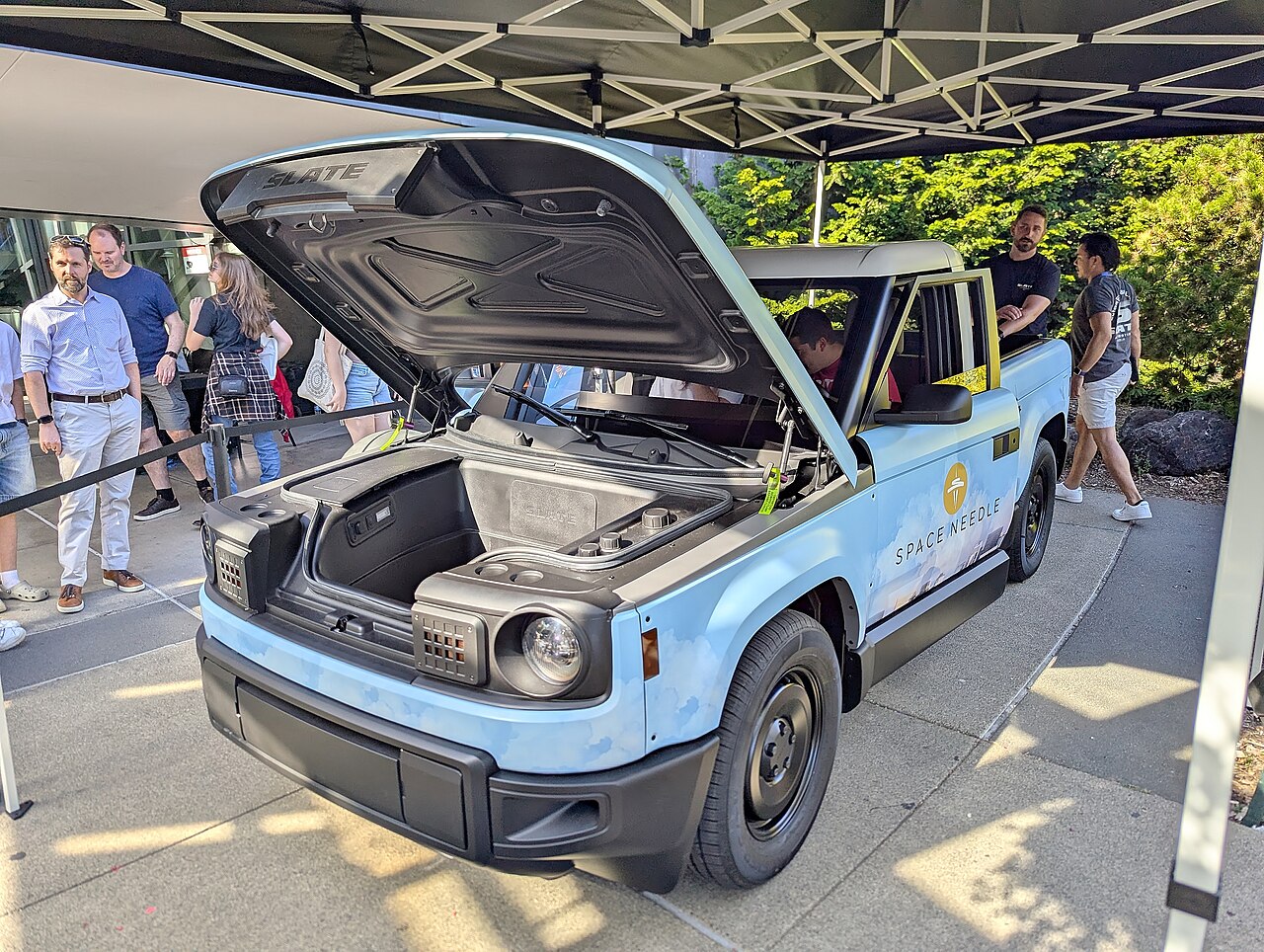
A gray, two door pickup with no paint options and no infotainment screen sat under showroom lights in Chicago last week.
Shoppers walked around it, phones out, comparing a sticker that still felt unusual for a new vehicle.
No chrome trim, no third row of dials, just a bed, a motor and a price tag.
That price tag is now reshaping who gets to claim the title of cheapest truck in America.
So how did a two seat startup pickup from Indiana end up underpricing a Detroit sales giant?
Why a stripped down truck can undercut a mainstream one on price
The mechanism is simple once you see the parts list. The pitch is brutally simple: a two seat, rear wheel drive electric pickup stripped to its studs, designed to be customized over time instead of loaded at the dealer. The company has stripped the truck of pretty much every standard feature you would expect in a modern car, including power windows, power mirrors, a radio or a central screen, and even paint, each a line item that normally adds cost to a production vehicle.
Instead of a dashboard full of electronics, owners mount their own phone and lean on a free app for charge status and battery health. That alone strips out sensor and wiring costs that every other new pickup already carries baked into its base price.
No dealer markup either. The company sells direct to consumer, and there is no dealer network.
That combination is what let a tiny startup undercut an established automaker’s long running budget model.
Inside the Chicago showroom and what the truck actually offers
The physical proof of that strategy opened its doors this month. The EV startup made the announcement on its social media channels, noting that its first Slate Experience Center opened starting October 15 at 1053 W. Grand Ave in Chicago , a location previously used by a different electric automaker’s retail outlet. A quick Google search reveals that the same building currently home to the showroom used to house Tesla’s first Chicago store .
So if you live in Chicago or the surrounding area, you can now check out the $26,400 truck in person instead of using the online configurator. In its own launch announcement, the company told fans to “come check out the truck in person, see accessories and wraps, and skip the dealership pressure.”
What they find on the lot is deliberately minimal. The pitch is brutally simple: a two seat, rear wheel drive electric pickup stripped to its studs, with an estimated 205 miles of range, a 2,000 pound tow rating, and a five foot bed with a front trunk.
Shoppers weighing this against a conventional pickup are getting a genuinely different vehicle than what most dealers stock.
Hard numbers behind the price shift and the reservation rush
The clearest evidence of demand sits in the order book. The order book is open via a $300 deposit, with early reservation holders able to submit the difference and lock in their place in line.
Pricing itself moved twice in public view. The advertised starting price excludes a mandatory destination charge, which brings the total price of the truck to $26,400 before factoring in local sales tax.
That still beats the truck it was built to challenge. Counting destination, a rival compact truck from a Detroit automaker starts thousands higher, and other competing trucks only go up from there.
Industry coverage has repeatedly framed the sub $25,000 starting price as genuinely remarkable for a new truck at a moment when affordable new vehicles of any kind have grown scarce.
Where the pricing story gets complicated
None of this happened as originally planned. The truck was once promised to start under $20,000, but that figure factored in electric vehicle incentives that are no longer in the picture after federal tax credit changes took effect.
So the number buyers see today is higher than the one that sparked the original wave of interest.
Even so, the comparison still resonates with shoppers hunting for a true budget pickup. Because paint, infotainment and power windows all cost extra, tacking on options can swing the price in the other direction, with a fully loaded version costing far more, pushing some buyers’ final price closer to a loaded rival than the base sticker suggests.
Meanwhile the delivery clock keeps ticking. Customer deliveries are expected before the end of the year, a target that still depends on a brand new factory hitting its production schedule.
What the shift means for budget minded truck shoppers
For buyers who simply want the lowest entry price on a new truck, the math has changed this year. A segment that barely existed before, sub $30,000 new pickups, now has a genuine price leader that is not the familiar compact gas truck shoppers expected.
That matters beyond one showroom in Chicago. Work truck buyers watching value plays in the used market now have a new benchmark to weigh against a sparsely equipped electric option.
Still, reservations are not deliveries, and reservation numbers are by no means a signal of sure success, since plenty of announced EVs have accumulated waitlists that never converted to sales.
The company’s Warsaw Indiana factory and its new Chicago retail outpost are the clearest signs yet that this one intends to actually build what it promised. If deliveries begin on schedule, the real test is whether the reservation holders still want the truck once they can sit in one.
