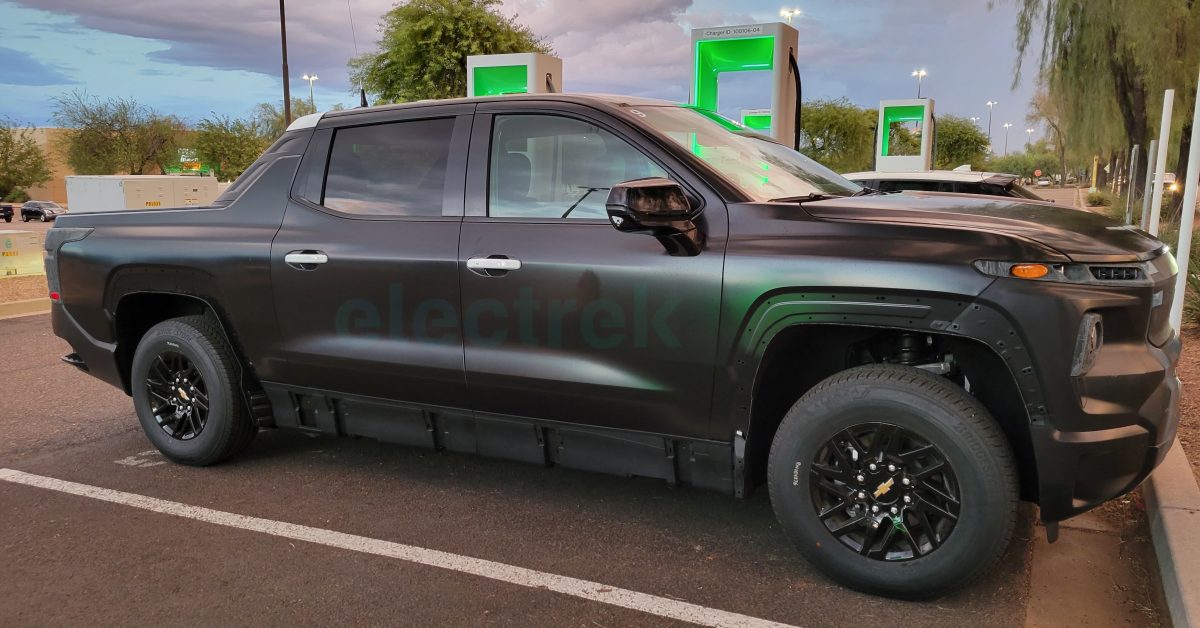
A pickup truck sits at a fast charger on a cold morning, its display climbing past 400 miles of promised range before the driver even reaches for coffee.
That number used to belong to someone else.
For most of the last two years, the longest range among electric trucks bounced between a handful of upstart names. Now a familiar nameplate from a Detroit giant has taken the crown, and the shift says less about one truck than about how the whole electric pickup market is being priced and built.
How one truck pulled ahead on range without a bigger engine
Range in an electric truck comes down to a simple trade: how much energy the pack holds against how much the truck drags through the air and the weight it carries. With an EPA-estimated 493 mile range, the 2026 Silverado EV Max Range WT sets the standard as the range leader for electric trucks. The rating is built around a pack sized near 200 kilowatt hours.
That is not a tiny or especially efficient battery. What changed is how the automaker tuned the Work Truck Max Range trim specifically for distance rather than payload or towing, trimming wheel size, tightening aerodynamics and prioritizing a smoother underbody over raw torque. Other Max Range trims on the same truck, like the LT and Trail Boss, are rated lower, closer to 478 miles, because added weight and equipment eat into the number.
So the Silverado EV is not winning through a chemistry breakthrough. It is winning through a deliberate trim strategy that treats range as the headline spec buyers cross-shop, the same way gas truck buyers once compared towing numbers on a window sticker. That is a meaningful shift for a segment long judged on torque and bed size first.
Inside the current ranking, and who got passed
The gap between the Silverado EV and its rivals is not small. The GMC Sierra EV is mechanically identical to the Chevrolet Silverado EV, but it offers different design details and equipment, and Max Range versions of GMC’s electric pickup promise 460 miles. That figure is a GM estimate rather than a separate EPA certification, but it still trails the Silverado’s EPA-rated Max Range number by more than 30 miles.
Rivian, long treated as the range benchmark for electric trucks, now sits further back. The 2026 Rivian R1T Dual Max with 22-inch wheels carries an EPA range of 420 miles, more than 70 miles behind the Silverado’s Max Range figure.
Tesla’s Cybertruck does not appear near the top of the current rankings at all, and neither does any electric truck from Ford, Toyota or Hyundai. That absence matters as much as the numbers at the top, because it shows how concentrated the long-range truck race has become among just a few builders.
Even the three-row electric SUV segment, where a recent independent charging test turned heads for speed rather than distance, has not produced a truck-class rival to this number.
Where the official numbers actually come from
These rankings rest on EPA certification testing, the same federal dynamometer procedure automakers have used for decades to generate the window sticker figure. It is a controlled, repeatable test, run at moderate speeds and mild temperatures rather than highway cruising or winter cold. The agency’s own fuel economy database lists the Max Range WT configuration at exactly 493 miles of total range.
Independent trackers compiling model year data across the full EV category consistently place the Silverado EV Max Range WT at 493 miles atop the electric truck category, with the GMC Sierra EV’s estimated 460 miles and the Rivian R1T’s EPA-rated 420 miles further back. Some full-size electric SUVs, like the Cadillac Escalade IQ at an automaker-estimated 465 miles, post comparable or even higher numbers, but they compete in a different class built around three-row seating rather than a cargo bed. That consistency across several independent compilations is what makes the truck ranking durable, rather than a single marketing claim.
None of that means every buyer sees 493 miles in daily driving. An EPA figure is a lab baseline, not a weather forecast or a towing guarantee.
The complication, because a lab number is not a driveway number
Real-world range tells a rougher story than any window sticker. Independent range tests of large EVs, including the Silverado EV, have shown it is one of only a handful of EVs that can sustain well over 400 miles at steady highway speed, a meaningful drop from the Max Range trim’s 493-mile label, though results vary by trim, wheel size and conditions.
That drop is not unique to this truck, because every pickup on the list loses range at 70 and 75 miles per hour, and a tall, flat-fronted shape pays a steep aerodynamic price that sedans and crossovers rarely face. Even so, the gap between trucks tends to hold its order, and a truck that leads by dozens of miles on the EPA test generally still leads after everyone takes their real-world haircut.
Price complicates the picture further, since the Silverado EV Max Range WT starts well below six figures, undercutting the Escalade IQ by tens of thousands of dollars while posting a comparable or better range figure, a combination that barely existed two years ago.
What the shift means for buyers cross-shopping electric trucks
For a buyer comparing electric trucks today, the practical lesson is that the badge on the tailgate no longer predicts the range number the way it did even a year ago. Rivian built its reputation on long-range capability, yet it now trails a mainstream trim built specifically to chase that metric.
That kind of reshuffling tends to ripple into financing and resale too, the way pricing above sticker has already reshaped other corners of the same lineup. A range leader draws extra demand, and extra demand has a way of showing up in transaction prices before it shows up anywhere else.
Whether this lead holds depends on what rivals do next. Rivian has newer platforms in development, and GMC shares enough hardware with Chevrolet that a future Sierra EV trim could close the gap quickly.
For now, the sticker tells a clear story: a mainstream pickup, not a boutique startup truck, currently goes farther on one charge than anything else built to carry a bed of cargo in America.
