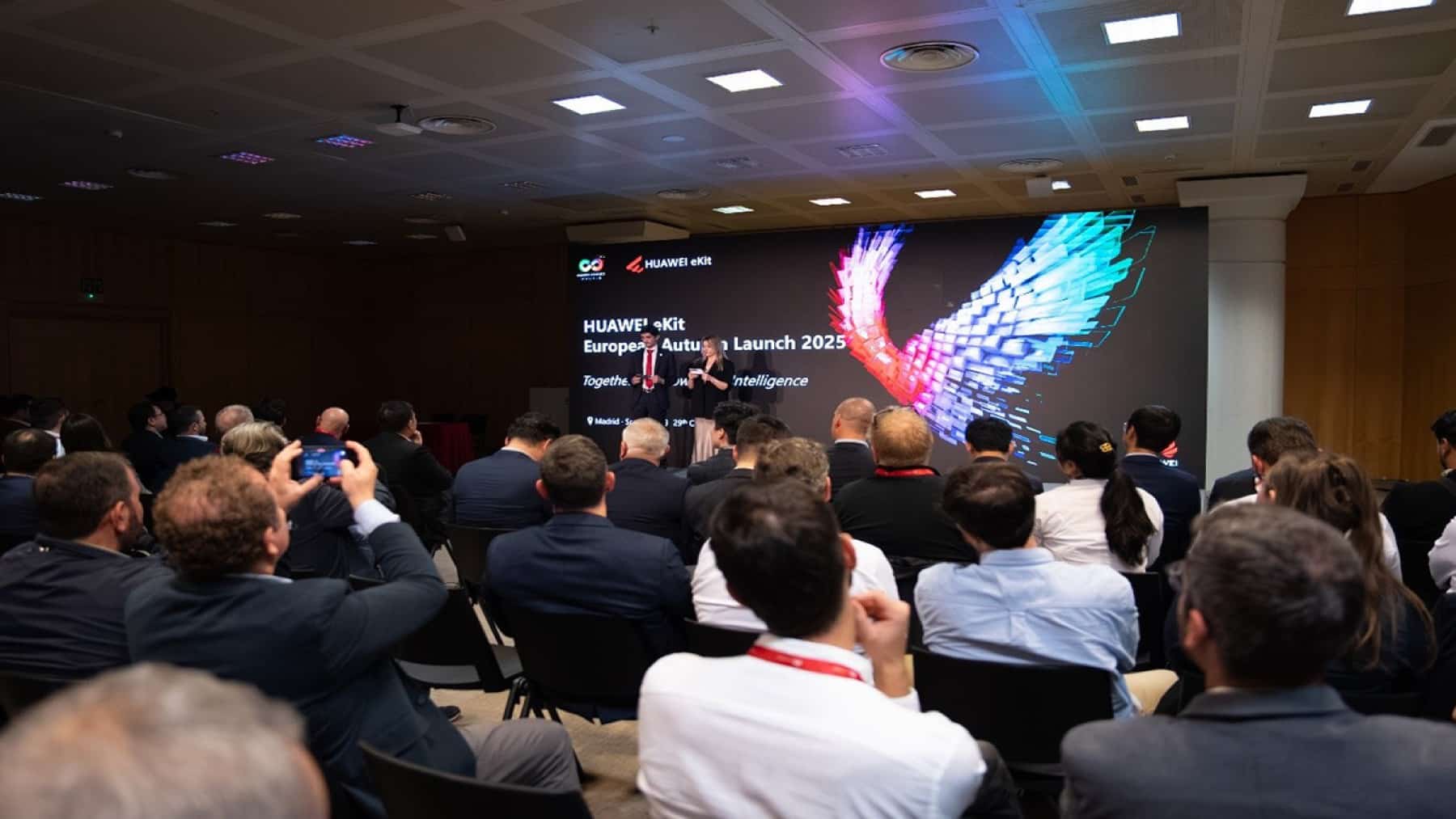
The latest step in Huawei’s efforts to recover the company’s position in the European market has taken an interesting turn, and this has come through the launch of innovative intelligence solutions. During the HUAWEI CONNECT 2025 event in Madrid, the company launched its “eKit 4+10+N” concept designed specifically for SMEs in Europe. The event was attended by over 130 distribution partners from 15 different countries.
Madrid launch showcases Huawei’s renewed European SME strategy
The event on the 4th of November in Madrid was different from the usual corporate launch. Huawei’s Vice President, Michael Ma, began the presentation by emphasizing the importance of partnership and the great support and collaboration the company has enjoyed from distribution partners in Europe during the last two years. This shows Huawei’s awareness that winning back the trust in Europe would mean much more than the innovations they possess.
In the opening speech, the President of European ICT Marketing and Solution Sales, Steven Qin, introduced the primary concept that the 4+10+N framework has. In the presentation, Qin reiterated Huawei’s focus on the development of solutions and services that are easy to use, easy to sell, and easy to maintain—a major approach specifically designed in response to the issues some SMEs experience when using AI.
The 4+10+N model consists
- 4 major cases: Intelligent Office, Intelligent Business, Intelligent Education, Intelligent Healthcare
- 10 one-stop solutions: ranging from SME office solutions, intelligent hotel solutions, and digital diagnosis solutions
- N Star Products: 26 customized products launched, including the HUAWEI eKitEngine AR180 series routers
- All-in-one design: combines routing, switching, wireless communication, and VPN functionality in one device
Untapped AI potential in the European SME market
The number of SMEs in Europe in the millions has a significant contribution in relation to their GDP, yet they are thwarted in their application and implementation of AI solutions because they lack the technology and the talent. In general, the focus here would be on developing intelligent solutions that are quick in deployment and have their intended purpose, namely, the optimization and increase in efficiencies.
In the past, the installation of these solutions has traditionally involved complex subcontracting arrangements, potentially proving inefficient and expensive for SMEs. The new distribution strategy adopted by Huawei changes the focus from the sale of standalone solutions, and all solutions are now installed in a manner that the installation companies can better utilize. The solutions are designed to solve real business scenarios and not the reverse.
Distribution partners formalize collaboration in major European markets
The concluding activity in the Madrid conference was the signing session, where the partners in Spain and Germany signed their plans in collaboration with Huawei. There was also the presentation of successful experiences by the three partners in the distribution in Europe, an act that validated the approach in eKit. The partners’ approach adopted in the Huawei organization considers the need for local knowledge in accessing the European markets.
Technology integration simplifies complex AI deployment challenges
The HUAWEI eKitEngine AR180 series routers are an example of Huawei’s “complexity for us, simplicity for customers” vision, where several networking functionalities are combined in one product. The latest IdeaHub solutions combine their AI conferencing systems with other functionalities, making it unnecessary for SMEs to deal with several different suppliers and complex integration projects.
Huawei’s “eKit 4+10+N” launch is much more than the unveiling of another product because it symbolizes the beginning of the SME digitalization process in the European region. The need to emphasize the aspects of collaboration, ease, and scenario development appears to highlight the company’s experience in the region. However, it still has to be seen whether this strategy would help the company counter the regional worries related to geopolitics.
