A line of sheet metal panels moves past an empty workstation where a pair of mechanical arms once placed each piece by hand.
The machine that worked that spot is gone now.
Something newer stands there instead, assigned to a different part of the plant entirely.
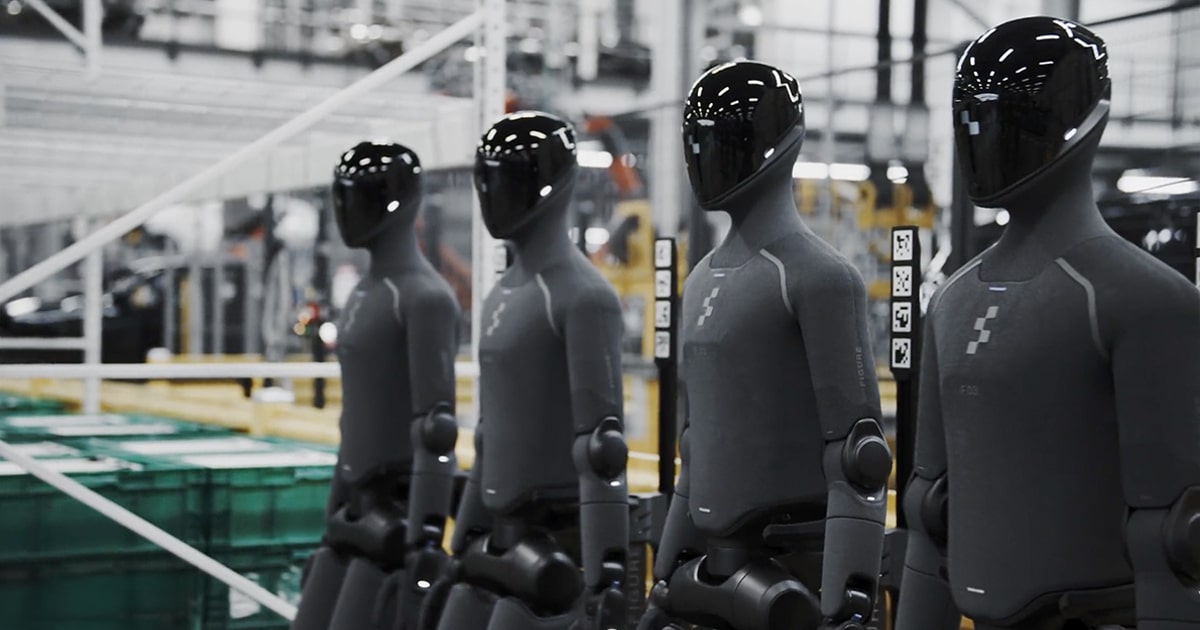
It is built to sort loose parts into the order the assembly line needs them, then let an automated cart carry them onward.
Nobody on the factory floor calls this science fiction anymore, it is simply how the next shift gets staffed.
So what actually changed between the robot that left and the one that replaced it?
What the new robot can do that the old one could not
The first generation machine had a narrow, repeatable job: pick up a sheet metal part and set it into position for welding. In the body shop, the robot inserted sheet-metal parts for the welding process, a task that demands high speed and accuracy and can be physically demanding. That task never asked the robot to sort mixed parts, adapt mid motion, or work alongside shifting inventory.
Its replacement is built for something harder. The new robot handles this through redesigned hands with tactile sensors and palm cameras for finer manipulation.
Each hand now integrates an embedded palm camera with a wide field of view and low-latency sensing, enabling redundant, close-range visual feedback during grasps, and allowing Helix to maintain visual awareness even when its main cameras are occluded. Each fingertip sensor can detect forces as small as three grams of pressure, making it sensitive enough to register the weight of a paperclip resting on your finger, which enables Helix to distinguish between a secure grip and an impending slip before it occurs. Figure 03 also adds wireless charging, speech-to-speech audio, and soft safety components over its predecessor.
Inside the plant where the handoff actually happened
The setting is BMW’s manufacturing complex in Spartanburg, South Carolina, a plant that builds SUV models for export and the domestic market. The plant builds every BMW X5, X6, X7, XM, Z4, and M8 sold worldwide , making it one of the highest-volume, highest-value automotive plants in the United States.
The outgoing robot’s work happened in the body shop. Hall 52 at Spartanburg, where the BMW X3 and future BMW iX5 will be assembled, incorporates virtual 3D simulation for production planning , letting engineers rehearse new assignments digitally before a robot touches a live part.
That groundwork mattered because the new assignment is less forgiving. Following the successful deployment of Figure 02 on the assembly line in 2025, Figure 03 arrived in Hall 52, one of the assembly and logistics halls at BMW Group Plant Spartanburg. In the new sequencing use case, delivered components arrive unsorted in larger containers, and the robot picks them and sorts them into a sequencing trolley for just-in-sequence delivery to assembly.
So the task moved from fixed and repetitive to variable and unpredictable, the kind of work planners have historically reserved for people. Handing a version of it to a machine is the real story inside the handoff.
The numbers behind the handoff, and where they came from
None of this rolled out on a press release alone. The retired machine’s run is documented by both the robot maker and independent manufacturing press, and the figures line up: the robots helped produce more than 30,000 BMW X3 vehicles and loaded over 90,000 sheet metal parts over an eleven-month deployment before coming off the line.
During that run the robot absorbed real repetitive strain. The robots ran a 10-hour shift Monday-Friday, loaded 90,000+ parts, recorded 1,250+ hours of runtime, contributed to the production of 30,000+ X3 vehicles, and logged an estimated 1.2+ million robot steps or 200+ miles. These metrics were presented as confirmation that humanoid robots can sustain industrial workloads for long periods inside active plants.
The successor arrived within months, not years. The company’s own account, published on its official newsroom, confirms the newer robot entered one of the plant’s assembly and logistics halls to begin its own trial.
That speed is itself part of the story. The Figure 02 supported the production of more than 30,000 BMW X3 vehicles for just under a year and in the process gathered important data on efficient handling and execution, with findings from the real production environment informing the further development of the robot , which only makes sense if the first run generated usable training data, not just finished parts. The pattern echoes how coding tools route tasks across multiple paths to find the cheapest, most reliable option before scaling up.
Where the approach still runs into limits
Even inside this one plant, humanoid robots remain a small slice of the automation on the floor. Traditional robotic arms, conveyor systems and automated guided vehicles still do the bulk of repetitive heavy lifting, and they have done it reliably for decades at a fraction of the cost.
Analysts following the broader industry are blunt about the gap. Most current assessments describe humanoid robotics as still confined to a handful of pilot sites, for a narrow set of tasks, at cycle times and reliability levels that traditional industrial robots cleared a decade ago.
Which means the handoff is a proof point, not a finished product.
Cost is the other open question nobody is pretending has an easy answer. Scaling from one hall with a handful of units to a full plant running around the clock demands a reliability and price point that even well funded robotics companies are still chasing, much the way efficient AI systems had to earn their speed before running at scale cheaply.
What this handoff signals for the factories watching it
For now, the clearest fact is the simplest one: a humanoid robot did real, measurable work on a live production line, got retired on schedule, and was replaced by a more capable version within the same year. Figure AI founder and CEO Brett Adcock said the 11-month deployment of Figure 02 proved that humanoids are no longer lab experiments and can be a valuable asset in establishing a flexible, reliable manufacturing workforce.
Other automakers and logistics operators are watching this specific plant closely because it is one of the few places running a documented, multi month deployment rather than a short pilot. Ulrich Wieland, Vice-President of Production Control and Logistics, BMW Manufacturing, said “Plant Spartanburg is the birthplace of humanoid robotics in BMW Manufacturing’s operational day-to-day activities. Having already successfully completed a pilot with Figure 02 in our body shop, we are now looking forward to deploying Figure 03 for a sequencing use case in logistics.” The lesson other operators are drawing is less about the robot itself and more about the pace of rapid hardware replacement.
Even so, nobody close to the project is promising an empty factory floor anytime soon.
The work shifting to robots right now is the narrow, physically demanding slice, leaving judgment calls and oversight with the humans still on shift. That balance, a machine for the strain and a person for everything requiring judgment, is likely to define this next stretch of factory automation far more than any single robot unveiling.
