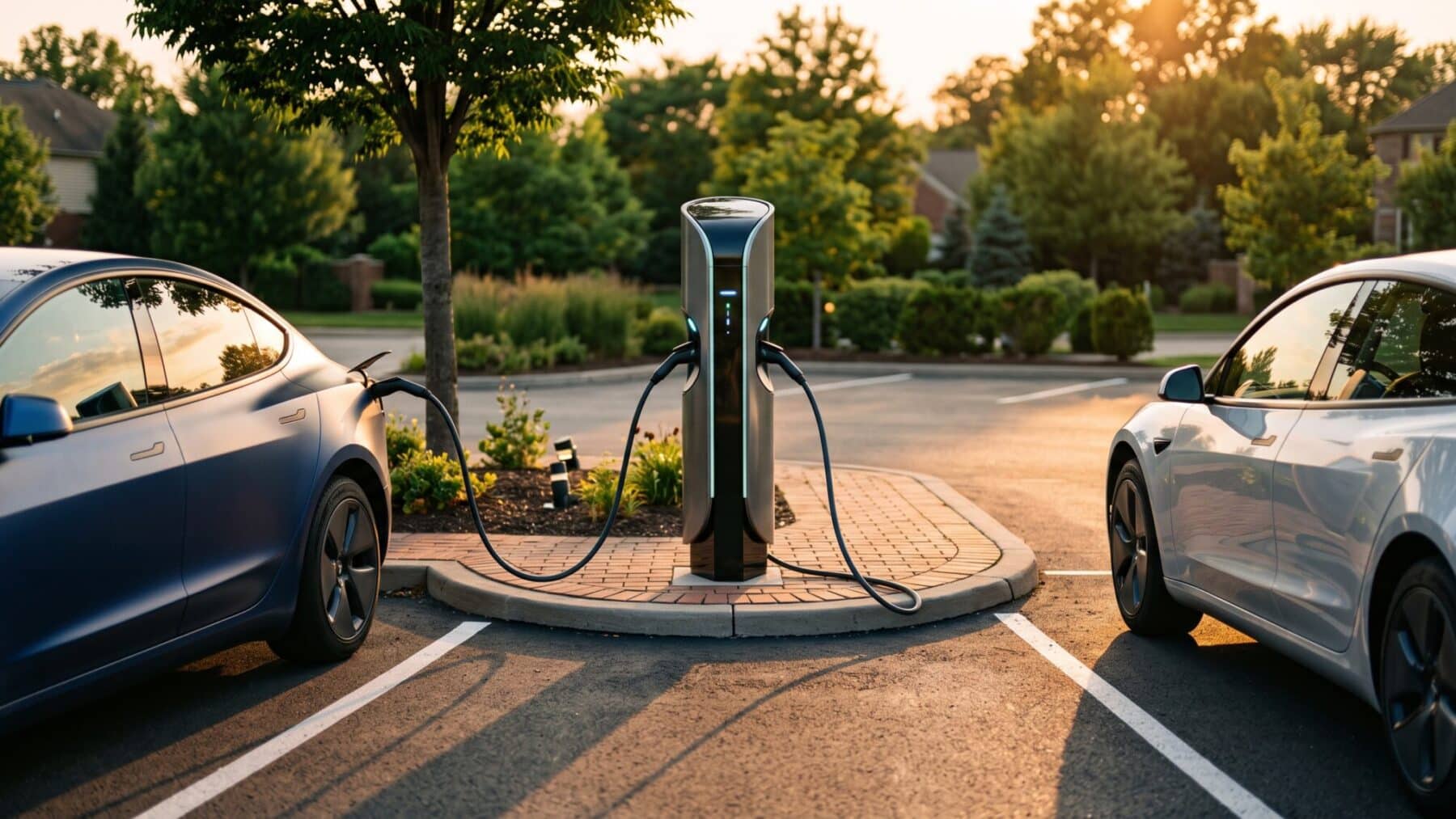
IONNA, the automaker-backed public charging network, has topped J.D. Power’s 2026 U.S. Electric Vehicle Experience (EVX) Public Charging Study in its first year of eligibility, ranking highest among DC fast chargers with a score of 807 out of 1,000.
The result pushes established networks out of the top positions and signals a shift in who is setting the standard for roadside charging in America.
OEM-backed networks sweep the rankings
IONNA is backed by BMW, GM, Honda, Hyundai, Kia, Mercedes-Benz, Stellantis, and Toyota. The network has been operating public fast chargers for less than two years, yet it earned a score of 807 out of 1,000 in the 2026 J.D. Power EVX Public Charging Study. It operated 1,375 ports across 150 stations as of the study’s publication, against a target of 30,000 stalls by 2030.
IONNA ranked highest with 807 points on a 1,000-point scale. The Mercedes-Benz Charging Network took second at 797 and the Rivian Adventure Network third at 755. Three charging networks built by automakers swept the DC fast-charging rankings in J.D. Power’s 2026 U.S. EV Experience Public Charging Study, in the first year all three were eligible for an award.
The rankings unseat Tesla from the top spot it held in last year’s EVX study.
The 2026 study was based on survey responses collected from 6,594 EV owners between January and June 2026, and was conducted in collaboration with PlugShare. J.D. Power evaluated 10 individual factors, including charger availability, charging speed, ease of initiating and ending a charging session, ease of payment, cost, location, safety, the physical condition of the charging site, and things to do while charging.
Charging failures hit a record low
The public charging experience continues to improve, with non-charging visits, instances in which EV owners arrive at a public charging station but are unable to charge their vehicle, falling to the lowest level ever recorded in the study. The non-charge visit rate fell to 12% in the most recent quarter, the lowest in the study’s history, from 14% a year earlier.
Average satisfaction with DC fast chargers increased by 12 points year over year to 666 points overall. The biggest improvements were charger availability, up 27 points; how safe drivers felt at charging locations, up 18 points; and charging cost, also up 18 points.
Brent Gruber, executive director of EV solutions at J.D. Power, attributed these gains to the performance of new OEM-backed fast-charging networks, which offer high-performing equipment, strong locations, and smoother charging sessions.
The study also found that the location of DC fast chargers plays a significant role in user satisfaction. Chargers located at hotels scored the highest at 697, followed by those at gas stations and convenience stores at 689, and restaurants at 688.
Level 2 charging lags behind
Satisfaction with public Level 2 chargers declined 12 points to 595, driven primarily by lower scores for ease of payment and ease of charging.
Car dealerships lagged behind with a score of 570. Stand-alone parking lots and garages ranked among the weaker performers as well.
The gap between DC fast-charging progress and Level 2 stagnation underscores where the industry’s investment is flowing. Networks like IONNA are concentrating resources on highway-capable, high-power stations rather than the slower Level 2 equipment that dominates urban parking lots and older installations.
The divergence matters for drivers who rely on workplace or street-level chargers for daily top-ups, where the ownership experience has not kept pace.
What the rankings mean for the market
IONNA’s debut at the top of a major third-party benchmark carries commercial weight beyond bragging rights. J.D. Power data consistently shows that public charging is the top reason new-vehicle shoppers reject EVs, which makes satisfaction scores directly relevant to purchase decisions across the brands that co-own IONNA.
The network is also expanding rapidly. That expansion will be tested against a complicated funding backdrop: the $5 billion NEVI program, which funds fast chargers along highway corridors, was frozen in early 2025; a federal court ruled the freeze unlawful, and the program has been restarting in 2026 with approximately $885 million in FY2026 funds flowing to states, though the shifting policy landscape has placed greater financial pressure on private operators and their automaker partners.
For drivers shopping EVs from any of IONNA’s eight owner brands, the J.D. Power result offers a concrete data point that the charging gap is beginning to close where it matters most: on the road at highway speed. The parallel push by GM, which has been expanding its EV portfolio across vehicle segments, reinforces why the automaker consortium invested in building its own charging ecosystem rather than relying on third-party networks.
