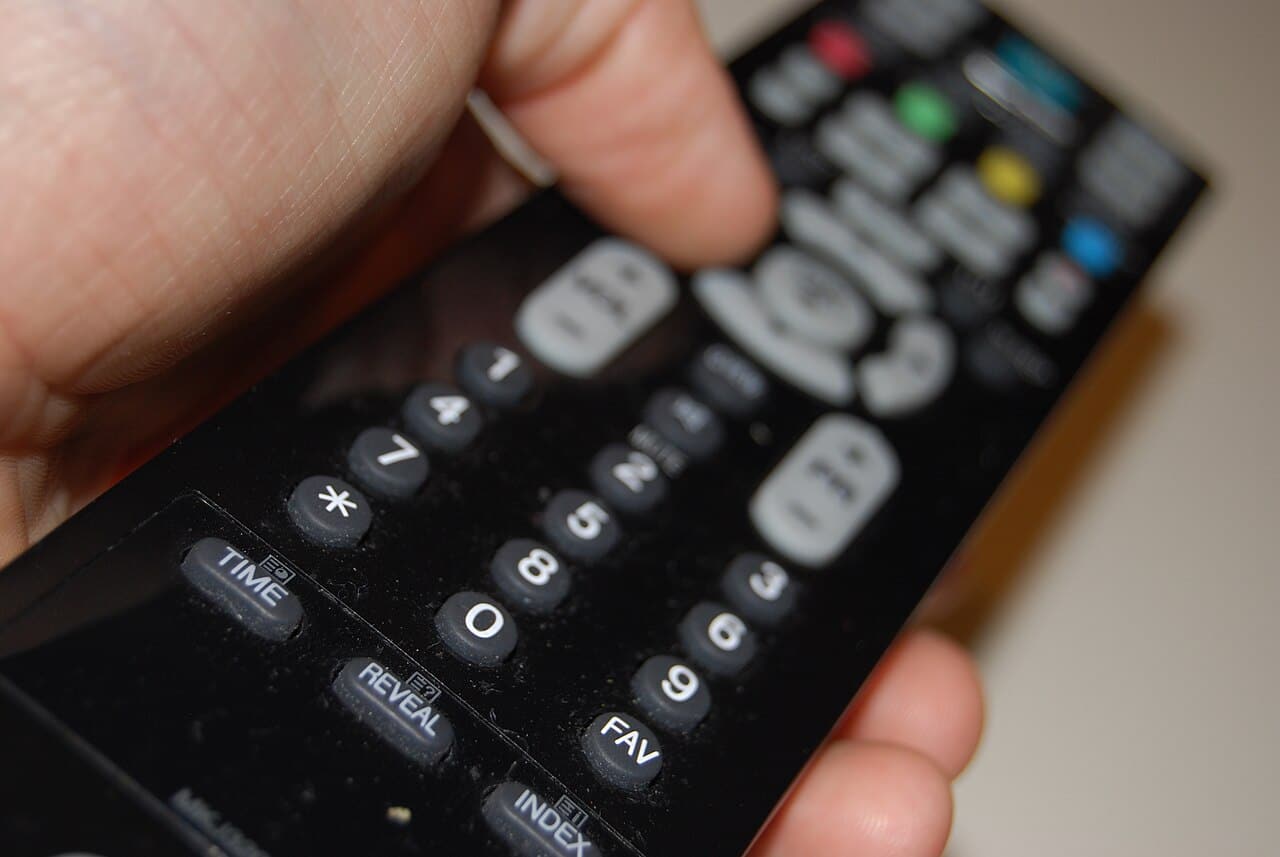
A thumb hovers over the remote as the credits roll.
Before anyone decides anything, the screen already has an answer. A soft bar sweeps across a button in the corner of the frame. Nothing was clicked, yet the next hour of the night just got decided anyway.
How the countdown actually takes the choice away from you
The mechanism is simpler than most viewers assume, and that is exactly why it works so well. When an episode ends on Netflix, the service does not wait for a command; it starts a visible timed countdown bar that will launch the next episode automatically unless someone actively intervenes.
When a piece of content playing on Netflix approaches its ending credits, a button appears in the bottom right, which users may press to begin the next episode, or they can let the countdown finish on its own. Viewers can return to the menu, opt to continue watching the credit sequence, stopping the next episode from automatically playing, opt to play the next episode right away, or do nothing, for which the next episode will automatically play after about 5 seconds.
So the default is not neutral, it is active. Viewers do not opt into another episode, they fail to opt out fast enough, and the clock keeps running whether anyone is paying attention or not. That single design choice turns a pause point built into every show into a moment with almost no friction left in it.
Which matters because friction is the only thing that was ever forcing a decision. Once the pause disappears, the default path forward is simply staying put. One participant in the research described the appeal of that path plainly, saying: “I like it automatically going to the next episode so I don’t have to move out of my comfortable bed.”
The ordinary living room scene this plays out in every night
Picture the setup almost every US household already owns. A phone sits face down on the couch arm, the lights are already low, and the show has been queued up for an hour already. That is the exact environment the countdown was built for, a moment of low effort and low resistance.
Because the button still appears even when the feature is switched off, viewers in the study were never stripped of choice entirely. When autoplay is disabled in Netflix’s account settings, the Next Episode button still appears, but the next episode does not begin playing until the viewer presses play.
The screen looks almost identical either way, just slower to act without a human pushing it.
That tiny difference, one tap required instead of zero, turned out to matter far more than it looks. A single extra step was often the whole gap between finishing a season in one sitting and closing the app early. The convenience never vanished, it just stopped happening automatically in the background.
What the hard numbers from the study actually showed
The clearest evidence comes from a controlled trial built specifically to isolate this one setting from everything else competing for attention on a couch. The study followed 76 participants who already reported moderate to heavy Netflix use. Half the group turned off autoplay, while the control group left it on.
Then came the comparison that gives the finding its teeth. Across the study window, people who disabled autoplay watched noticeably less television per sitting than the control group did, and the gap was not small.
A new study found turning off Netflix’s autoplay option led to participants watching on average 18 minutes less per viewing session. That is a single setting, one toggle buried in an account menu, reshaping how an entire sitting unfolds; researchers separately found that Netflix’s autoplay resulted in, on average, 21 fewer minutes watched per day as well.
Researchers involved in the original experiment called the finding significant precisely because it isolated one mechanism rather than blaming viewing habits generally. Lead author Brennan Schaffner put the core problem in blunt terms, noting that “platforms like Netflix try to minimize friction so that opportunities for consumers to deviate from the activity in which they are passively engaged are few and far between,” and “the 5-second autoplay countdown is hardly enough time for viewers to consider, or even just re-visit, their original intentions for visiting the platform.” A co-author on the project separately described it as “one of the first to isolate and measure the impact of one attention-capture dark pattern, that is, autoplay, and its effects on watching behaviors.”
Where the effect gets complicated and does not fully hold
Even the researchers behind the trial are careful not to oversell it. Not every participant who switched the feature off stayed that way, and the honest reporting from the project tracks what happened afterward rather than hiding it.
Some viewers in the no-autoplay group told researchers directly that they intended to turn the convenience feature back on once the study ended, with about half of the treatment group reporting that they plan to turn autoplay back on upon having completed the study , commonly citing the feature’s convenience.
So the finding is not that people hate autoplay, it is closer to the opposite. The same participants who watched less also admitted enjoying the lack of friction while the feature was active, which tracks with a split reaction captured during exit interviews about whether disabling it felt better or worse. About one-third opted to keep autoplay off after experiencing the benefits of disabling it during the study. None of that undoes the headline number, though. It does mean the fix is not emotionally neutral, because removing a habit loop that people have built an evening routine around tends to produce some genuine ambivalence even when it technically saves time.
What this means for anyone holding the remote tonight
None of this requires outrage, and it is not really a story about willpower failing. It is a story about a default setting doing quiet, measurable work in the background of a daily habit.
That is the same way other everyday defaults shape choices people assume they are making freely, the way a weekly screen time report rarely changes how much someone actually scrolls once the novelty wears off.
Even so, this is one of the rare digital habits with an actual lever anyone can pull tonight, sitting in an account settings menu rather than requiring new willpower. Flipping one toggle will not rewrite an entire evening, but the research suggests it reliably buys back real minutes.
That tracks with the way other small frictions elsewhere, like the everyday costs people underestimate, add up only once someone actually measures them. The feature is not secretly sinister, it is just well built for exactly what it was designed to do, and now there is a real number attached to what it costs an average sitting.
Whether that trade feels worth it is still, refreshingly, a decision left entirely up to the person holding the remote.
