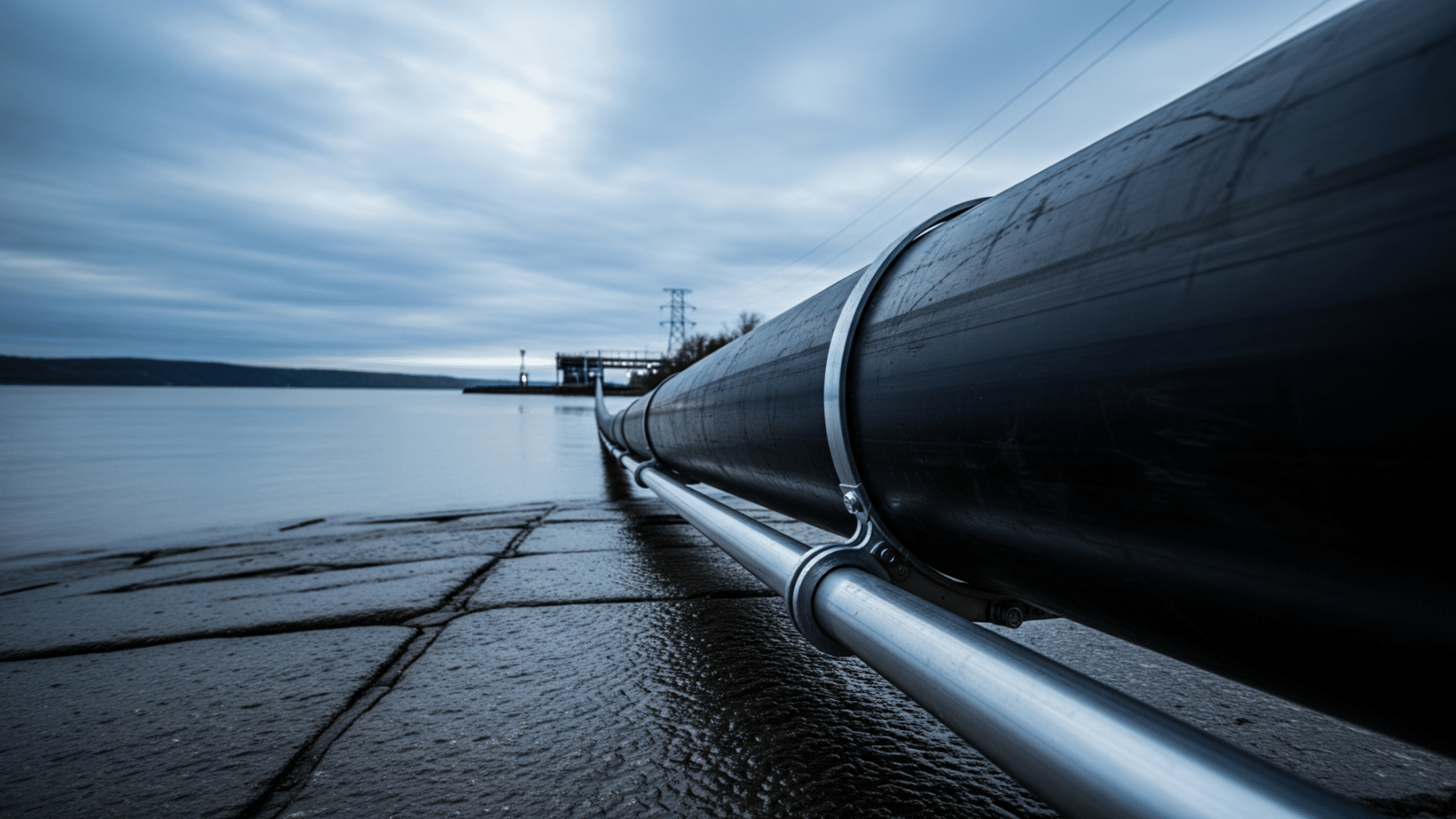
On July 3, 2026, the New York Independent System Operator (NYISO) imported 52 gigawatt-hours (GWh) of electricity from Canada, the most traded between the two areas since January 2025, with some of that power flowing along the new Champlain Hudson Power Express (CHPE) transmission line between Québec, Canada, and New York City, which officially reached commercial operations in May after three years of construction. The single-day figure came during a summer heat wave and marked an early stress test of the newly opened line, which tripped offline less than 24 hours later due to a cable fault.
A 17-month import high during peak heat
A strong heat wave drove electricity demand in NYISO up during the first week of July, with a maximum hourly load of 31,097 megawatts (MW) on July 2 at 7:00 PM.
Canadian imports fulfilled 9% of electricity demand in NYISO on July 3, with a daily average of 1,400 MW per hour coming from Hydro-Québec and 800 MW per hour from the Independent Electric System Operator in Ontario.
The new CHPE transmission line connecting Hydro-Québec’s grid and the NYISO grid has a capacity of 1,250 MW, which was fully utilized on July 3, according to the U.S. Energy Information Administration.
What the CHPE line is and how it works
Construction of the Champlain Hudson Power Express began on November 30, 2022, and all major construction work was completed in January 2026, with the line becoming operational on May 13, 2026.
The project uses high-voltage direct current (HVDC) cable technology, with cables installed for roughly 339 miles underground and underwater from Lake Champlain at the U.S.-Canada border to a converter station in Astoria, Queens.
CHPE is underpinned by a 25-year contract with the New York State Energy Research and Development Authority (NYSERDA), under which the line is expected to deliver around 10.4 terawatt-hours of hydropower annually from Hydro-Québec’s reservoir system.
The project is relevant to the broader U.S. grid buildout underway, including the record 24 gigawatts of battery storage developers plan to add in 2026 as utilities work to shore up reliability margins.
Two outages in the line’s first summer
The $6 billion project went down around 8 a.m. on July 4 after a cable splice was damaged.
The line has gone down twice since it reached commercial operational status in May. Its first outage was on July 1, and it returned the next day, supplying power to the city’s grid during the heat wave. It has remained down since the second outage on July 4.
No power has flowed through the 339-mile line for more than 10 days and Hydro-Québec estimates repairs to take another two weeks.
NYISO said its energy demand planning studies did not assume that CHPE would be available to meet peak summer demand.
Grid reliability and the longer outlook
In recent years, both ISO-New England and NYISO have relied less on electricity imports from Canada as drought conditions have limited hydroelectric generation. However, both regional grids have built high-voltage transmission lines connecting hydropower from Québec to their respective regions, which could reverse the trend if hydroelectric generation increases.
According to the New York State Energy Research and Development Authority, CHPE is expected to meet up to 20% of New York City’s power demand.
The July 3 performance confirmed the line can reach its rated capacity under real grid conditions. Whether it can sustain that output consistently is now a central reliability question for NYISO planners as New York also works to meet new FERC requirements on large load interconnection across its territory.
After a major outage, the Champlain Hudson Power Express is scheduled to return to service on August 1 to provide clean energy to New York City, according to reporting by Habitat Magazine.
