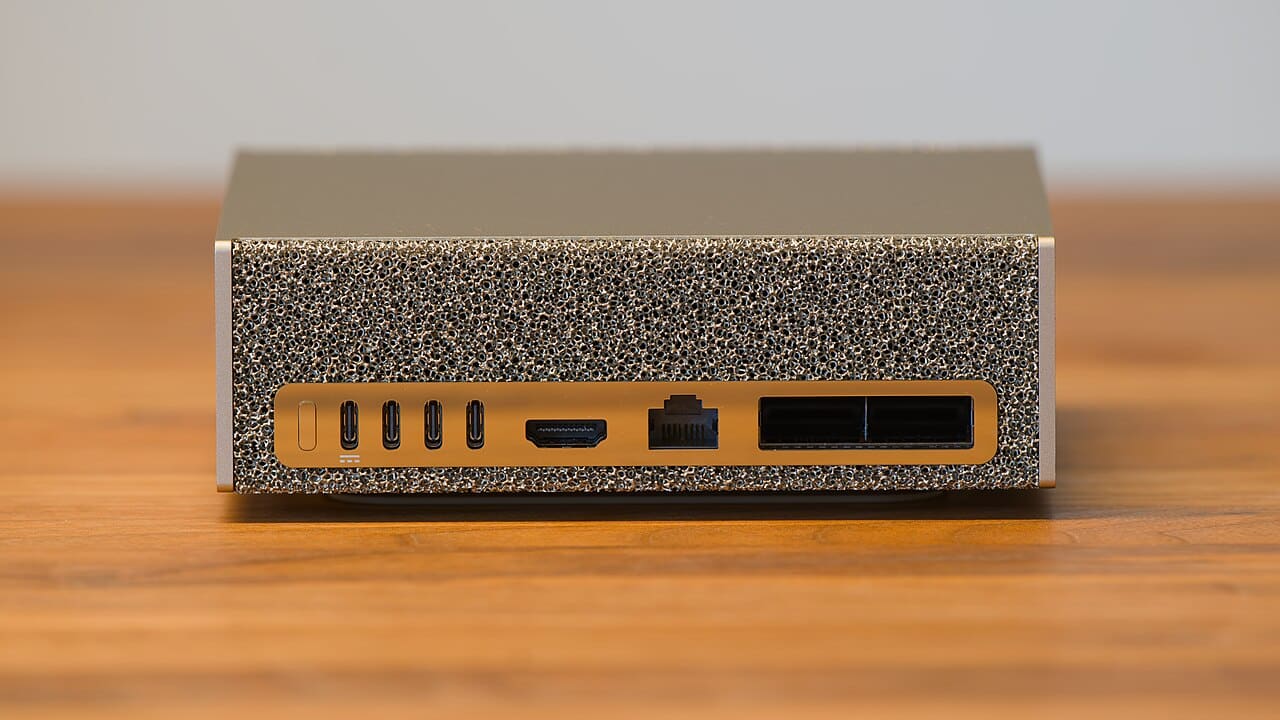
Nvidia has introduced a 64GB configuration of its DGX Spark desktop AI computer, a lower-cost version of the compact machine that lets software developers run larger artificial intelligence models directly on their desks instead of in the cloud.
The company detailed the new configuration in a post on its official newsroom, describing it as a tool for builders who need more headroom as open AI models grow more capable while shrinking in size.
What the new machine offers
Local AI is becoming more useful by the token, as AI agents move from experiments into everyday development.
Increasingly capable open models are shrinking to fit on more devices, giving builders more to run locally.
The new 64GB DGX Spark is aimed squarely at that shift, giving developers a desktop machine with enough unified memory to handle sizable workloads without needing constant access to remote data center hardware. The new 64GB configuration, available exclusively from manufacturer partners, keeps the platform at an accessible price point while retaining the GB10 Grace Blackwell Superchip, DGX OS and full NVIDIA AI software stack, same as the 128GB model.
Nvidia has positioned the DGX Spark line as a bridge between consumer workstations and full data center AI infrastructure. DGX Spark combines NVIDIA Grace Blackwell compute, unified memory, NVIDIA ConnectX-7 networking and an NVIDIA CUDA-accelerated AI software stack in one system.
The new DGX Spark 64GB configuration supports practical work from day one. With up to 100-billion-parameter models running entirely on device, developers and enthusiasts can start with a single system for models that fit within its memory, or connect multiple DGX Spark systems to pool resources for larger workloads. This is a common bottleneck for developers prototyping agentic AI tools or testing new open-source models before scaling them up.
Part of a broader local AI push
The announcement arrived alongside other recent moves from Nvidia expanding its lineup of personal AI computing hardware.
The company has also been preparing the launch of its RTX Spark platform built around the N1X chip, a separate Windows PC product aimed at bringing similar on-device AI capability to laptops and compact desktops. The more powerful option mixes a 20-core Grace CPU with a 6,144-core Blackwell GPU, and comes with between 24 and 128GB of unified memory.
Nvidia is offering the N1X in two configurations: the higher-end version described above, and another variation that uses an 18-core CPU and a cut-down 5,120-core Blackwell GPU with between 24 and 32GB of unified memory, which will only be in laptops. The first Windows PCs equipped with the platform, including Microsoft’s Surface Laptop Ultra, began shipping in mid-October.
Together, the two product lines reflect a strategy of pushing AI compute closer to the end user rather than routing every task through cloud servers. That approach mirrors a broader industry trend toward edge and local inference, a shift also visible in FieldAI’s funding surge as investors bet on AI systems that run outside centralized data centers.
Why memory capacity matters
Memory capacity has become one of the most closely watched specifications in AI hardware as models grow in parameter count and context length.
Larger memory pools let a single machine load bigger models without splitting them across multiple devices, which can slow performance and complicate development work.
For independent developers and small AI labs, a higher-memory desktop unit can reduce dependence on expensive cloud compute rentals for early-stage testing and fine-tuning work. Two units can be clustered together via NVIDIA Sync Cluster Assistant to create a unified memory pool for larger models or heavier workloads. Nvidia says the clustered setup connects directly over a QSFP cable, pooling memory to 128GB and expanding supported model size to up to 200 billion parameters.
The expanded DGX Spark lineup also lands as demand for AI-capable chips remains intense across the industry. Nvidia’s hardware announcements this year have consistently emphasized unified memory and local processing power as selling points, a pattern that fits the efficiency pressures already reshaping how chatbot parameter use during everyday operation.
Availability and rollout
Starting Friday, Oct. 23, the new configuration will be available from Acer, ASUS, Dell, Gigabyte, HP and MSI , with pricing starting at $4,999. This marks a new lower-cost entry point alongside the original 128GB DGX Spark, which Nvidia sells directly.
The launch continues a steady cadence of hardware announcements from Nvidia throughout 2026, as the company works to extend its dominance from data center AI chips into desktop and consumer-facing products aimed at developers building the next generation of AI applications.
