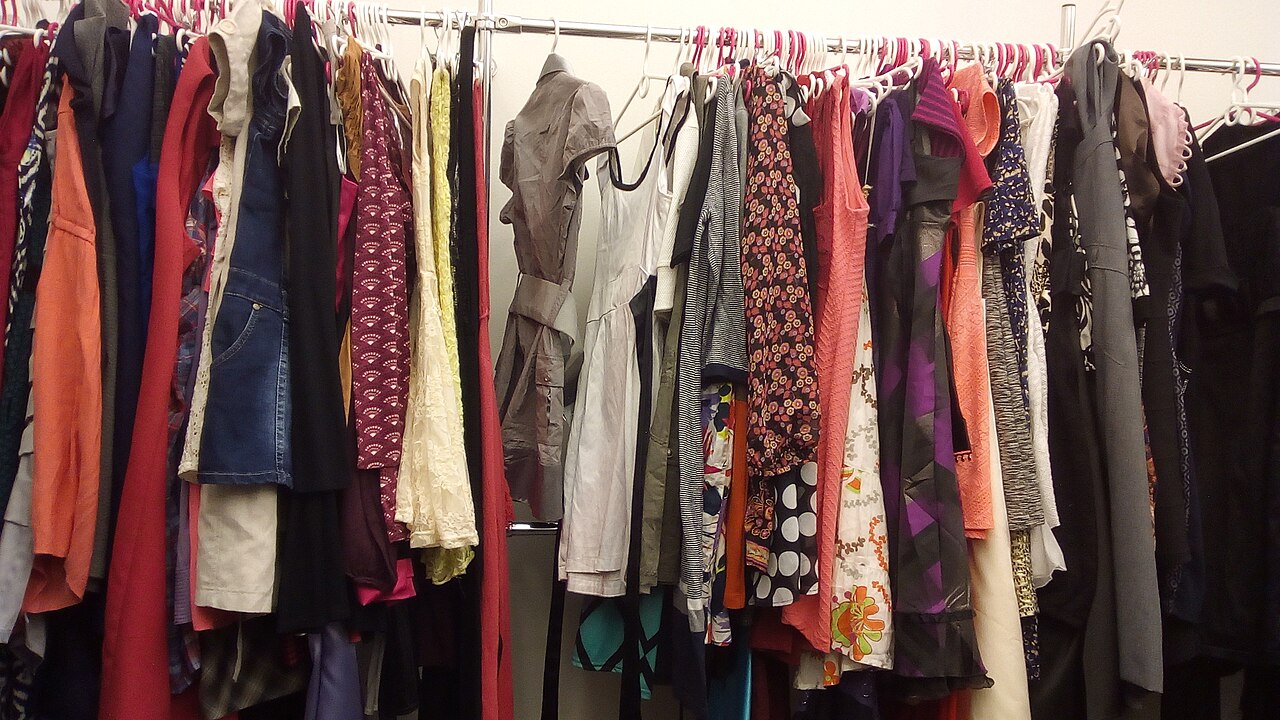
A pair of shorts that once hung on a clearance rack now sits in someone’s cart with a price tag that would have bought three pairs new.
The buyer is in their twenties.
The seller is probably closer to forty.
Neither one thinks the price is strange.
That gap, between what one generation wore and what another generation will now pay for it, has become a real and measurable market.
Why an old hoodie suddenly reads as treasure instead of clutter
The mechanism is simple and it runs on distance, not fabric. A piece of clothing needs enough time to pass that it stops looking dated and starts looking period correct, and for mall brands from the early 2000s that window has just opened. The closet filler one generation wore to class reads as a costume artifact to the one that never lived through it.
So sellers lean into that gap on purpose. Listings lean hard on keywords like “rare,” “vintage” and “Y2K,” and the same hoodie that reads as dated closet filler to a 38-year-old reads as period-correct fashion to a 22-year-old shopper searching those exact terms. That framing does real work, turning an ordinary garment into something worth hunting for by name.
Scarcity finishes the job nostalgia starts. A current-season Abercrombie top is readily available at the mall. An original from the 2000s does not, and search-by-brand and era filters on Depop, Poshmark and eBay make that scarcity findable. That is a built-in price floor new retail can never recreate.
The scene: a mall relic turns into a listing worth real money
The clearest example is concrete. The stuff you bought new at the mall is now being rediscovered by people who were in elementary school when you wore it, with Vogue Business reporting that old Forever 21, Topshop and Abercrombie pieces are reselling above their original retail prices, with nostalgia helping drive the climb. One pair of vintage Forever 21 shorts recently resold for $198.
That is a single garment that likely cost under twenty dollars the first time it was sold.
Scroll a resale app today and the aesthetic has a name. Depop’s 2026 trends report names “Neo Nostalgia” as a shift toward blending fragments of the 70s, 90s and early 2000s to form a visual language that feels familiar and personal , mixing eras and archival pieces. The secondhand site saw searches spike for everything from bandage dresses, up 542 percent, and JNCO jorts, up 495 percent, to medieval references, up 240 percent. Those are not costume pieces anymore; they are everyday wardrobe items again.
Even the emotional pitch has shifted. Sellers describe hunting down these old pieces precisely because they stand out from anything available new, turning a stranger’s old hoodie into the kind of statement a brand new designer piece used to make.
The evidence behind the price tags, and where the numbers come from
None of this is anecdotal guessing dressed up as a trend. A full fashion trends report built on the platform’s own listing and search data backs the shift. Vogue Business reported that old Forever 21, Topshop and Abercrombie pieces are reselling above their original retail prices, with nostalgia helping drive the climb, and separate coverage confirms the pattern holds beyond one viral screenshot.
The scale is bigger than any single short. Resale categories built on exactly this kind of era hunting already account for a meaningful chunk of listings on the leading platforms.
As Marta Indeka, senior foresight analyst at The Future Laboratory, told Vogue Business, “The thrill of thrifting, flipping and owning something that’s hard to get” can shape what shoppers are willing to pay. Curated vintage like this is increasingly close to the center of the market now rather than a side hustle for a handful of sellers.
It also tracks with how younger shoppers are spending more broadly this season. According to PwC’s 2026 Holiday Outlook report, nearly four in five Gen Zers (78%) are interested in screen-free gifts like puzzles, art supplies and gift cards, as compared to 64% for all consumers. Clothing with a built-in backstory fits that mood exactly, the same instinct reshaping how younger shoppers treat a lot of other screen-free hobbies right now.
Where the trend breaks down, and what still won’t sell
Even so, not everything pulled from a closet is worth a second look. Coverage of the trend is careful to note that not every single thing kept from that era is a goldmine. Original pieces from Abercrombie, Forever 21 and Topshop are drawing interest because they carry era-correct logos, cuts and embellishments rather than modern reinterpretations.
A plain, unbranded basic rarely clears the bar that a recognizable logo or a distinctive cut does.
The split also runs along generational lines in both directions, not just one. Some retail researchers have pointed to older shoppers purging their own closets, and to Y2K’s return following a familiar cycle seen before with other decades, as part of what is feeding the supply side of this market. That is a reminder that older shoppers are not simply bystanders in this story; many are active participants too, just differently.
And prices in resale are volatile in a way a mall price tag never was. A single viral listing, like the exact shorts that resold for nearly $200, does not set a stable market rate. Comparable pairs may move for a fraction of that depending on condition, size and who is searching that week.
What it means for a closet nobody thought was worth sorting
So the practical takeaway is small and specific. Before a worn tee or an old tracksuit goes into a donation bin, it is worth a quick search by brand and decade. The same item can carry wildly different value depending on who is shopping for it and why.
That is also a quiet shift in how two generations relate to the same object. One generation sees the garment as something already used up. The other sees lived-in proof of an era it only encountered secondhand, not unlike how different age groups already read small digital habits like workplace emojis in opposite ways.
None of it requires a rare designer label or a lucky find at an estate sale. It just requires patience, because the clock that turns ordinary clothing into vintage inventory keeps running whether or not anyone is watching the closet.
