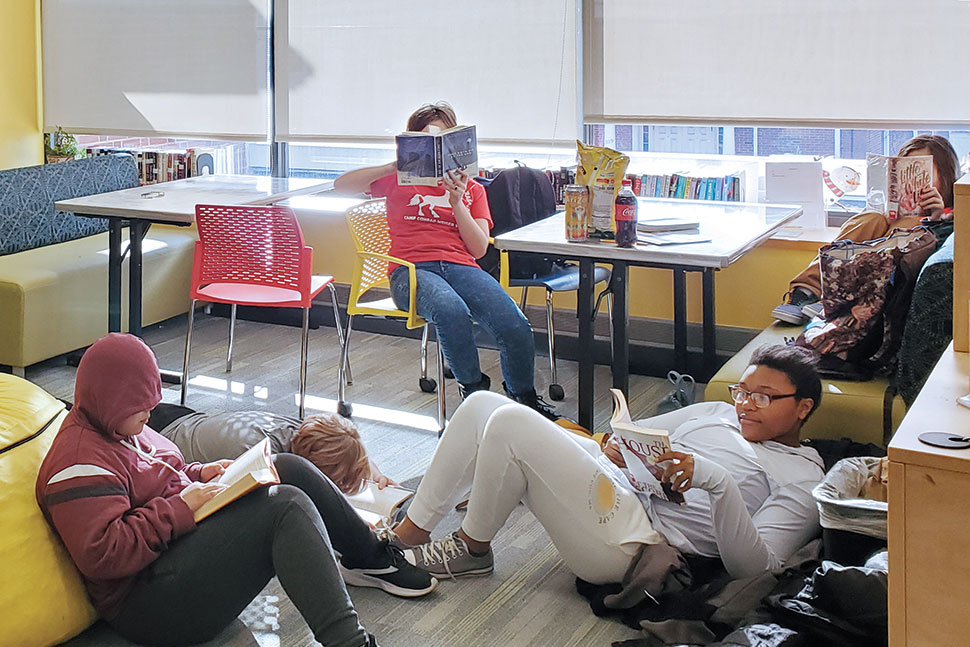
A reading format built on a simple rule, show up, open a book and say nothing for an hour, has grown into a global network of more than 2,000 chapters spanning 62 countries.
Silent Book Club, which began with two friends reading together at a San Francisco wine bar in 2012, has become one of the fastest-spreading grassroots leisure movements in the country, according to Axios reporting on the trend.
How the format works
There is no assigned book, no discussion questions and no homework. Members bring whatever they are reading, in any format, and read quietly together for roughly an hour before an optional period of conversation.
No assigned reading. No forced discussion. Just you, your book and a room full of fellow introverts quietly reading.
Co-founder Guinevere de la Mare described the appeal to Axios as a kind of digital detox built into a social evening. “It became this really lovely little escape pod where you could put down your devices, and you could focus on books and human interaction,” de la Mare told Axios.
She calls the format “introvert happy hour.”
From two friends to a global network
Co-founders Guinevere de la Mare and Laura Gluhanich launched the Silent Book Club in San Francisco more than a decade ago. What began as two friends reading at a bar has grown into more than 2,000 chapters in 62 countries , according to a separate Axios report on the club’s Indianapolis chapter.
The organization’s own site confirms the current scale, noting it is a global community of readers, with more than 2000 chapters in 60+ countries.
Leadership has shifted recently as the group marked a milestone. After celebrating our 10th anniversary, Laura stepped back from day-to-day operations in 2026. Guinevere continues to lead Silent Book Club’s global operations.
New chapters keep launching
The spread is not confined to big cities. A chapter launched in St. Louis last year after a local resident could not find a nearby group.
In summer 2025, local communications professional Kristen Oyer was looking for an event near her but only saw options about 45 minutes away from St. Louis City. The first event, in August 2025, was hosted at Soulard’s Protagonist Cafe. The crowds grew as further meetups took place at spaces such as Art Hill, Goshen Coffee, Laumeier Sculpture Park, and ‘ssippi.
Oyer told St. Louis Magazine, “It was both surprising and not surprising the amount of connections that have come out of book club and the simple act of showing up and reading.”
In San Diego, local organizer Krystle Johnson told Axios the group typically draws a modest but steady crowd. About 15, 20 consistently attend and it’s mostly a millennial crowd, local host Krystle Johnson told Axios.
The San Diego chapter popped up in 2017, and the club has grown locally with other groups meeting around Escondido, Carlsbad and Oceanside.
Indianapolis offers an even sharper growth curve. Kelsey Jones saw the concept on social media and thought, “Indianapolis needs something like this.” So, in April 2022, she started Silent Book Club Indy.
Last year, the largest gathering ever attracted nearly 400 readers when the club partnered with the Indy Indie Book Crawl. It regularly attracts upwards of 100 readers for its monthly meet-ups, which now require a free ticket to manage the interest that often outpaces the capacity at its rotating hosts.
Part of a wider quiet-socializing shift
The growth comes as other forms of solitary, low-pressure group activity gain traction, echoing patterns seen in community engagement trends tracked nationally.
It also fits alongside broader hobby shifts like the resurgence of hands-on crafting documented in analog hobby searches among younger Americans trading screen time for tactile, screen-free activities.
Unlike franchised business models, Silent Book Club remains decentralized. The organization provides editorial and branding support for hundreds of chapters whose social media channels are managed by volunteer organizers rather than charging licensing fees.
This allows the format to multiply with little overhead as new hosts in new cities keep opening chapters.
