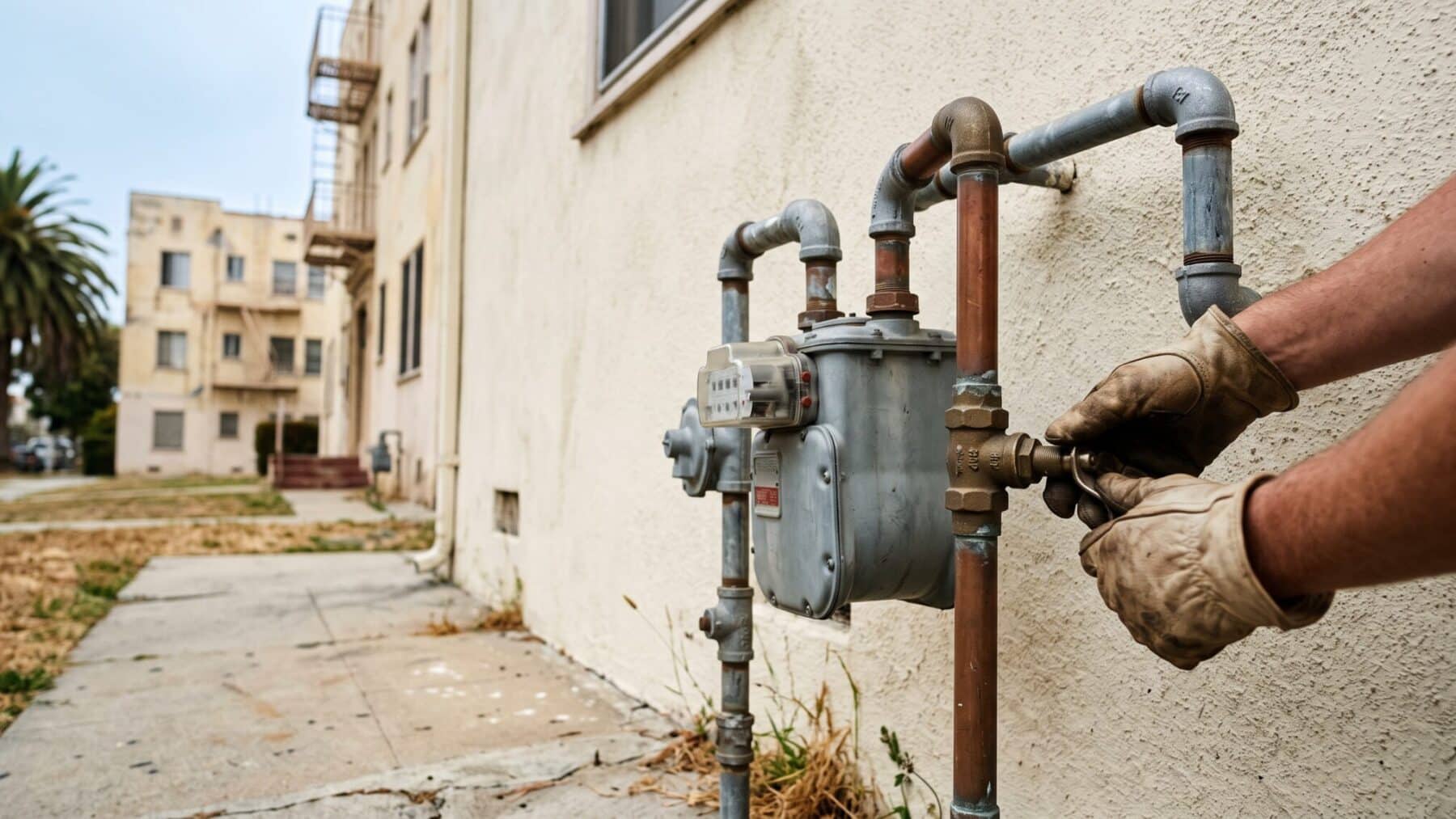
California’s gas utility regulator has resolved a major rate case filed by Southwest Gas Corporation. The California Public Utilities Commission approved Southwest Gas’s application for authority to increase rates for gas service, setting a 5.17% increase for the combined Northern California and South Lake Tahoe territory and a 22.36% increase for Southern California.
How the case was resolved
Southwest Gas filed a general rate case application (A.24-09-001) with the Commission on September 6, 2024, seeking authority to increase revenues within the Company’s three California service territories or rate jurisdictions.
On May 14, 2026, the Commission approved Southwest Gas’s Settlement Agreement authorizing revenue increases, with rates effective July 1, 2026. A subsequent decision in this proceeding resolved the remaining contested issues, including the gas utility’s capital structure and return on common equity. That decision established a rate increase of 5.17% for the Northern California/South Lake Tahoe territory and a rate increase of 22.36% for Southern California.
Southwest Gas claimed an annual revenue deficiency for its test year 2026 of approximately $38.5 million for its Southern California rate jurisdiction, approximately $63 thousand for its Northern California rate jurisdiction, and approximately $10.2 million for its South Lake Tahoe rate jurisdiction. The CPUC approved an all-party settlement agreeing to a revenue increase of approximately $39.5 million, before consideration of the separately litigated capital structure and cost of capital.
Beginning August 1, 2026, South Lake Tahoe customers transferred to the appropriate Northern California rate schedule, and the new rate schedule began appearing on customer bills. Full details are published on Southwest Gas’s California Rate Adjustment page.
Southwest Gas is authorized to make post-test year margin adjustments of 2.75% for years 2027 through 2030 in each of its three California rate jurisdictions.
A national rate-case wave
The Southwest Gas decision lands amid a broad national surge in utility rate filings. As of August 2026, 57 electric and gas utilities across 48 states have filed rate increase requests with their respective state regulators, with the average utility seeking a 13.2% increase, or roughly $208 million, affecting a combined 125.1 million residential and commercial customers.
Analysis by the Center for American Progress and the Natural Resources Defense Council finds that at least 254 electric and natural gas utilities have already implemented increases, been approved for increases, or are proposing one starting in 2025, 2026, or 2027. Those filings affect more than 111.9 million electricity customers, equivalent to 68% of all US electric utility customers.
That wave has already cleared several state commissions this summer. On July 15, 2026, the Missouri Public Service Commission issued an order allowing The Empire District Electric Company, doing business as Liberty, to implement new electric rates effective August 3, 2026, phased in over three years.
In New England, Eversource Energy electricity supply rates rose beginning August 1, driven by wholesale natural gas price volatility, grid infrastructure upgrades, and clean energy investments.
Why the disparity between northern and southern California
The sharp difference between Southwest Gas’s two California increases reflects the distinct cost structures of each territory. Southern California is a larger service area that carries a proportionally higher share of the company’s capital investment, which the settlement agreement captured in the revenue deficiency figures.
The Northern California rate jurisdiction covers communities and areas in Placer, El Dorado, and Nevada Counties, and faced a far smaller revenue gap heading into the test year.
Southwest Gas Holdings published its second-quarter 2026 earnings on August 5, 2026. President and CEO Justin Brown noted that the adjusted result excluded the retroactive portion of California revenue that had been deferred in a memorandum account since the first quarter because of the timing of the rate-case approval, and said the company is reaffirming its 2026 and long-term guidance ranges. In California, the commission’s decisions are expected to provide approximately $40 million of incremental annual revenue. Management also increased the Great Basin 2028 Expansion Project capital estimate to $2.3 billion during the call.
What regulators are watching next
Utilities cannot raise prices on their own; they must file an application with their state’s Public Utility Commission, provide detailed financial justification, and go through months of review before any change takes effect, a process that typically takes 6 to 18 months.
That procedural clock is already running on several large pending cases. In Minnesota, Otter Tail Power Company has asked the Minnesota PUC to approve an increase in its retail electric rates of approximately $44.8 million, or roughly 17.69%. Evidentiary hearings concluded in early August, with an administrative law judge’s report due in November and a commission order deadline of February 23, 2027.
The national rate-case landscape is already a subject of close scrutiny. As GCN has reported, investor-owned utilities sought $18.6 billion in rate hikes in the first half of 2026, and regulators have been approving more than half of every dollar requested in recent years. Separately, the scale of grid spending driving many of these filings is closely tied to storage and reliability investments; the EIA projects US utility-scale battery storage will approach 65 GW by the end of 2026, with much of that new capacity appearing in rate base calculations that regulators must now weigh.
For Southwest Gas customers in Southern California, the 22.36% increase is the most immediate consequence, adding meaningful dollars to monthly household gas bills at a time when broader energy costs are already outpacing inflation across most of the country.
