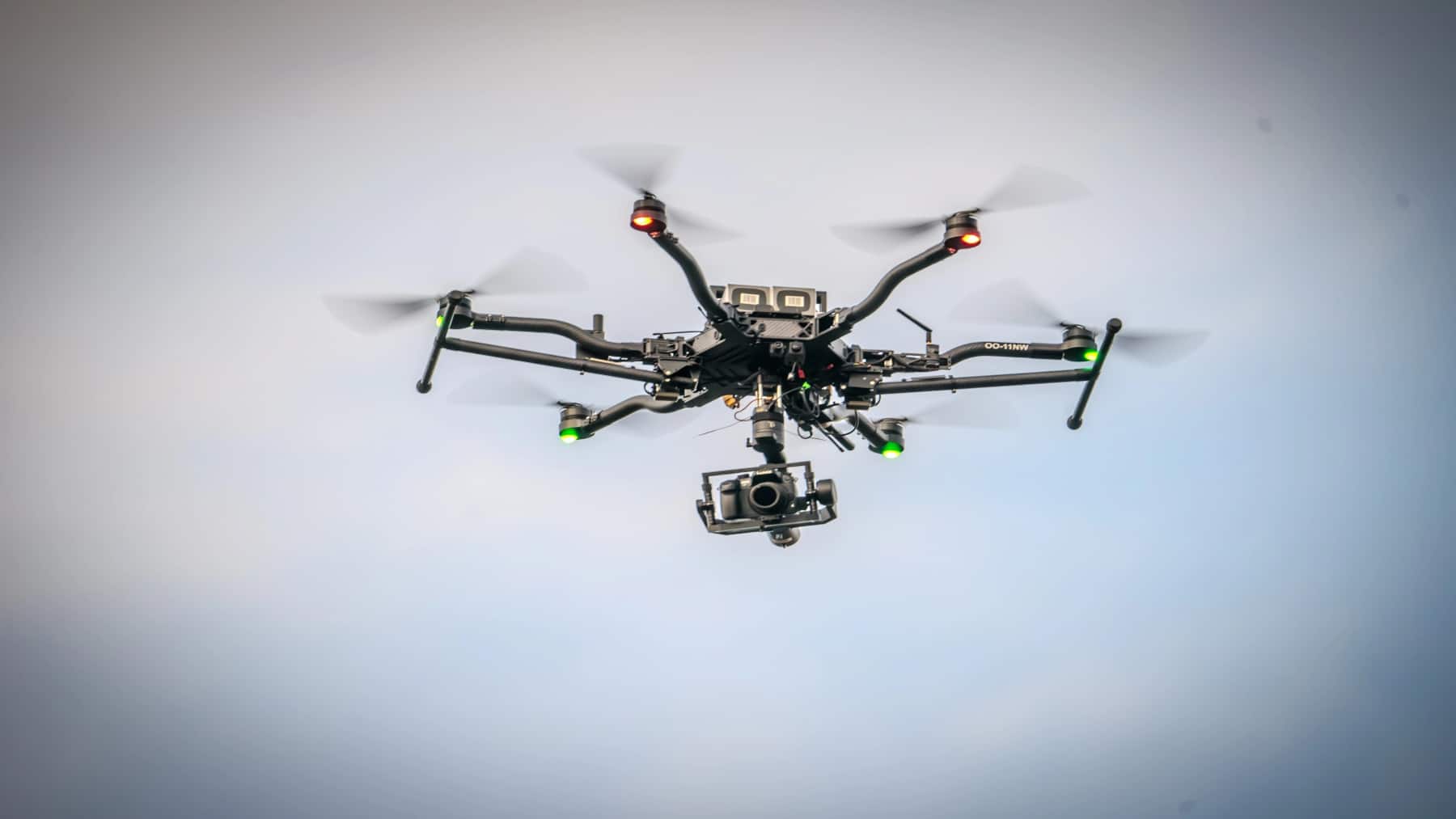
Texas police forces have notably increased the number of unmanned aircraft system surveillance missions carried out to monitor public assemblies across the state. The Texas Department of Public Safety launched 16 drone missions across the state on October 18th in relation to the “No Kings” protest event, with advanced surveillance technology being deployed over the State Capitol, the downtown area of the city of Dallas, the Alamo, among other prominent locations.
Texas DPS’ rationale for drone surveillance activities
The Texas Department of Public Safety asserts that the use of drones in protest assemblies is intended for the greater good of public safety, not for surveillance purposes. The stated intent is that the drone technology supports “situational awareness” in protest assemblies, with the drone acting as overwatch on the event, according to the agency’s statement on the matters raised by civil liberties groups concerned about the drone surveillance.
Officials with the Department of Protection Services stated that any pictures taken from these protest activities would be kept for only one year, and these pictures would never be used to track down the protesters or conduct further inquiries. The main reason for most surveillance missions was cited as “Providing Security at a Large Public Event,” while one was intended for rapid response to public safety emergencies.
Texas DPS is now the country’s first law enforcement agency to apply the Airborne Counter Unmanned Aircraft Systems, or ACUS, technology on its helicopters. The system is capable of identifying, tracking, and dealing with any possible threat from unmanned aerial vehicles or their users in real time, while the agency is on its high-risk missions, be it disaster relief, border control, or criminal patrol missions.
Why civil liberties groups are raising concerns about surveillance
Privacy activists, along with Democratic members of Congress, have also expressed concerns about the increasing number of uses of drones to monitor protesters across the US. Recently, five Democratic senators expressed their disapproval with the Predator drone surveillance conducted on an anti-immigration protest in Los Angeles, fearing that the surveillance may intimidate the protesters, effectively inhibiting their freedom of speech.
The Electronic Frontier Foundation Privacy Researcher, Beryl Lipton, illustrates the extent to which technology has expanded the capabilities of the police to gather data on people via drone surveillance. Lipton points out that today’s drone video is capable of being interfaced with facial recognition technology, allowing for the formation of surveillance networks beyond the common crowd surveillance feature of the drone technology.
Regulations differ from state to state
What constitutes the legal bounds on the state’s usage of police-operated drones at protest gatherings is generally different from state to state, some requiring the obtaining of warrants, while others are largely unconstrained. In the city of Cleveland, Ohio, the operation of drones is banned over protest gatherings, which is one of the rare instances of local legislation on drone surveillance activities.
What drone deployment data reveals about surveillance scope
“The UAS operation was conducted for the purpose of gaining situational awareness of the incident, and not for the intent of obtaining any identifying information of the involved parties,” the Texas DPS said in their response.
Requests for public information disclosed the fact that the main aircraft type used by the DPS in the October protest was made in China by the company DJI. The available flight reports show the operation of the aircraft over different cities, including joint operations with the UAS unit of the Dallas Police Department.
The Texas system reflects the rising pattern within the nation’s law-enforcement bodies, incorporating highly advanced surveillance technology into the standard procedure for dealing with protest gatherings. The correct measure between necessary public protection requirements and the constitutional rights promised to citizens is highly controversial, especially with the advancing levels of drone technology integration across the USA.
