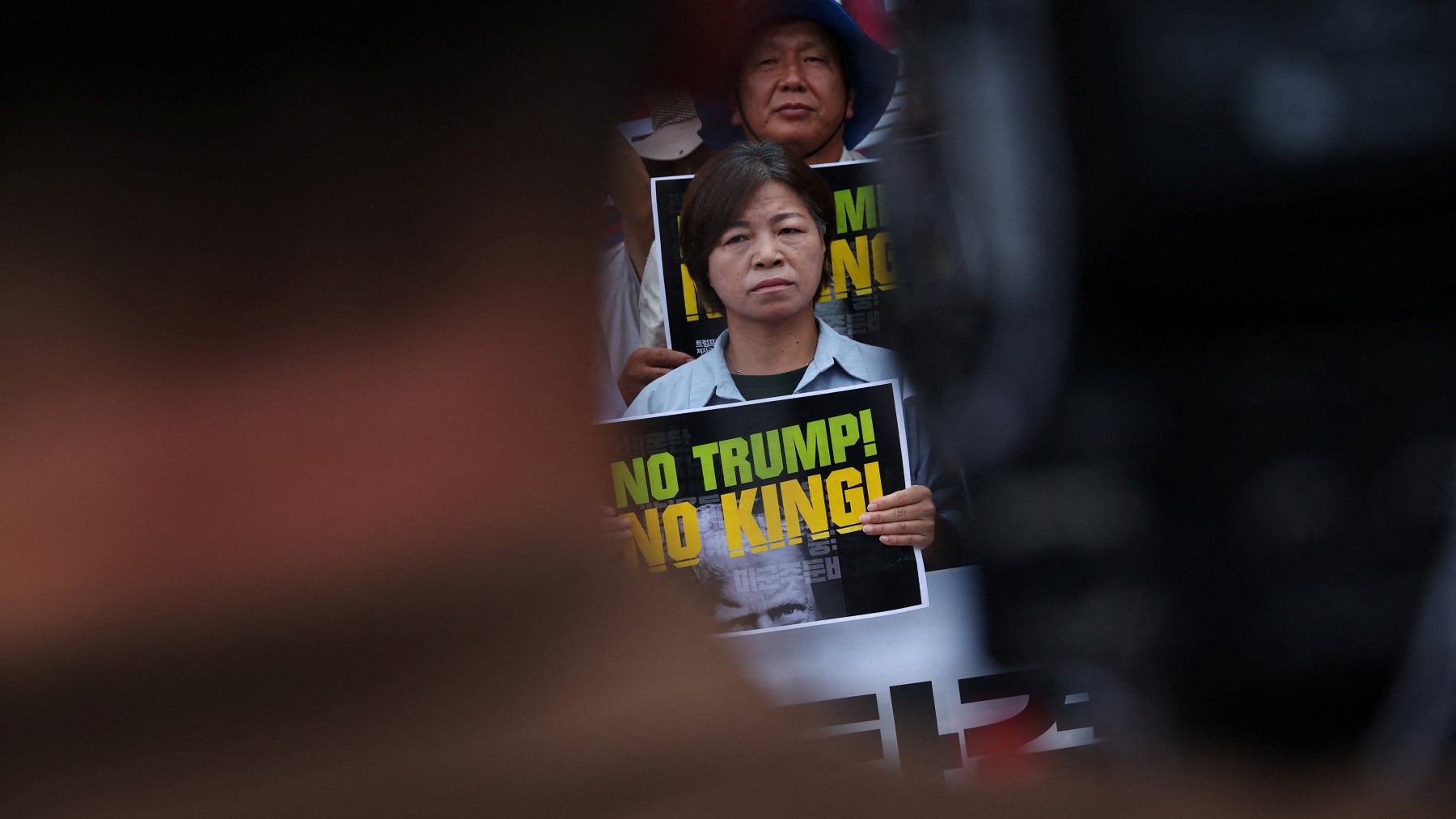
It looks like the U.S. is having beef with almost everyone and every nation, including Korea. The world frequently observes with interest, and occasionally worries, when two long-term nations unite. Decades of military alliances, economic collaboration, and cross-cultural interactions have characterised the U.S.-South Korea relationship. However, disagreements and difficulties can occur even in such a close connection, particularly when there are high-stakes matters like commerce at stake. Right now, they are not on good terms, and we will unpack why.
Tensions could arise before the U.S.-South Korea summit due to unresolved disputes
As South Korea and the United States prepare for a summit of their leaders, topics left unresolved by a recent trade deal provide scope for more disputes between the key allies and trade partners, six former negotiators and experts said. President Donald Trump may use the summit with counterpart Lee Jae Myung to seek more concessions on defence costs and corporate investments, left out of the deal.
While non-tariff barriers and currency could prove thorny issues, experts said. No official summit date has been disclosed, though Trump last week gave a timeframe of two weeks. The absence of a written agreement underpinning last week’s talks could open the way for disputes, with some differences already emerging in the two sides’ accounts of the deal.
As concerns over trade deals increase, South Korea responds to U.S. profit accusations
Key among these was Sunday’s denial by a South Korean presidential adviser of U.S. claims that it would take 90% of the profit from project investments of $350 billion by South Korea, which also agreed to open up its domestic rice market. Choi Seok-young, a former chief negotiator for the Korea-U.S. free trade deal, signed in 2007, warned,
“Even a binding deal like the FTA has been efficiently scrapped, And this is just promise.”
Last week’s pact was scaled down from South Korea’s previous plans for a package deal on trade, security and investment envisioned in the run-up to the summit between Trump and the newly elected Lee. But Japan struck a deal with the United States sooner than expected, spurring South Korea into a scramble for a trade-focused pact, leaving issues of security and investment for the coming summit, presidential adviser Kim Yong-beom said.
What does this mean and hold for both nations?
Access to American markets and equitable treatment under US trade regulations are essential for South Korea’s steel, electronics, and automotive sectors. These industries support thousands of jobs in addition to being the engine of the economy. In addition, the nation is attempting to manage its regional relationships while preserving close ties with the United States in a complex geopolitical environment.
The U.S., meanwhile, has its own worries. Maintaining competitiveness, upholding trade regulations, and making sure that any agreement doesn’t result in job losses domestically are the major concerns of policymakers. Lawmakers and unions are also putting pressure on the government to prioritise domestic interests and be harsh on trade. The US has an ongoing battle with nations; even India continues trade talks with the U.S.
Uncertainty clouds plans for $350 billion in funds that Trump has said South Korea would invest in the United States in projects “owned and controlled by the United States” and selected by him, though he gave few details of the plan’s structure or timing. The allies face challenges in ironing out details of the fund at upcoming working-level talks, South Korean Finance Minister Koo Yun-cheol told reporters on Friday. There is also another thing where Pakistan touts the U.S. tariff deal, and Trump highlights the oil pact. The policies that follow will ultimately be the true measure of this summit.
GCN.com/Reuters.
