
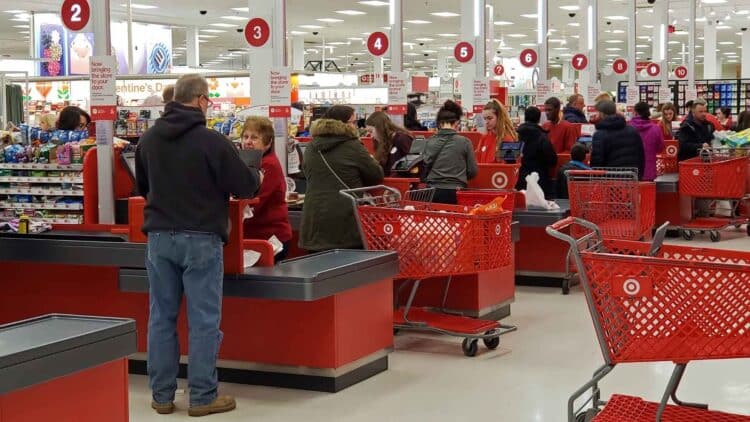
A recent warning was made that one of America’s biggest retailers, Target, should take note of. Over the past few months, many companies, especially those in the retail industry, have been experiencing massive challenges. Now the Bank of America issued a warning that all consumers of Target should take into consideration. Also, it has been predicted that the retailer will increase the prices of certain products to double that of one of its biggest rivals, Walmart.
Details behind the issued warning
Over the past few months, retailers across the country have been battling a growing threat. Also, earlier this year, President Donald Trump announced the sweeping of tariffs, which could have also been a warning for many companies. This alluded to the taxes that companies had to pay to import goods from overseas. It impacted multiple countries, and the aim was to encourage more manufacturing in the United States, which may cause companies to raise prices for everyday goods.
According to an interview that was conducted with Bloomberg News in October, President Donald Trump said that “The higher the tariff, the more likely it is that the company will come into the United States and build a factory.” In April, he made an announcement about a 10% baseline tariff on nearly all United States imports. Also, by August 7, 2025, higher tariffs went into effect, which impacted dozens of the country’s trade partners.
In addition, as the president’s tariff policy has unfolded over the last few months, Target and many other large retailers have been warning about the potential domino effect this policy could have on their businesses. It is for this reason that many companies feel under pressure, because they had to make the decision to increase the prices of certain products. Others are trying to find different ways to remain operational, and some companies cannot stand the heat and were forced to close their doors.
Continuous increase of Tariffs affecting Target
Target might need to make a drastic change in stores to navigate tariffs, thus the warning was made by the Bank of America. Amid Target’s tariff battle, some of the Bank of America analysts predicted that the retail giant may soon have to make a startling change in their stores. According to a recent analyst note obtained by MarketWatch, BofA analysts stated that due to the high import exposure, the retailer will need to increase its prices to twice the rate of Walmart, Target’s top rival, to weather the impact of tariffs.
In addition, analysts estimated a warning that Target would need to hike its prices by about 8% on average to fully offset tariffs in fiscal year 2027. This is being compared to the potential 4% to 5% price increase required for Walmart. This will only occur if Target’s sales volume and other costs stay flat, and it takes no other initiatives to mitigate the impact of tariffs.
The impact of high prices
An increase in prices is the last thing that Target needs in its stores. This could scare away price-conscious consumers. In the first quarter of 2025, the retailer’s comparable sales decreased by a total of 3.8% year-over-year. As indicated by recent data from Placer.ai, the number of consumers that have been visiting Target stores per location decreased by 4.8% year-over-year during the quarter.
In addition, the decrease in sales is occurring after the retailer suffered several consumer boycotts. The reason for these boycotts was due to the company’s decision to scale back its diversity, equity, and inclusion policies earlier this year. Consumers nationwide have also been spending less money on products due concerns they have about Trump’s tariffs.
According to a recent survey that was conduct from market research company Numerator, 87% of consumers are worried about tariffs impacting their finances. Also, it has been found that 80% of consumers are adjusting their finances or consumer habits in response to tariffs. This includes:
- delaying nonessential or expensive purchases,
- buying fewer imported goods,
- searching for sales and coupons, and
- switching to shopping at lower-priced retailers and discount stores.