
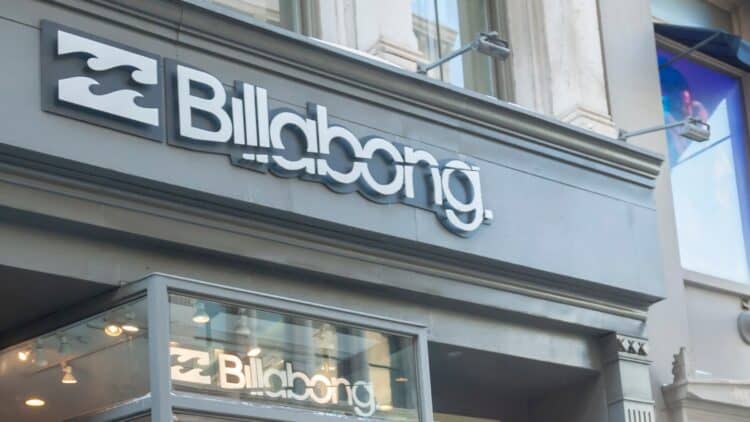
The bankruptcy train has made yet another stop in recent months. This time its specialized apparel brands, Billabong, Quicksilver, and Volcom who are journeying out of the United States. Surfers, skaters, and snowboarders will have to seek alternative retailers to fulfil their sporting apparel needs as over one hundred of the stores collectively owned by the three brands are slated to close its doors and leave the country.
Volcom, Quicksilver, and Billabong catching the last wave out of the U.S.
The United States will soon be saying goodbye to apparel retailers, Quicksilver, Volcom, and Billabong as a result of the brands’ operator filing for bankruptcy protection. Liberated Brands, the former operator for the sportwear retail trio, submitted a voluntary petition for Chapter 11 bankruptcy protection in the U.S Bankruptcy Court of Delaware on Sunday, February 9.
Liberated Brands shared in a statement, “The Liberated team has worked tirelessly over the last year to propel these iconic brands forward, but a volatile global economy, consumer spending changes amid a rising cost of living, and inflationary pressures have all taken a heavy toll.”
“Despite this difficult change, we are encouraged that many of our talented associates have found new opportunities with other license holders that will carry these great brands into the future,” the operator shared in the statement, according to Financier Worldwide.
What caused this mass closure?
Tightening budgets, increased rates of inflation, and stagnant job markets are all contributing factors to the recent surge in store closures across the retail industry. Similarly, the Liberated Brands operator has been facing “significant pressure” due to a multitude of reasons.
Todd Hymel, CEO of California based Costa Mesa, extended his support towards the operator’s decision to file for bankruptcy. Hymel further shared that a “rapid and dramatic rise in interest rates,” inflation rates, lowered customer demand, delays within the supply chain, and evolving consumer preferences all contributed to the immense pressure placed on Liberated Brands.
The COVID-19 pandemic, believe it or not, brought with it a retail boom, and as a result the trio of brands were able to expand operations almost threefold, going from 67 stores to 140. Unfortunately, as things restabilized once the pandemic had ended, inflation and interests increased and the business began to struggle due to a downtick in customer demand.
The pandemic and lockdown period created an all time high demand for online shopping options which was bad news for Liberated’s recently expanded physical presence. The outcome was “a further drag on profitability.”
Additionally, during this time, the demand for fast fashion increased at exponential rates, which, according to Hymel, was another contributing factor to Liberated’s struggles.
Current state of the operator
The assets and liabilities of Liberated Brands are estimated to have a value of between $100 million and $500 million, as per the Chapter 11 bankruptcy filing.
The next hearing for Liberated is scheduled for March 4, 2025, with the operator having received interim approval to access $25 million of a total $35 million debtor-in-possession financing from its secured lender JPMorgan Chase Bank NA. This interim approval was granted in order to keep the business running until the next hearing date in March.
Currently, Liberated is in possession of $3.3 million in cash on hand and massive debt of $226 million.
Once the processes of the liquidation sales are completed, the brands under Liberated will be shuttering all 140 locations and permanently leaving the United States. The company also has nine more stores in Hawaii, however, whether these stores will join the others in closing down or not, has not yet been decided.
The company also has business units in Canada, Japan, Europe, and Australia, who remain unaffected by the bankruptcy petition. Liberated, is however, looking for a buyer for these units.