
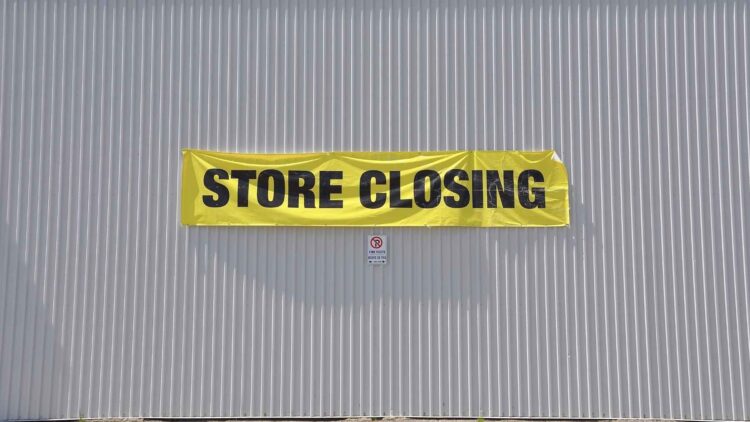
Economic crises and stagnant job markets has caused large scale chaos in the retail industry. Stores that previously stood the test of time through centuries are being compelled to close down or downsize and it really makes you wonder if there is any hope left.
Hudson’s Bay Company, a department store chain based in Canada that has been running for close to four centuries now has been forced to undergo restructuring after filing for bankruptcy due being unable to pay off its debts. Are the recently imposed 25% tariff fees to be blamed or has the market become too volatile? In a post-COVID world, many retailers — particular those who offer more a more mid- to luxury range of products — have been struggling to regain their footing in the industry and as a result, closures, restructuring, or bankruptcy has been announced in abundance in recent months. The notion of a retail apocalypse becomes increasingly realistic with each passing day.
Hudson’s Bay Company forced to restructure after a 355 year run
Even Canada’s oldest running department store, Hudson’s Bay Company, has not been able to keep up with evolving markets and is now undergoing a major restructuring that could be likened to the bankruptcy process after the company failed to pay off its debts timeously.
According to a court filing, “the company dates back to 1670, when it received a ‘right of sole trade and commerce’ from the King of England for what ultimately became Manitoba and parts of Saskatchewan, Alberta, Nunavut, Ontario and Quebec.”
An announcement on Friday revealed that the centuries-old company had received Canada’s Companies’ Creditors Arrangement Act (CCAA) creditor protection from the Ontario Superior Court of Justice. Hudson’s Bay department stores and TheBay.com are both operated by this 355 year old company.
According to the Canadian government’s official website, the CCAA allows “insolvent corporations that owe their creditors in excess of $5 million to restructure their business and financial affairs.”
The company has subsequently shared that it aims to “restructure its operations, streamline costs, and refocus its core strengths,” as per the proceedings.
Liz Rodbell, Hudson’s Bay CEO, also shared that this is not the end for the retailer just yet.
“Our goal is to re-establish our foothold and ensure the company’s long-term place in the evolving Canadian retail market,” Rodbell reiterated. “As we go through this process, we will continue to show up for our customers and communities, as we always have.”
In terms of physical real estate, the retailer currently has 80 Hudson’s Bay locations. Additionally, the company also runs three Saks Fifth Avenue stores, as well as over a dozen Saks Off 5th locations in Canada through means of a licensing agreement. According to the company, these locations will continue operating.
Rodbell further shared that the company had “worked with potential investors to refinance a portion of our credit facilities to improve our liquidity and support our business plan earlier in the year but the threat and realization of a trade war has created significant market uncertainty and impacted our ability to complete these transactions.”
As such, the retailer found it imperative to seek creditor protection. The company received approval for $16 million CAD in “interim debtor-in-possession financing” from Restore Capital and other lenders. Hudson’s Bay has also stated that it is looking into “strategic alternatives and having discussions to explore potential solutions to preserve and strengthen its business.”
Canada – US relations
It is no hidden fact that the relationship between Canada and the U.S. has become increasingly tense due to Trump’s recent tariff hike for goods entering the States. Trump’s 25% tariff on goods coming from Canada to the U.S. was put on a monthlong pause that ended March 4 and the end of the pause brought with it retaliatory levies.