
The retail sector has been hard pressed for any good news in recent months and it does not seem like things will be looking up any time soon either.
Companies across the country have been closing stores in the hundreds since last year as it becomes increasingly difficult to keep up with evolving markets and inflation rates that are forcing consumers to cut back and budget at unprecedented levels. With the newly increased tariffs imposed on goods imported to the U.S., retailers might be facing even more pressure during an already tense time. The fallout of this troubling economic landscape? Mass store closures across the sector.
Major retailers are closing stores — is there any hope left?
Macy’s
The well-known department store chain recently shared its plan to close around 150 of its stores over the next two years. In order to bounce back from recent underperformance and an overall decline in sales, the retailer has put a “Bold New Chapter” strategy in motion aimed at restructuring the company in order to minimize losses. An uptick in preference for online shopping has been on of the main contributing factors to the company’s struggles.
Joann Fabrics
The beloved fabric and craft supplies retailer, Joann Fabrics will be shutting the doors of all 800 locations for good. After an eighty year run, the retailer could no longer keep up with the rising cost of goods and its subsequent decline in sales.
“We are committed to working constructively with the winning bidder to ensure an orderly wind-down of operations that minimizes the impact on all our stakeholders. We deeply appreciate our dedicated Team Members, our customers and communities across the nation for their unwavering support for more than 80 years,” the company shared in a statement.
Liberated Brands
Liberated Brands, the parent company to Volcom, Billabong, Quiksilver, Spyder, RVCA, Roxy, and Honolua, also filed for bankruptcy in February and as such will be shuttering all of its stores in the U.S. as it was not able to overcome competition from fast fashion brands.
Todd Hymel, company executive claimed, “These fast-fashion companies can cater to micro-trends as opposed to the traditional seasonal trend-forecasting retail model. Liberated, and other companies reliant on the traditional retail model, have generally suffered from decreased profit margins after losing part of their overall market share and pricing power to fast fashion.”
Neiman Marcus
Downtown Dallas will soon have to say goodbye to the iconic Neiman Marcus flagship store after Saks Global announced its closure by the end of this month. The luxury retailer had been headquartered in this location and has been in operation for over a century.
According to a company statement, “After more than a decade of negotiations, we received a notice from a landlord to terminate our occupancy, forcing us to close the Neiman Marcus Downtown Dallas location effective March 31, 2025. This location has been a beloved institution in the community for more than a century, and we are disappointed to be losing a piece of Neiman Marcus history. For our impacted team members, transfer opportunities to nearby Neiman Marcus locations will be offered where possible, and those who are eligible will be offered appropriate separation packages.”
Kohl’s
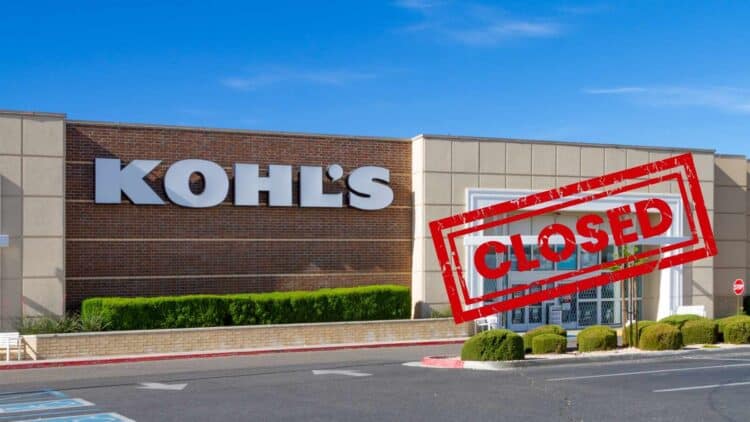
Another popular department store chain will be saying goodbye to 27 locations this April. The retailer’s San Bernardino fulfillment centre will also be closed.
“We always take these decisions very seriously. As we continue to build on our long-term growth strategy, it is important that we also take difficult but necessary actions to support the health and future of our business for our customers and our teams,” Kohl’s CEO Tom Kingsbury explained. Kingsbury will also be stepping down as CEO and retiring in May of this year.
Walgreens
Last October, an announcement was shared revealing that over 1,000 Walgreens locations would be closed nationwide due to underperformance. A total of 1,200 locations will be closed over a three year period, with 500 closures slated for August of this year.
“Our financial results in the fiscal fourth quarter and full year 2024 reflected our disciplined execution on cost management, working capital initiatives and capex reduction. In fiscal 2025, we are focusing on stabilizing the retail pharmacy by optimizing our footprint, controlling operating costs, improving cash flow, and continuing to address reimbursement models to support dispensing margins and preserve patient access for the future,” Chief executive Tim Wentworth explained.